In Kenya's Maasai Mara, local people say a new luxury safari hotel is threatening the ecosystem – and the livelihoods of those for whom tourism was supposed to bring opportunity.
At dawn, when the mist is still clinging to the grass, Nasieku Kipeke's hands are already moving through beads. Red, blue, white... she threads them with the same rhythm her mother taught her.

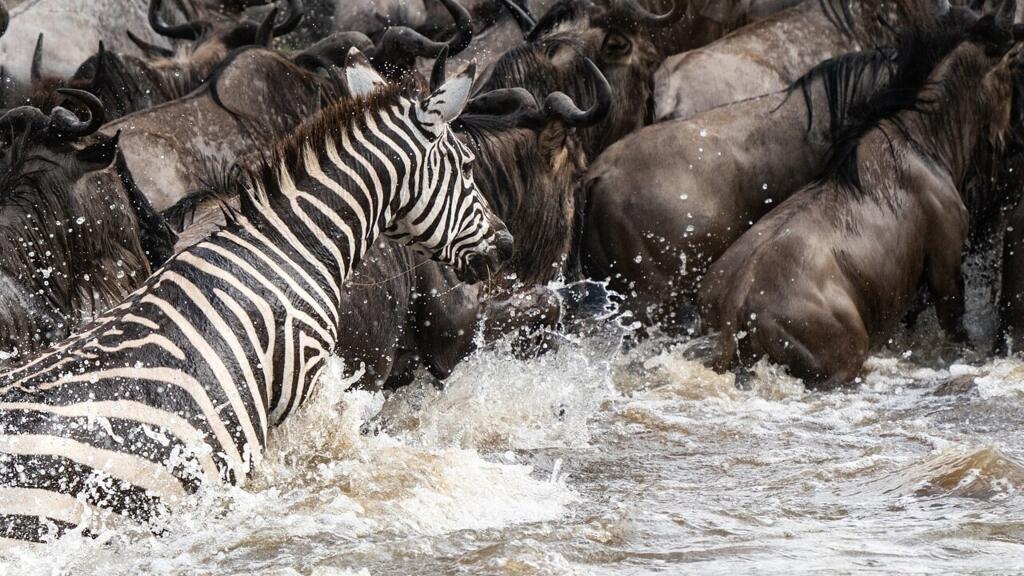
The beaded bracelets she makes will end up in the hands of tourists who come to the Maasai Mara to witness the Great Migration – the epic annual journey made by 2 million zebras, wildebeest and gazelles from Tanzania to Kenya, following the path of the seasonal rains.
The money Nasieku earns from her beads pays for her children's porridge and books and, when she can manage it, clinic visits – which she often puts off.
But this morning, her fingers are slow. Word has spread about the new luxury hotel rising near Sand River, one of the most important wildlife corridors in the reserve. For her, the development feels like a storm cloud settling over land she depends on but has no power to protect.
“When they block the animals, they block us,” she says in a low voice. “We survive because the world comes to see what lives here.”
'Climate whiplash': East Africa caught between floods and drought
Opportunities out of reach
Down the road, 20-year-old Lemayian leans on a crooked fence post. His ambition is to be a wildlife guide – one who can speak about lions, migration cycles and Maasai history in the same breath.
But jobs are thin on the ground now. Conservancies are tightening rules. The land for grazing is shrinking.
"They tell us tourism will give us opportunities. But sometimes I feel like the opportunity is fenced away from us, something we can see but not reach."
For people like Lemayian, the pace of development can be a double-edged sword, promising prosperity while encroaching on and eventually closing off spaces that his family has depended on for generations.
Jane Goodall, pioneering primatologist and voice for wildlife, dies aged 91
Ole Nkaputie, a herder in his seventies, drives his cattle toward a water point. Each step is deliberate, steady, shaped by a lifetime of reading the land. To him, the world-famous Maasai Mara National Reserve is not a tourist attraction – it's memory, livelihood, identity.
“The animals move like we move,” he says, as he watches his cows drink. “When you block their path, you block ours too.”
He remembers when people would assemble under a tree to debate the changes, when the elders spoke and everyone had their say.
'Fear cannot guide us'
Dr. Meitamei Ole Dapash is a conservationist. His small office is cluttered with maps of wildlife routes and folders full of petitions and legal papers. The weight of responsibility hangs heavily over him.
“This isn’t about stopping tourism,” he says, tapping a map where the Sand River flows. “It’s about stopping harmful tourism – development that ignores the people and the wildlife it claims to celebrate.”
It was Dapash who took the fight to court, challenging the construction of the Ritz-Carlton luxury Masai Mara Safari Camp on the grounds of poor community consultation and suspect environmental review.
The women carrying the burden of Kenya’s rural healthcare on their backs
He has put himself squarely in the crosshairs of powerful interests. The threats have followed – late-night calls, anonymous warnings, intimidation.
"But fear cannot guide us," he says. "If we lose this land, what will my grandchildren inherit? Photographs of animals that used to roam here?"
When he speaks with communities, he listens more than talks. Women like Nasieku speak of incomes drying up with bad tourist seasons. Young people like Lemayian ask who will hire them when the land they depend on is parcelled off. Elders like Nkaputie warn of a day when cultural erosion will creep in, long before anyone notices it happening.
He walks one afternoon with a group of women to the edge of the river. A herd of zebra hesitates nearby, unsure of the new noise. One woman sucks her teeth in frustration. “This place was for the animals,” she says. “Now it is for the rich.”