Get all your news in one place.
100’s of premium titles.
One app.
Start reading
The Guardian - UK
The Guardian - UK
World
María de los Ángeles Graterol in Caracas and Tom Phillips in Rio de Janeiro

‘It’s a farce’: families of Venezuela political prisoners still await their release

police in riot gear stand guard behind a group of people sitting or lying down on a blanket on the street
Relatives of political prisoners lie down in front of riot police guarding the Zone 7 detention centre in Caracas. Photograph: Ariana Cubillos/AP

In the days after Nicolás Maduro was accused of stealing Venezuela’s 2024 election, the relatives of hundreds of protesters captured during the ensuing clampdown flocked to the Zone 7 police detention centre in search of incarcerated loved ones.

Now, after the tables turned dramatically and Maduro finds himself locked up in the US, the families have returned to demand the immediate release of every last one of their country’s political prisoners.
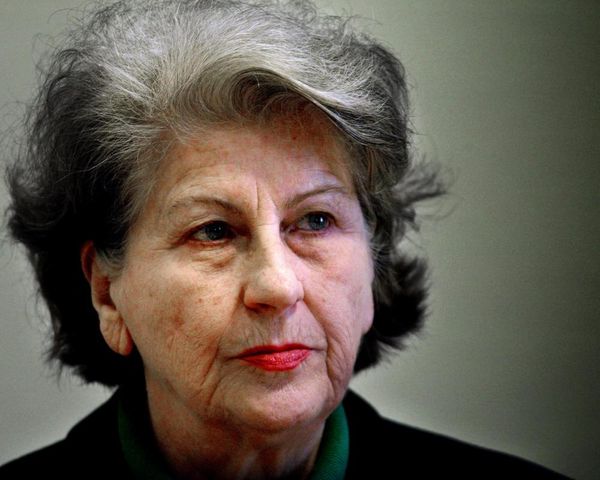
“I’m staying right here … we aren’t going anywhere without our relatives,” said Mileidy Mendoza, 30, one of 20 women – some in their 70s – who have spent the last fortnight camped outside the jail in east Caracas waiting for their relatives to emerge.

Inside the compound, behind a line of riot police with shields, was Mendoza’s partner, Eric Díaz. “What are they waiting for? For someone else to die?” she complained, referring to a police officer who recently died in the Zone 7 prison a month after being arrested for reputedly sharing “treasonous” messages about Maduro’s regime.

Venezuela’s prisoner releases were announced on 8 January, five days after Delta Force commandos snatched Maduro and took him into custody in New York. Venezuela’s acting leader, Maduro’s former vice-president Delcy Rodríguez, called the releases proof of “a new political moment” in a country that slid into dictatorship as her former boss used repression to keep control amid a massive economic slump.

Donald Trump, who claims the US “runs” the oil-rich South American country after his recent attack, hailed the move, telling reporters: “They have released a lot of political prisoners in Venezuela.”

But the advocacy group Foro Penal says only about 250 have been freed so far, leaving more than 600 political prisoners still languishing in Venezuelan jails.

Orlando Moreno, a human rights activist who lives in hiding, believed the “drip drip” of releases was an attempt by Maduro’s successors to reduce international pressure without actually effecting change.

“There hasn’t been a true liberation of prisoners. There have been some releases,” said Moreno, who claimed new prisoners were already being “kidnapped”, among them Alfredo Márquez who was picked up on 12 January while going to church. “While some are going out the front door, others are coming in through the back,” Moreno said.

Some of those still in prison are prominent opposition figures, such as Juan Pablo Guanipa, who helped spearhead the movement widely believed to have beaten Maduro in 2024.

Guanipa’s son Ramón said he had seen his father just once, for 20 minutes, since masked “anti-subversion” agents captured him last May on charges of terrorism, treason and conspiring with a foreign government. “The first thing he said to me was that he wouldn’t bow down to these people, not even behind bars,” recalled the 29-year-old psychology student.

Ramón Guanipa rushed to Caracas when the releases were announced amid rumours his father’s name was on a list of prisoners to be freed, but he remains in custody. “I assume something happened along the way. There was some kind of hitch,” he said. “[That] someone within the regime said: ‘No, Juan Pablo Guanipa isn’t getting out.’”

Other prisoners, such as Eric Díaz, are anonymous citizens caught in the regime’s dragnet as it used security forces to quell dissent. Mendoza said Díaz, whose children are eight and nine, worked for the government, organising lighting and banners at political rallies, until November when he was arrested after police stopped and searched his car. Officials claimed his crime was “phone pairing” but did not explain what that meant.

“When they announced [the release] we thought they were all going to be freed. But it’s just been a farce,” Mendoza said as she sat on the pavement outside the prison by a wooden crate table stacked with pastries, coffee and cakes.

The scenes of tension, despair and anger unfolding outside the Zone 7 centre contrast with joyful images of family reunions involving prisoners who have been released.

Videos on social media have shown a child leaping into her father’s arms in Lara state after over a year without him; the politician Enrique Márquez embracing his wife and weeping after a similar stint in El Helicoide, Venezuela’s most notorious political prison; and cheers of delight as an activist emerges from a Ciudad Bolívar jail and wraps himself in Venezuela’s flag.

Early on Thursday Rafael Tudares, the son-in-law of Edmundo González, the presidential candidate believed to have won 2024’s election, was released more than a year after being grabbed while taking his children to school.

Campaigners have celebrated their newfound freedom, but the sluggishness of the releases has frustrated those who hoped Venezuela’s “new political movement” would involve rapid democratic change. “Releasing [political] prisoners is always an amazing thing … But it means nothing … in terms of ending the repression,” said Javier Corrales, the author of Autocracy Rising: How Venezuela Transitioned to Authoritarianism.

Corrales said the “interim administration” had shown no sign of fundamentally changing its repressive ways. Rodríguez has reshuffled her cabinet, ousting several Maduro loyalists and appointing a new head of presidential security, reputedly over fears for her life. But the most powerful architects of the repression – figures such as the interior minister, Diosdado Cabello and the defence minister, Vladimir Padrino López – remain.

“When it comes to the repression and the terror, absolutely nothing [has changed],” said Moreno, a member of the Nobel laureate María Corina Machado’s opposition movement. “People are still very afraid because they know the people still in power are criminals who can persecute, threaten … detain and torture you.”

Orlando Pérez, a Latin America expert from the University of North Texas at Dallas, said the slow pace of releases exposed how Rodríguez’s regime was “making enough changes to keep the US satisfied, but not enough to be meaningful in terms of democratisation”. Armed pro-regime mobs called colectivos continue to roam the streets intimidating opponents.

“These are not the actions of a regime that’s in the process of democratising. They’re the actions of a regime that’s in the process of trying to pragmatically consolidate power under a new context,” said Pérez, who believed Rodríguez’s strategy was to outlast Trump by offering him major concessions on oil but only cosmetic ones vis-à-vis democracy and human rights. “It’s a survival mechanism,” he said.

For the families camped outside Venezuelan prisons that means more uncertainty. Forty kilometres from the Zone 7 facility, in a dormitory town called Guatire, several dozen women have pitched their tents outside a maximum security prison called Rodeo I.

Sitting on a plastic chair in the encampment, Massiel Cordones described how as a child, her son, José Ángel Barreno Cordones, had been obsessed with military parades. “He’d tell me he was going to be a soldier,” she said.

Her son fulfilled his dream, becoming an army lieutenant in 2018 – the same year Maduro was accused of rigging his first election to stay in power. But two years later he was jailed for allegedly being part of Operation Gideon, a bungled attempt to overthrow Maduro. He was 22 at the time of his arrest. Today he is 28 and serving a 30-year sentence for treason, terrorism and arms trafficking.

His 52-year-old mother raced seven hours to the prison from her home in Falcón state when she got wind of the releases. But after a fortnight sleeping rough outside she still has no news, although she is putting on a brave face. “I won’t lie, staying here is exhausting, but because I have this hope that my son is going to get out, the days just fly by,” said Cordones, who gets by thanks to the solidarity of locals who have opened their homes for the women to wash and deliver them food.

At night, protesters join hands in prayer or belt out Venezuela’s national anthem, which features the lines “down with chains!” and “let’s scream out loud: death to oppression!”

“We’ve had everything we need,” Cordones said. “The only thing truly missing for us is to see our children released – to see those doors swing open and freedom arrive.”

Sign up to read this article
Read news from 100’s of titles, curated specifically for you.
Already a member? Sign in here
Related Stories
Top stories on inkl right now
One subscription that gives you access to news from hundreds of sites
Already a member? Sign in here
Our Picks
Fourteen days free
Download the app
One app. One membership.
100+ trusted global sources.