Get all your news in one place.
100's of premium titles.
One app.
Start reading
International Business Times UK
Francis Miñoza

'It Looks More Like Dementia': Pathologist Says Viral Trump 'Scissors' Clip Could Be Consistent With Frontal Lobe Impairment

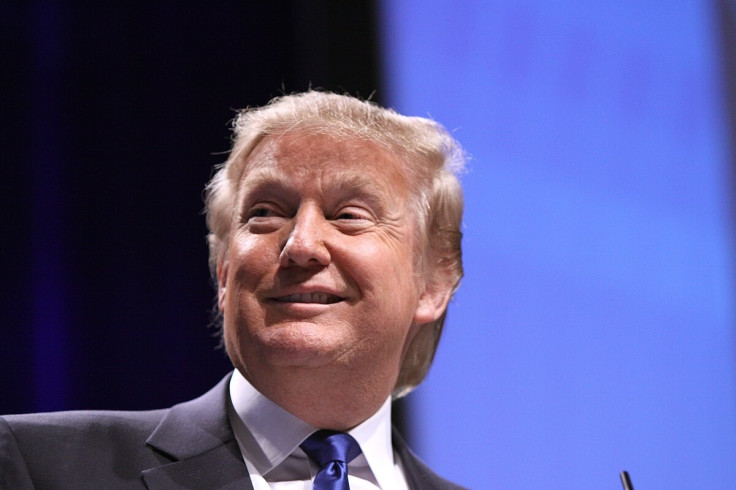
Donald Trump speaking at CPAC 2011 in Washington, D.C. (Credit: wikimedia commons)

Donald Trump's now-viral 'scissors' moment at a ribbon-cutting in North Dakota may be less about petty theft and more consistent with 'frontal lobe impairment,' according to a pathologist who specialises in brain injury and dementia. Speaking on Thursday about the clip, which shows the 80-year-old former president apparently pocketing a ceremonial pair of scissors at the Theodore Roosevelt Presidential Library, US-based pathologist Hilary Shae said the behaviour 'actually looks more like a sign of dementia.'

The footage of Trump emerged on Wednesday and spread quickly across social media, with critics accusing him of brazenly stealing during a public ceremony. The short video shows Trump taking part in the ribbon cutting, then appearing to slip the scissors away instead of returning them.

The row landed on top of a fresh wave of claims in the new book Regime Change, which describes Trump allegedly taking objects from White House hallways and even from his wife Melania Trump's room and moving them into his own.

Pathologist Links Trump 'Scissors' Clip To Dementia Signs

Shae, who says she works in neurological rehabilitation, told viewers in her video that although the online joke has been that Trump is 'a little bit of a kleptomaniac,' she sees something different. In her words, 'quite honestly, it actually looks more like a sign of dementia.'

She pointed to examples highlighted in Regime Change, saying the authors 'talked about the fact that Donald Trump would take things from the hallways and put them in his room. He would go in and take things from Melania's room and put them in his room. And they made it sound like it was a competition, but quite honestly, I'm not sure that's what it was.'

Shae then links those alleged habits to the ribbon-cutting incident, adding, 'And then there's this clip of him taking scissors from the ribbon-cutting ceremony for the Theodore Roosevelt Presidential Library.'

Her core argument is that what looks like kleptomania, in the psychiatric sense of an irresistible urge to steal, can in some dementia patients be something else entirely. 'Instead,' she says, 'the stealing is usually a symptom of changes in the brain affecting memory, judgment, impulse control, or the ability to recognize ownership.'

In her explanation, a person with dementia might genuinely believe an item belongs to them or forget they already have something similar at home. The act of slipping it into a pocket or handbag, she suggests, can feel perfectly ordinary to the person doing it, even if to everyone watching it looks utterly mad.

Frontal Lobe Impairment and Behavioural Dementia

Shae frames the scissors moment as an example of possible 'executive dysfunction,' a term used to describe problems with planning, judgment and inhibition. 'Damage to the frontal lobes can impair planning and judgment and inhibition,' she says, 'and that can make it harder to resist an impulse or recognize that an action is inappropriate, like pocketing a pair of scissors on a live broadcast.'

In her view, dementia that affects the frontal lobes can also scramble a person's understanding of ownership itself. She notes that it is not only the 'I think it's mine' type of confusion, but at times a more basic blurring of what is 'mine' versus 'someone else's.' As she puts it, 'There is no real ownership at some point.'

Shae links this pattern of behaviour most closely to what clinicians call behavioural variant frontotemporal dementia, often shortened to bvFTD. This form of frontal lobe impairment is known for personality change, lack of inhibition and compulsive behaviour rather than just memory loss.

Trump (Credit: The White House)

'Because this condition causes loss of inhibition, causes impulsivity, compulsive behaviors, and poor judgment,' she says, 'someone with frontotemporal dementia may really become this stereotype of a kleptomaniac.'

She stresses that other dementias could produce somewhat similar behaviour. Alzheimer's disease, usually associated in the public mind with forgetfulness, might also lead to unintentional stealing if memory and judgment are impaired. If a patient is also experiencing visual hallucinations and delusions, Shae says the pattern could be more consistent with Lewy body dementia.

To be clear, she does not claim to have examined Trump or to be offering a formal diagnosis. Her comments are based on publicly available anecdotes and the viral video, and IBTimes UK cannot independently verify her clinical conclusions. Nothing is confirmed yet so everything should be taken with a grain of salt.

Still, Shae is blunt about the direction of travel she sees. 'So I do not think that Donald Trump is actually, psychiatrically speaking, suffering from kleptomania,' she concludes in the video. 'I do believe it is just one more sign and symptom of dementia.'

Trump, Dementia Speculation and the Politics of Age

The Trump campaign has not publicly responded to Shae's analysis of the scissors clip or to the broader dementia claims attached to it. The video, however, has folded smoothly into a wider, nastier conversation about age, fitness for office and cognitive decline at the top of US politics.

Trump's critics have long seized on verbal slips, rambling speeches and odd stage moments as evidence that he is not as sharp as he once was. His supporters, in turn, tend to dismiss these episodes as harmless quirks or insist that his public enemies are cherry-picking clips to make him look frail. This latest row, centred on a fleeting grab for a piece of metal, fits neatly into that ongoing trench war.

Shae's breakdown lands somewhere else, less about partisan point-scoring and more about the unsettling possibility that a man seeking another term in the White House might be showing signs that specialists recognise from dementia clinics. That does not mean her reading is correct, and it certainly does not amount to proof.

But her framing of the scissors moment as a possible symptom of frontal lobe impairment rather than simple bad manners is likely to stick in some viewers' minds the next time Trump reaches for something that is not his. Whether that changes any votes is another question entirely.

Sign up to read this article
Read news from 100's of titles, curated specifically for you.
Already a member? Sign in here
Related Stories
Top stories on inkl right now
One subscription that gives you access to news from hundreds of sites
Already a member? Sign in here
Our Picks
Fourteen days free
Download the app
One app. One membership.
100+ trusted global sources.