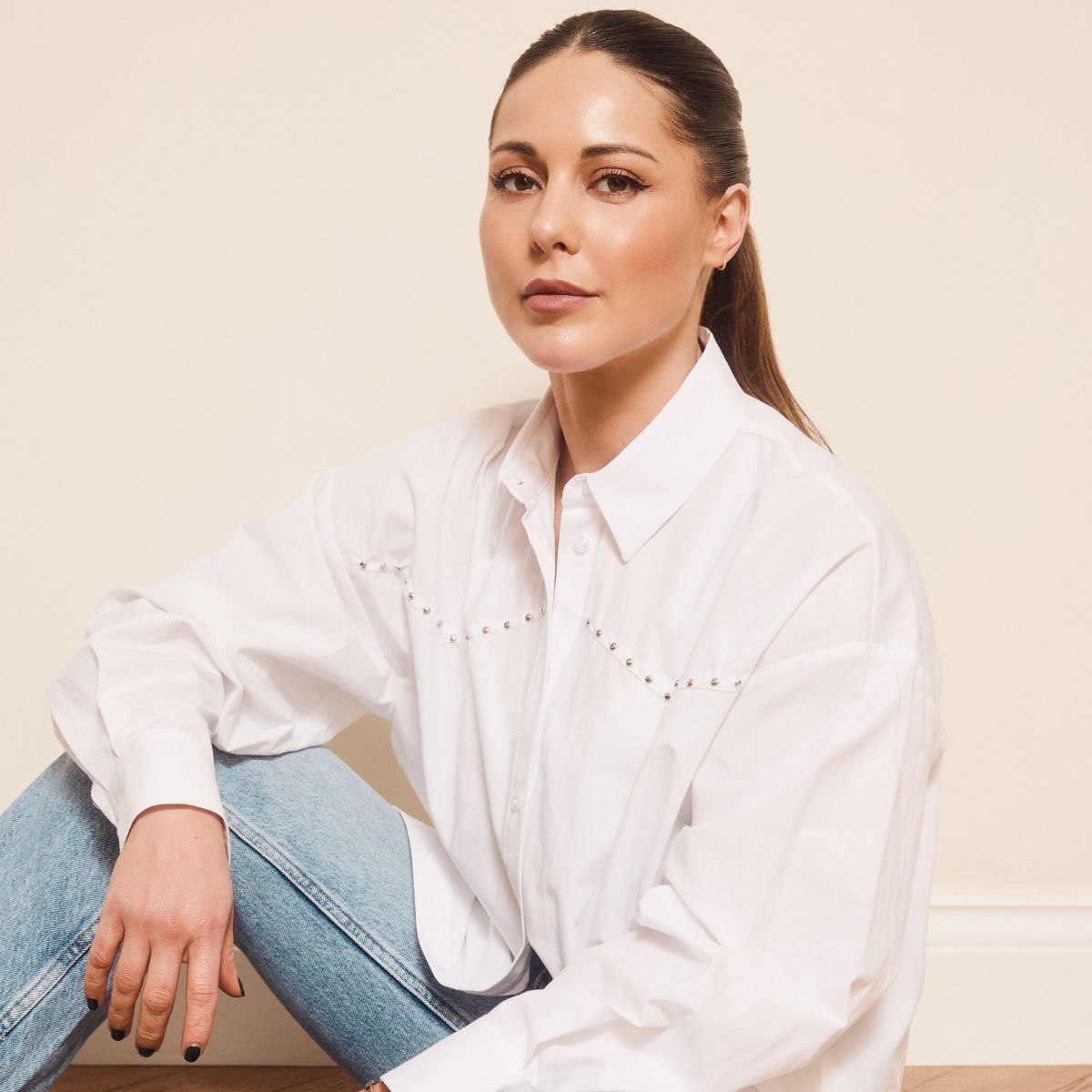
Four years after nearly dying during childbirth, Louise Thompson still finds herself poring over scan reports late into the night, trying to understand just what exactly happened to her. She went into hospital as a healthy young woman to give birth to her son and left physically and psychologically traumatised, facing years of surgeries, recovery and unanswered questions.
Thompson, a former reality TV star turned author and activist, has spoken publicly about birth trauma, emergency surgery and the perilous road to recovery before. But what continues to surprise her is not just the trauma itself, but the realisation that some experiences don’t simply fade with time and that perhaps the only way to make sense of the pain is to turn it into purpose.
Here, she reflects on living with the aftermath of the birth that almost killed her, the anger that followed, and why revisiting the darkest period of her life ultimately led her to campaign for change in maternity care.
Sign Louise’s petition for a Maternity Commissioner to improve maternity care for mums and babies here
What It Feels Like To Turn Pain Into Purpose
As told to Mischa Smith
If I think about my birth experience now, four years later, my mind goes to Saturday night last weekend. I’d had a day to myself. My son and my partner were away. Most parents would think that’s a really joyful experience, having a day to themselves. But I’d been hugely triggered by a book I’ve tried to read fairly regularly over the last four years: The Body Keeps the Score.
Reading about trauma and about other people’s experiences has really reaffirmed to me that this is not something that I will ever get over. It opened the floodgates again. Then, after a very, very dissociated day on my own, where everything flooded back into my mind, I spent four hours reading through scan reports and being reminded of everything that had happened. It’s genuinely bizarre to me that, as an intelligent young woman, I still haven’t managed to digest all of the information that’s happened to me.
My health was taken away from me
I was putting scans into AI, creating emails to send to medical professionals and lawyers, trying to figure out what the hell really happened, because ultimately, I was a super healthy person who had everything going for me. A lot of privilege.
That was all basically ripped away from me. My health was taken away from me. It was incredibly scary; there’s no better word than scary. I was full of fear 24 hours a day, and I feel pretty angry as well.
There are women who are probably dying right now, frankly, and I think it’s fucking unacceptable. It’s unacceptable. It is one of the grossest failings in humanity that women are treated like this.
The lack of education around hormones and women’s health and maternity care in this country is ruining people’s lives so that we cannot live full, interesting, happy, efficient, productive lives. Women are being held back. The more I dig into this, the more I realise that every single day someone is coming to me with a story, and it makes me feel sick to my core.
People often think about birth trauma as one moment, but every single part of our world was shattered the day I went into that hospital.
Four years later, Ryan is still affected by what happened. We watched that Panorama together, and he threw up all night afterwards. That is the visceral reaction people can have years after a traumatic birth.
People often think about birth trauma as one moment, but every single part of our world was shattered the day I went into that hospital. Every single thing. The lack of someone writing the right thing on the whiteboard, the investigation, the birth debrief, the information that was wrong; it’s everything. It was a complete car crash.
@louisethompson ♬ original sound - Louise is getting better
I lost 12.5 litres of blood in a year, and I had to have my colon removed; it’s phenomenally upsetting. And what I’ve realised since is that this isn’t an isolated incident. When this first happened to me, I left the hospital, and I couldn’t really speak to anybody for months. If someone said, “Oh, my birth was quite bad as well,” I would think, there’s no way anyone could be on the same wavelength as me, but the more I speak publicly about my situation, the more I realise there are thousands of women. Tens of thousands of women.
Over 150,000 people signed our petition in less than three months. People are being told that what happened to them is normal. They’re being told that they’re the problem. They go home assuming there’s nothing they can do.
@louisethompson ♬ original sound - Nathan
Speaking publicly wasn’t something I planned; I think I was still quite numb when I started sharing things online. I wanted to explain that I’d had a baby and that the circumstances were weird. I was so used to sharing everything publicly that not sharing felt really jarring. In some ways, it connected me with my old self, and I found writing became an outlet.
I would lie in bed with my son for hours while he slept, and I’d write these captions and just mind-dump. I found this connection with writing that I’d never had before. I’ve always been a control freak; I could never express myself so freely, but I actually just didn’t care. I had nothing to lose. I was like: I don’t care if everybody hates me. My life couldn’t be any worse.
There was a phase where people around me suggested I stop sharing such honest accounts of my mental health because they worried I was holding onto things for too long, they worried it might put off work opportunities, but I couldn’t stop.
I’d already lost so much; two of my businesses were basically wiped out as a result of the birth trauma, and one even destroyed my relationship with a business partner. I couldn’t go back to being the person I was before.
It’s only really been in the last year that something has shifted. Now I’m sharing more to help other people versus helping myself, and that’s partly because I’ve realised how many women have been through something similar.
I remember when women I knew started telling me about their own experiences; women I’d gone to university with, women who nearly died, women who couldn’t access their medical notes. I even spoke to doctors who had experienced traumatic births themselves. Consultant obstetricians and gynaecologists who told me this was a problem.
Even people who worked at the hospital where I had my traumatic birth told me they supported what I was doing; that was when I realised this wasn’t personal, it really is a systemic issue. And once you see that, it’s impossible to ignore.
My book happened to come out the exact week the Birth Trauma Inquiry was published. I connected with Theo Clarke, who became my co-petitioner, and when we met, we realised we needed to do something.
Since then, the campaign has become a huge part of my life. Suddenly, I’m hiring someone with a political background, I’m speaking to MPs, I’m meeting policymakers, I’m reading medical negligence cases at two in the morning – I never imagined any of this would become my life, but I think I’ve realised that if we don’t keep talking about it, nothing changes, and women deserve better than this.
The public cares deeply about this issue; the question is whether the people in power will listen. My long-term goal is to set up a charity facility for women. I’ve realised I’m going to have to network, ask people for help, and keep having difficult conversations – none of that comes naturally to me. But the time is now to put on my big girl pants and see where we can go with it. Because the thing I’ve learned over the last four years is that recovery and forgetting are not the same thing. And some experiences change you forever.