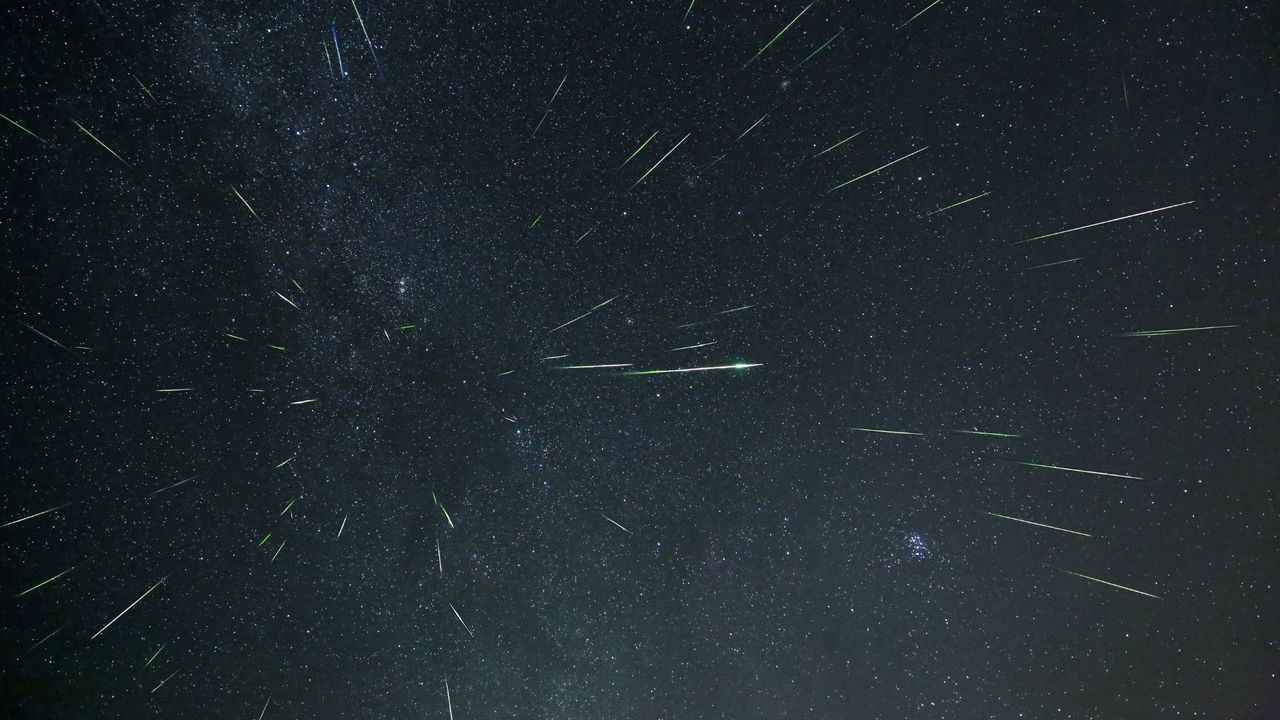
The Perseid meteor shower dazzled stagazers with a spectacular natural light show around its peak on Aug. 12-13. But could we be in for even more impressive displays of shooting stars in the years to come?
Perseid shooting stars can be seen each year as Earth crashes through the trail of debris shed by the icy comet 109P/Swift-Tuttle. Many of these cometary shards are no larger than a single grain of sand. Yet they're capable of burning bright enough to be seen with the naked eye as they collide with our planet's atmosphere at 37 miles (59 kilometers) per second, often destroying themselves in the process.