
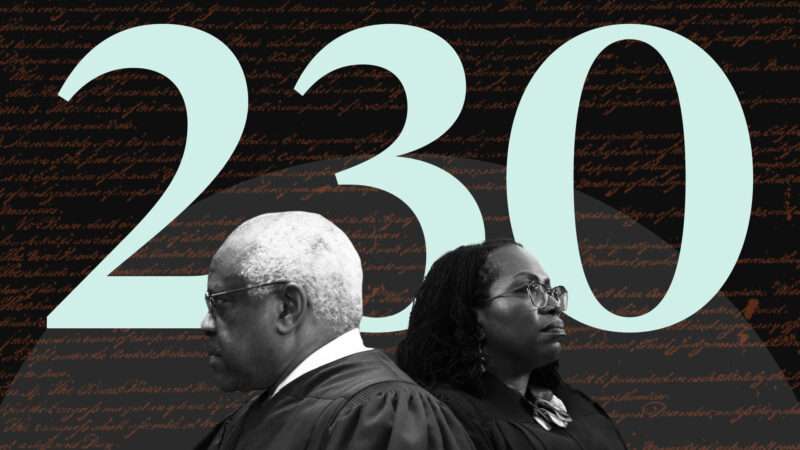
Justice Clarence Thomas has emerged in recent years as the Supreme Court's biggest critic of Big Tech. Like many modern conservatives, Thomas seems to believe both that social media companies routinely censor conservative viewpoints and that the government should do something about it. Thomas has even spelled out his own preferred vision of how the government might more aggressively regulate social media platforms.
That was the Thomas I expected to hear from today when I tuned in to the oral arguments in Gonzalez v. Google, one of the most significant Big Tech cases on the Supreme Court's docket in recent years. To my surprise, however, Thomas seemed quite skeptical about some of the key arguments made against Google. "I don't understand how a neutral suggestion [by YouTube] about something that you've expressed an interest in is aiding and abetting," he declared at one point. "I don't understand it." Google's lawyers were undoubtedly happy to hear that.














