Get all your news in one place.
100’s of premium titles.
One app.
Start reading
Kiplinger
Kiplinger
Business
Coryanne Hicks

Is It Too Late to Invest in Bitcoin?

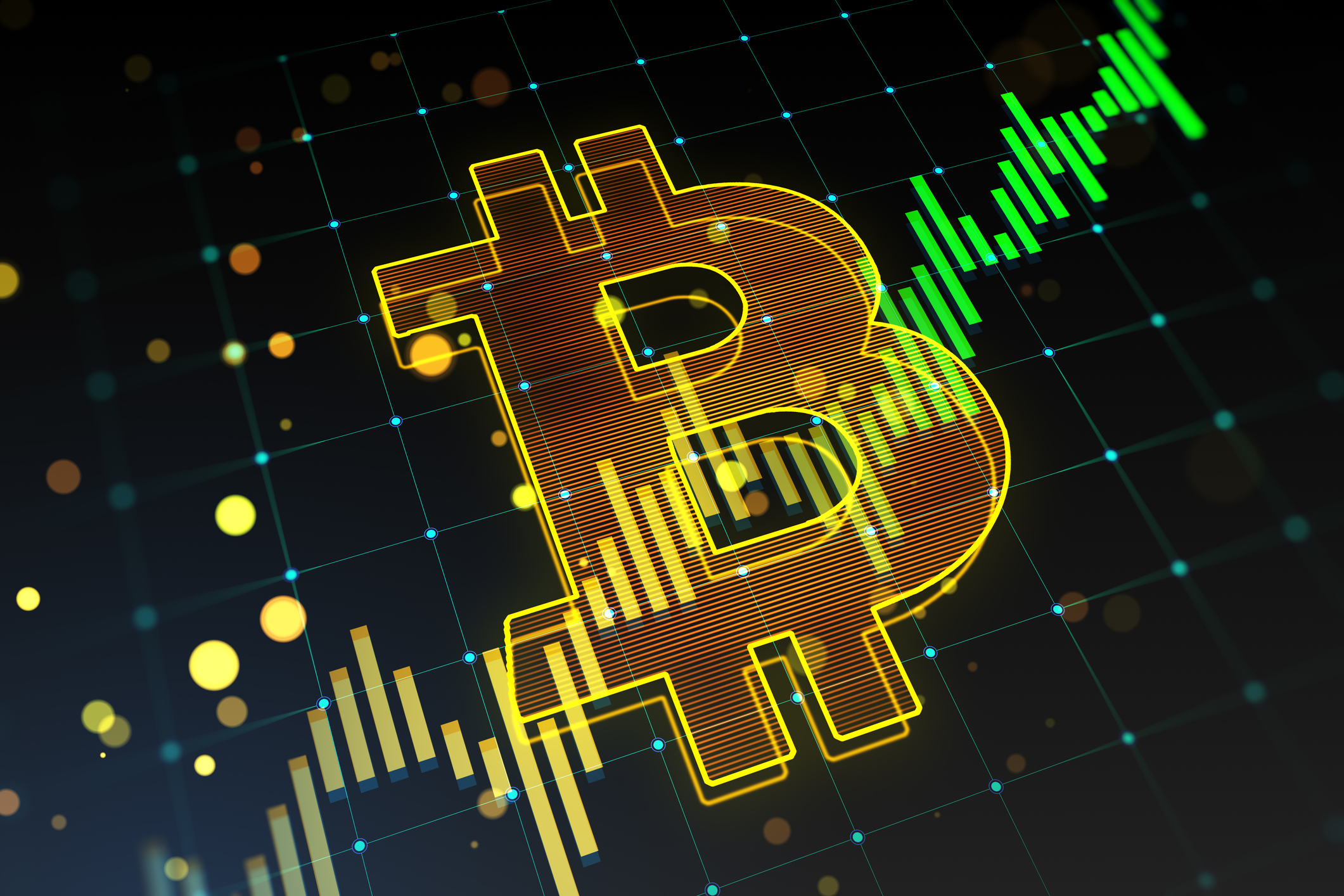
(Image credit: Getty Images)

Few things can capture an investor's imagination like FOMO, especially when that fear of missing out is rooted in six-figure-profit stories. Such was likely the case for investors who witnessed the price of bitcoin rally to record highs in late 2025.

If you've been on the bitcoin bandwagon for a good length of time, you were probably one of those singing a merry tune amid the cryptocurrency's meteoric rise.

But if you're among the multitudes who have shied away from what remains a volatile asset, perhaps you saw its recent pullback and started wondering if it's time to position for bitcoin's next leg higher?

Bitcoin past, present and future

Before you can determine if bitcoin is a good investment today, you need to be sure you understand what you're getting into.

Bitcoin is a decentralized asset, meaning there is no government or bank acting as a central authority overseeing it. This puts it in a weird regulatory grey area that also makes it susceptible to fraud and scams.

For example, in 2011, Mt. Gox, the largest bitcoin exchange at the time, was hacked. The hackers made off with millions of user funds, but even investors who were not directly involved took a hit when the price of bitcoin plummeted more than 90%.

This is important for prospective investors to keep in mind: bitcoin can fall as fast as it can rise — if not even faster. Indeed, we just witnessed a massive liquidation event in late 2025 when the price of BTC crashed more than 30% from October to November.

That said, bitcoin has rebounded off its late-2025 lows. And while the cryptocurrency will probably continue to be a rocky ride, experts say the chances of it going to zero are unlikely.

"Too many large institutions own cryptocurrencies," says Dan Casey, founder of Bridgeriver Advisors and Panic Proof Retirement. "Whether you understand the blockchain or not, cryptocurrency is here to stay."

Additionally, Congress is currently considering additional legislation to create more regulatory boundaries for cryptocurrency. In 2025, the GENIUS Act, which developed guardrails for stablecoins, was signed into law.

There's also the Digital Asset Market Clarity Act, which would outline a system for regulating digital assets, and the Anti-CBDC Surveillance State Act, which would ban the Federal Reserve from releasing a digital currency with congressional approval.

These regulatory frameworks "would provide the institutional 'seal of approval' needed for the next leg of the bull cycle," says Matt Mena, crypto research strategist at 21shares.

What is the current bitcoin price relative to its all-time high?

As of Tuesday, January 13, bitcoin was trading near $93,580. This is roughly 25% below its all-time high of $124,752.13 from October 6. Bitcoin is up roughly 7% so far in 2026 and flat relative to its year-ago price level.

The digital asset is now trading comfortably above the $90,000, which served as resistance in late 2025, says Mena. "Institutional funds are redeploying capital, and on-chain data confirms that whales (wallets holding 1k–10k BTC) ... pivoted from distributors to aggressive net buyers in the first week of 2026."

Mena believes this "smart money" pivot could keep the wind at bitcoin's back.

How do interest rates and inflation impact the outlook for bitcoin in 2026?

Bitcoin rallied hard throughout most of 2025 as expectations that the Federal Reserve would lower interest rates increased investors' appetites for riskier assets.

Uncertainty over President Donald Trump's tariff policies, sticky inflation and the Fed's rate-cut plans certainly increase the likelihood of volatility.

But David Hernandez, crypto investment specialist at 21shares, believes bitcoin, because it is "a scarce risk asset," could be in a position to benefit no matter what the central bank does with the federal funds rate.

"If rates keep coming down, cheaper money could flow into bitcoin," says Hernandez. "If rates stay elevated, investors could view the asset through its emerging store-of-value lens, seeing its finite supply as an essential hedge against the central bank's difficulty in taming inflation without crashing the economy."

What are the risks and volatility factors with investing in bitcoin?

So the question remains: Is it too late to invest in bitcoin? Ultimately, the answer rests with you, your financial goals and your tolerance for risk.

The fact of the matter is the cryptocurrency market will continue to be volatile, due in part to uncertainty over macroeconomic factors such as inflation and interest rates and potential regulatory delays. That said, Bernstein analyst Gautam Chhugani is optimistic about where bitcoin is headed in 2026.

He believes bitcoin bottomed near $80,000 in Q4 2025 and will end 2026 closer to $150,000. Key catalysts for cryptocurrency, according to Chhugani, are the passage of the CLARITY Act, which he expects in Q2, and the Securities and Exchange Commission's (SEC) crypto innovation exemption, which will allow companies an easier path to test new products.

If you do choose to invest in bitcoin, most advisors recommend limiting your investment to 1% to 5% of your net worth, says R.J. Weiss, a certified financial planner and CEO of The Ways to Wealth. The real question to ask yourself isn't if now is a good time to invest in bitcoin. Rather, your focus should be on whether it "has a long-term place in your portfolio, depending on your goals and risk tolerance."

If a 50% drop will make you panic, this likely isn't the investment for you.

How to invest in bitcoin

If you've decided to invest in bitcoin today, the next question is how to do it. Luckily, modern finance is your friend. You can start investing in bitcoin with as little as $1 through a broker such as Fidelity or an exchange that lets you buy bitcoin tokens on a per-dollar basis.

However, you'll need a place to store those coins, typically with a crypto wallet or with an exchange. Both of these methods are susceptible to hackers and scams.

Another way to invest in bitcoin is through a bitcoin ETF. These funds are designed to track the price of bitcoin, and they trade just like any of the best ETFs to buy.

They can be easier and more familiar than buying bitcoin tokens. And they can even hold a variety of different cryptocurrencies. You also won't need to store your crypto keys in a wallet or on an exchange.

Bitcoin ETFs let you participate in bitcoin's price appreciation (or depreciation) through a more secure channel – but know that you don't own actual BTC. You own shares of the fund. These funds also come with expense ratios, so ensure the benefits outweigh the costs.

Whatever method you choose to invest in bitcoin, have an exit strategy in mind.

"Given bitcoin's volatility and cyclical peaks, it may be wise to take profits gradually or begin exiting well before the projected cycle top," says Utkarsh Ahuja, founder and managing partner of Moon Pursuit Capital.

Ahuja notes that "institutional investors, well-versed in bitcoin's cycles" will trade in a way that increases risk for retail investors who try to time the market.

It's important to put the same level of thought and care into how and when you'll sell as you do into whether you should invest in bitcoin in the first place.

Related content

Sign up to read this article
Read news from 100’s of titles, curated specifically for you.
Already a member? Sign in here
Related Stories
Top stories on inkl right now
One subscription that gives you access to news from hundreds of sites
Already a member? Sign in here
Our Picks
Fourteen days free
Download the app
One app. One membership.
100+ trusted global sources.