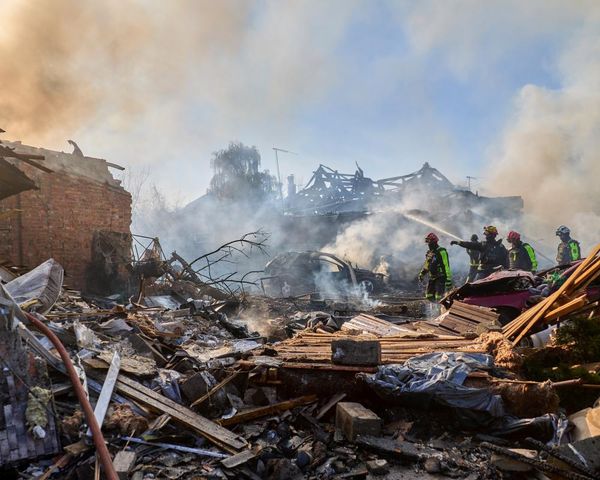
Conflict in the Middle East has escalated after the US and Israel launched a wave of strikes, killing Iran’s Supreme Leader Ali Khamenei.
Blasts were reported in Jerusalem in Israel, Dubai, Abu Dhabi in the UAE, Doha in Qatar, and Manama in Bahrain on the third day of the conflict.
Meanwhile, Israel launched a wave of missile and drone attacks on Hezbollah-controlled southern suburbs of Beirut in Lebanon on Monday and ordered evacuations.
Holidaymakers who have trips booked in the region are advised to follow the advice of the UK’s Foreign Office (FCDO) on what to do if they are heading to or are currently in a country in the Middle East.
Live: Iran-US war latest
Is it safe to travel to Jordan?
FCDO advises against all travel to within 3km of the border with Syria. The rest of the country, including popular tourist hotspots such as Amman, Wadi Rum and Petra, has no warnings against them.
What is the UK government's advice if you are already there?
The FCDO updated its travel advice for Jordan on Friday, 27 February.
The advice reads that “regional escalation poses significant security risks and has led to travel disruption”.
Travellers are directed towards its “crisis abroad” guidance, which includes a list of emergency supplies in the event of an escalation.
It also says to sign up for FCDO Travel Advice email alerts, monitor local and international media for the latest information, sign up to local information alerts and follow the instructions of the local authorities.

The FCDO also says to stay away from areas around security or military facilities. Departure plans should be kept under review and documents should be up to date.
It adds that if you are advised to take shelter, stay indoors or find the nearest safe building or designated shelter. An interior stairwell or a room with as few external walls or windows as possible may provide additional protection.
How can I get home?
Flights are still departing from Amman Queen Alia International Airport in Jordan, although many are subject to cancellations and delays.
For example, a 9.10am (local time) British Airways flight to London was cancelled on Monday morning but a Royal Jordanian flight to London departed on time at 12.15pm.
If your flight is cancelled, you are covered by UK law if you are arriving at an airport in the UK on an EU or UK airline.
Airlines must provide you with care and assistance if your flight is cancelled, meaning they must supply you with food and drink (often provided in the form of vouchers), means for you to communicate (often by refunding call costs), accommodation if you are given a new flight the following day, and transport to and from the accommodation or your home.
The airline must provide you with these items until it is able to fly you to your destination, no matter how long the delay lasts or what has caused it, the Civil Aviation Authority says.
Can I cancel my holiday?
The FCDO has not warned against non-essential travel to parts of Jordan where tourists usually visit. So in these places, there will be no special circumstances in place to be able to cancel a trip for a full refund.
The conditions for cancelling your trip will be dependent on your holiday provider, so it’s best to contact them if you’re looking to postpone.
There is no obligation for companies to refund bookings if you want to cancel, and you will not be able to claim on your travel insurance due to safety concerns unless government advice changes.
Check your insurance policies and speak to your insurer to see where you stand.
Read more: Plans being drawn up for Muscat airlift to rescue stranded Britons from Dubai and Abu Dhabi
Is it safe to travel to Bahrain? Latest advice
Is it safe to travel to Dubai and Abu Dhabi? Latest UAE travel advice
Is it safe to travel to Egypt? Latest advice
Plans drawn up for Muscat airlift to rescue stranded Britons from UAE
Travel chaos as all UK flights to and from Middle East grounded for days
Thousands of flights disrupted as travel chaos deepens after Iran hits airports