
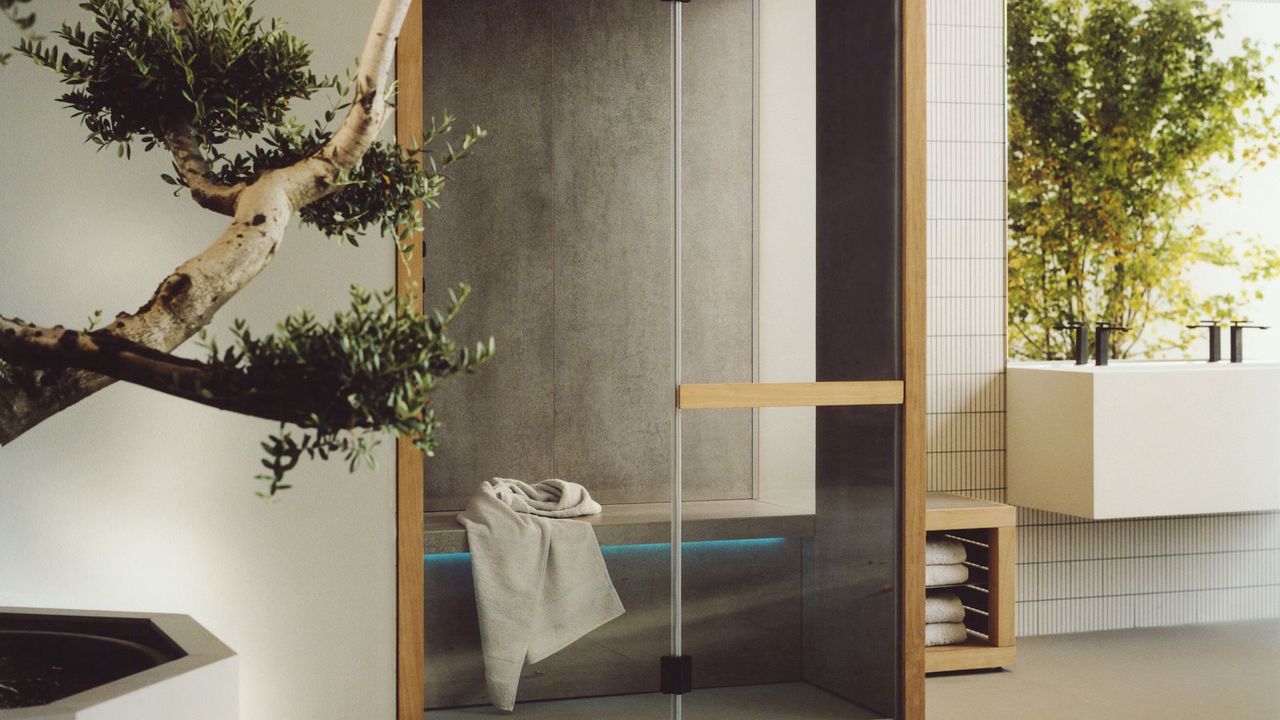
This year has shifted the spotlight onto home wellness in a big way, and I'm predicting that 2026 will only see this desire for restorative spaces flourish in kind. And at the top of my considerations on where the trend will hit, I see bathrooms being first in line, with steam showers at the very top of the list.
Rather than having to carve out space for a dedicated sauna room, a steam feels like a more approachable and equally restorative design idea for your shower room. But how do you know if this is the wellness space for you?

Well, first, let's take a look at what a steam shower is and how it's different from your everyday shower.
What Is a Steam Shower?

"A steam shower is a specially built, enclosed shower cubicle fitted with a steam generator," says Joel Fry, designer at West One Bathrooms. "A steam shower room is often designed with minimal gaps to trap steam and tends to feature a built-in seat or bench when space allows."
When it comes to designing a steam shower room, Lauren Feurich, senior designer at Drury Designs, tells me that this bathroom space needs to be entirely enclosed so that the steam stays within the shower.
"Because of this key aspect of steam shower room design, every surface within this home wellness zone needs to be clad with water-resistant material such as tile or stone slabs," she notes.
Some steam showers, like this Kohler Polished Chrome Steam Kit, also come with aromatherapy reservoirs to enrich this ritual with a fragrance that fits your vibe.
And while it might sound like a demanding design, a steam shower can be outfitted in your current bathroom with just a couple of tweaks. No longer will you have to yearn for a vacation to unwind in a stylish, steamy space when you have a spa bathroom like this at your fingertips.
How Is a Steam Shower Different to a Regular Shower or Sauna?

If, like me, you take hot showers that leave your bathroom warm and steamy long after you wrap up in a towel, then you're probably wondering what the true difference is between a regular shower room and a steam shower room.
Lauren tells me that of these types of showers, the latter uses hot steam, which warms the air to make your bathing environment humid. "The temperature in a steam shower is around 38°C to 50°C, while a sauna is quite hotter at 75°C to 95°C," she adds.
"And in the case of a regular shower, you'll find standard fixtures where heat is generated through a thermostatic valve in the wall. This means you can typically expect temperatures of around 38°C."
As you can tell, the major difference between these spaces is the temperature. And the steam shower is a happy medium for wellness aficionados who crave respite but don't quite have the room for a home sauna.
What Are the Benefits of a Steam Shower?

On the surface, Lauren points out that steam showers are great for a spa relaxation feel, all while being in the comfort of your home. "The steam provides many health benefits as well," she adds. "For instance, it can reduce stress, increase circulation, and improve skin health."
Joel agrees, saying, "When it comes to using a steam shower room, the main benefits include opening airways and pores. Additionally, it also aids in relieving congestion, which can be helpful for allergies and asthma."
With self-care being a clear ambition in wellness-led homes, it makes sense that shower trends catering to this elevated lifestyle are the talk of the town. And since a hot shower before bed is sleep expert-approved, this bathroom design idea is one worth considering.
What Are the Disadvantages to a Steam Shower?

"One disadvantage to these showers is that steam can generate germs. Hot, moist areas need to be cleaned regularly, and it is very important at the installation stage that all the surfaces in the steam shower are well-waterproofed," says Lauren. "Overall, they are more expensive than a standard shower, too. This is because of the increased labor and materials for installation. Plus, they require a lot of water and energy to use."
The upkeep of steam shower rooms is a non-negotiable, and the design costs are understandably upcharged when considering the additional requirements. But if it's the water and energy that you're concerned about, my advice would be to use your regular shower on a daily basis and make use of the steam as an end-of-week treat or whenever your heart desires a dose of wellness.
Operating these high-energy wellness spaces with intention is key. It will help you embrace modern bathroom trends and enjoy moments of solace in a steamy shower while acting sustainably to limit its usage.
Stylish Bathroom Accessories
Color: Blue
This Ceramic Soap Dish from Ferm Living makes me want to give up my shower oil for bar soap. I mean, just picture it with this iconic Tomato Leaves Loewe Soap.
Size: 61 cm x 11 cm x 31 cm
NEXT shower caddies are the stylish, reasonable must-haves to keep your bathroom organized.
Color: Dark Forest
To me, nothing says luxe bathroom quite like soap dispensers that match your marble. And this range from Mette Ditmer includes a couple of finishes to pick from.
FAQs
How Long Should You Spend in a Steam Shower?
According to Lauren, the recommended time to stay in a steam shower varies. "For beginners, it’s best to start off with five to ten minutes," she says. "However, once your body starts acclimating to the steam shower environment, you can extend the time to 15 to 20 minutes."
What is a Necessary Design Component in a Steam Shower?
"I think it’s always best to include an operational transom window somewhere within the shower glass," says Lauren. "This is typically located above the shower door, but doesn’t have to be. Including a transom window will allow flexibility of ventilation for the shower when not using the steam generator so that the space doesn’t get too hot."
Now, while you ponder over the idea of bringing home a steam shower, let me leave you with some more inspiration to elevate this zone in the form of smart bathroom technology trends for a totally relaxing sanctuary.