
Get all your news in one place.
100's of premium titles.
One app.
Start reading
Marie Claire
Marie Claire
Lifestyle
Lottie Winter

Is Gel Polish Inherently Problematic? Inside Gel Polish’s Never-Ending Safety Scandals

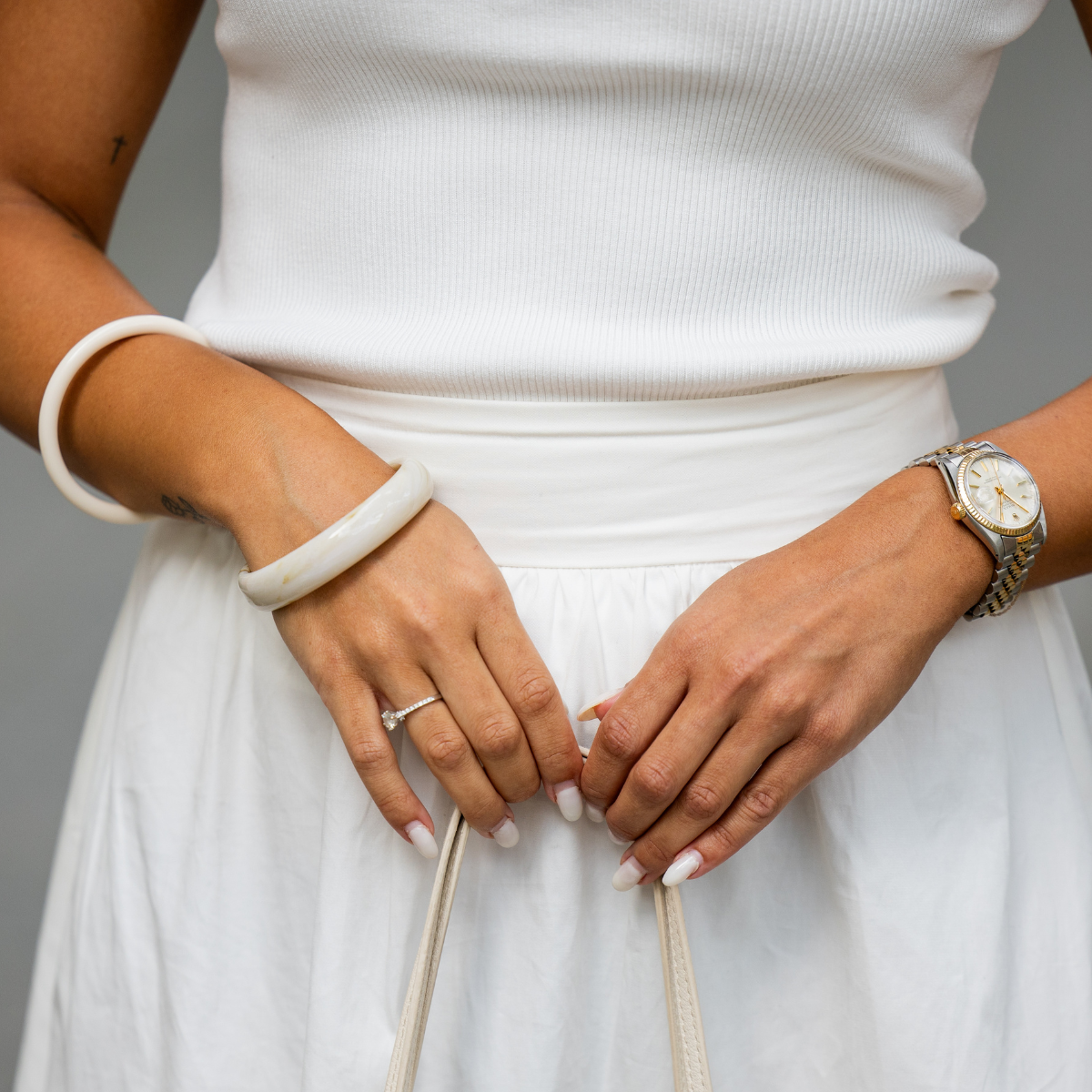
Gel nail polish ban Bella Emar wears white Polo Club Top, white high waisted Sézane Skirt, white bag, Rolex Datejust watch on August 03, 2025 in Berlin, Germany.

Gel manicures changed the nail game with their chip-free, high-shine finish and, over the past decade, have become a staple of beauty maintenance for many. But their rise hasn’t come without challenges. In fact, no other corner of the beauty world has weathered quite as much controversy. Gels have been at the centre of repeated safety scares: UV lamps accused of causing premature ageing and raising skin cancer risk; allergy-triggering acrylates like HEMA driving a spike in skin reactions.

Most recently, TPO—or trimethylbenzoyl diphenylphosphine oxide, a photoinitiator used to harden gel polish under a lamp—was banned in the EU from September 2025 after being classified as a Category 1B reproductive toxicant, based on animal data. Great Britain has since followed suit: new cosmetic products containing TPO can no longer be placed on the market from 15 August 2026, with a transitional period for products already on the market running until 14 February 2027.

Each time, the industry has reformulated, and clients have returned—a testament to just how transformative gel nails are. Yet the never-ending cycle of alarm bells begs the question: are gel nails inherently problematic?

The nature of gel polish

Traditional nail polishes are composed of pigment and resins dissolved in solvents. As it dries and the solvents evaporate, it leaves a film of colour over the nail bed. There is no chemical reaction—it's just drying out. Gel, on the other hand, doesn't dry—it 'cures'. It relies on a process called polymerisation where tiny liquid building blocks link together to form a plastic-like coating. To make this happen, the formula needs to contain photoinitiators (like TPO), which are chemicals that react to UV or LED light and kickstart the polymerisation reaction.

Because the whole product depends on a chemical reaction triggered by light, gel polish must contain reactive ingredients that are more prone to regulatory scrutiny. But without them, the gel would just sit on the nail as a sticky liquid.

The history of red flags

Over the past decade, gels have endured a series of safety scandals. UV lamps were accused of accelerating skin ageing and raising cancer risk. In 2010, the first case reports surfaced documenting women with non-melanoma skin cancers on the backs of their hands after years of regular gel manicures, and the media quickly ran with it. However, the evidence is scanty, and the overall risk appears to be low.

Then there were the allergic reactions to HEMA, or 2-Hydroxyethyl methacrylate, that is used in gels to help adhesion between the natural nail plate and the gel layer. Because of its small molecular weight, it can penetrate the skin incredibly easily, and if it contacts skin repeatedly, it can trigger allergic contact dermatitis—red, itchy, blistered skin around nails, fingers, and sometimes even eyelids or face.

Most recently, the EU banned TPO, or trimethylbenzoyl diphenylphosphine oxide (a commonly used photoinitiator that is responsible for hardening gel polish under a lamp) classifying it as potentially carcinogenic, mutagenic, or toxic for reproduction (CMR 1B) based on animal studies.

Each time a scandal breaks, brands have worked hard to reformulate without the problematic component—and clients have happily come back to salons.

Why the constant scrutiny?

It can feel as though regulators have a particular bugbear with gel nails. But with millions of us having gels reapplied every few weeks, there's a high level of chronic, repeated exposure—not to mention the thousands of nail technicians who are working with the products on a daily basis.

The EU takes a particularly precautionary approach to cosmetic ingredients, meaning substances classified as carcinogenic, mutagenic or toxic to reproduction are generally prohibited, even where there isn’t evidence that typical cosmetic use is causing harm in humans. The US takes a different approach: most cosmetic ingredients don’t require FDA approval before they reach the market, although brands are legally responsible for ensuring their products are safe when used as intended.

So, are gels inherently problematic?

So, do all these red flags point to a product that is fundamentally unsafe? The truth is more nuanced. Gels will always rely on reactive chemistry to deliver their performance, but that doesn’t mean they can’t be made safer. Indeed, each wave of regulation has nudged the category forward, replacing risky ingredients with less problematic alternatives.

That said, it never hurts to dial back the frequency of your gel appointments and swap in a traditional polish now and then can help minimise the cumulative damage associated with repeated application and removal.

The brands leading the way

Manucurist's at-home gel nail polishes have been TPO-free since 2019. They're also fortified with patented KeraHCE+ technology to help strengthen the natural nail and are free from toxic ingredients and endocrine disruptors. The formulas are designed with larger molecules that aren’t absorbed by the skin, reducing the risk of reactions, all while delivering a glossy finish in a wide spectrum of shades that stay chip-free for up to 14 days.

Kure Bazaar has always paved the way when it comes to combining colour with care, but their new collection of nail therapy products takes it to new levels. The Colour Repairing Serums feature highly targeted active ingredients, including skincare actives like Centella Asiatica and Buckwheat Extract, to help protect and strengthen nails, all the while delivering beautiful, glossy colour.

Leighton Denny MBE, internationally recognised nail expert and founder of Leighton Denny Nails, has long championed a “skincare for nails” philosophy, developing formulas designed to nourish and strengthen the natural nail rather than simply cover it up. He also promotes a balanced approach: enjoy gels when you want them, but alternate with restorative, gel-free colours and treatments when your nails need time to recover.

Sign up to read this article
Read news from 100's of titles, curated specifically for you.
Already a member? Sign in here
Related Stories
Top stories on inkl right now
One subscription that gives you access to news from hundreds of sites
Already a member? Sign in here
Our Picks
Fourteen days free
Download the app
One app. One membership.
100+ trusted global sources.