Get all your news in one place.
100’s of premium titles.
One app.
Start reading
We Got This Covered
We Got This Covered
Jaymie Vaz

IRS just admitted to a massive privacy failure – handing thousands of confidential taxpayer files straight to ICE

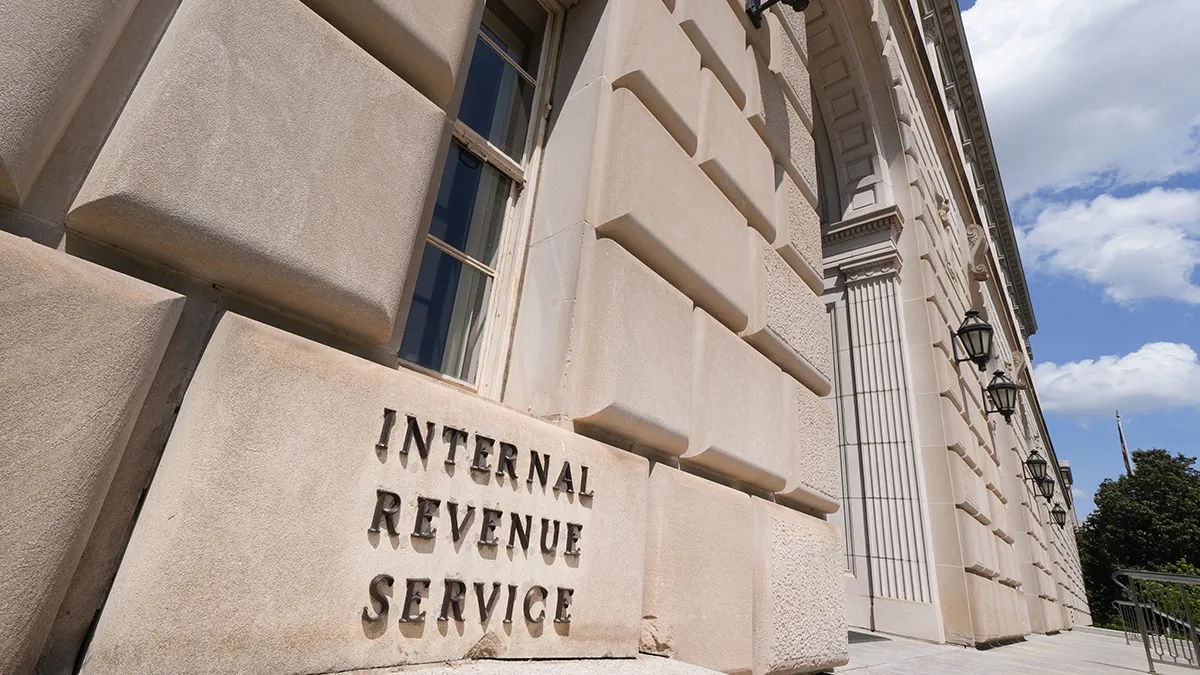
The Internal Revenue Service (IRS) just admitted to a monumental privacy failure. Newsweek reported that they improperly disclosed confidential taxpayer information of thousands of people to the Department of Homeland Security (DHS) and U.S. Immigration and Customs Enforcement (ICE). The IRS also confirmed that it shared data even in cases where the DHS lacked sufficient information to positively identify the specific individuals.

This shocking admission came via a court filing this week, surrounding a data-sharing agreement signed by Treasury Secretary Scott Bessent and Homeland Security Secretary Kristi Noem in April 2025. The agreement was designed to assist immigration enforcement by allowing ICE to submit lists of names and addresses of people they believed were in the United States illegally, which the IRS was supposed to cross-check against tax records.

The IRS’s chief risk and control officer, Dottie Romo, provided the specific details in a sworn declaration. Romo stated that the agency received requests for 1.28 million names from ICE. While the IRS was able to verify about 47,000 names, it made an error. For roughly five percent of those individuals, the IRS provided additional address details that very likely violated federal confidentiality protections for tax records.

It looks like the IRS made up for incomplete ICE data by providing confidential information

The data file ICE supplied included fields like first and last name, Social Security number, the date of a final removal order, and an address field labeled “EARM_ADDRESS.” Romo later confirmed that the IRS provided addresses even in instances where the ICE-supplied address field “was either incomplete or insufficiently populated.” 

Federal law generally imposes extremely strict confidentiality requirements on tax information. Disclosing this data outside of narrowly defined exceptions can trigger both civil and criminal penalties. As a result, a federal judge had previously ordered the IRS to stop sharing residential address information with ICE, and another court had blocked the agreement entirely, ruling that it likely violated taxpayer privacy protections.

Romo said the Treasury Department informed the DHS of the error back in January and sought assistance in fixing and disposing of any improperly shared data quickly. The filing also states that the DHS and ICE have confirmed they will comply with federal law and, pending litigation, “will not inspect, view, use, copy, distribute, rely on, or otherwise act on any return information” disclosed under the agreement. 

For experts, this failure proves exactly why these protective barriers are necessary. Tom Bowman, policy counsel for the Center for Democracy & Technology, reacted strongly to the news. He stated: “This privacy failure is a stark reminder of why safeguards for sensitive data are so critical. The improper sharing of taxpayer data is unsafe, unlawful, and subject to serious criminal penalties.” He pointed out that any inevitable mistakes will impact innocent people.

ICE agents have been increasingly mining confidential sources to track down individuals, and it has been endangering lives. It has led organizations and politicians to take a stand to prevent the illegal sharing or seizure of information.

Sign up to read this article
Read news from 100’s of titles, curated specifically for you.
Already a member? Sign in here
Related Stories
Top stories on inkl right now
Our Picks
Fourteen days free
Download the app
One app. One membership.
100+ trusted global sources.