
Get all your news in one place.
100's of premium titles.
One app.
Start reading
LiveScience
LiveScience
Laura Geggel

Iron oxide baked into Mesopotamian bricks confirms ancient magnetic field anomaly

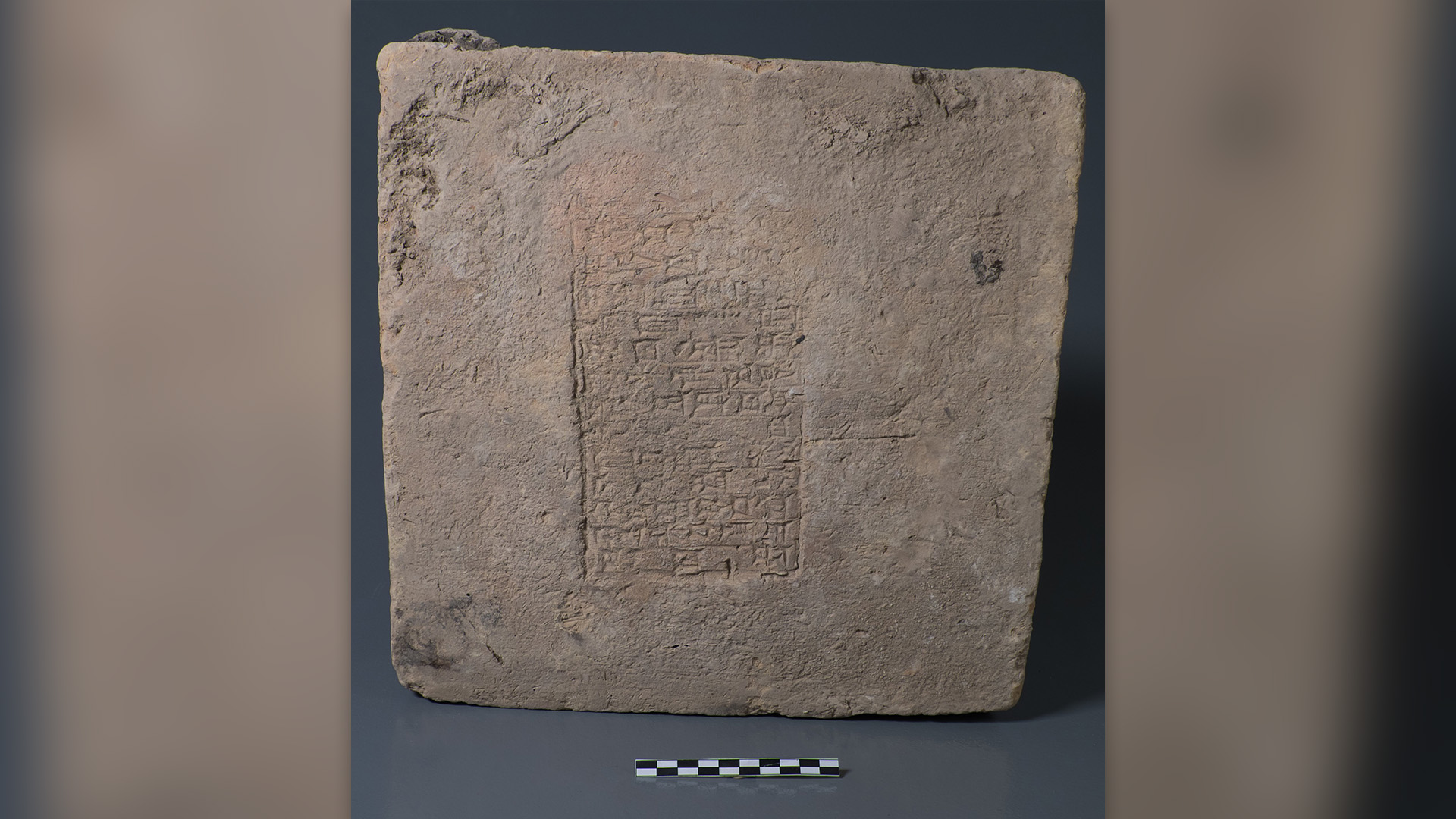
A brick dating to the reign of Nebuchadnezzar II (circa 604 to 562 B.C.), according to the inscription. This brick, which was looted and is now housed in the Slemani Museum in Iraq, and others helped researchers confirm an ancient magnetic field anomaly.

Ancient bricks from Mesopotamia have helped confirm a mysterious anomaly in Earth's magnetic field that occurred 3,000 years ago, a new study finds.

Brickmakers baked the bricks, which were imprinted with the names of Mesopotamian kings, between the third and first millennia B.C. Iron oxide grains within the clay recorded changes in Earth's magnetic field when the bricks were heated, enabling scientists to reconstruct changes in the magnetic field over time, the team reported in a study published in the journal PNAS on Monday (Dec. 18).

Sign up to read this article
Read news from 100's of titles, curated specifically for you.
Already a member? Sign in here
Related Stories
Top stories on inkl right now
One subscription that gives you access to news from hundreds of sites
Already a member? Sign in here
Our Picks
Fourteen days free
Download the app
One app. One membership.
100+ trusted global sources.