
Get all your news in one place.
100's of premium titles.
One app.
Start reading
Digital Camera World
Dan Mold

Irix Edge Light Pollution Filter review: a quality astro filter for larger lenses

Irix Edge Light Pollution Filter.

Light pollution is caused by the bright glow of artificial lights from towns and cities, which can be a problem for photographers taking pictures at night, adding a yellow color cast, haze, and reducing sharpness and contrast in low-light shots, whether it's cityscapes, landscapes, or astro work.

The best light pollution filters are designed to cut out specific wavelengths of light from artificial street lamps and the glow of towns and cities, and should therefore deliver cleaner, sharper shots with more impact.

The Irix Edge Light Pollution filter is designed to cut out sodium lamp wavelengths (589nm) and should eliminate yellow color casts caused by street lighting in photos. I took it out on a clear night into fields with city lights in the distance, to see how the filter performed.

Irix Edge Light Pollution Filter: Specifications

Filter type

Screw-in

Filter threads

67, 72, 77, 82, 86, 95 & 105mm

Material

Reinforced tempered glass, aluminum frame

Coatings

Dual-sided multi-layer nano

Depth

5.5mm (3mm when attached)

Weight

23g (82mm)

Irix Edge Light Pollution Filter: Price

Aimed at pros and only available for larger lens diameters from 67mm upwards, Irix Edge Light Pollution Filters don't come cheap in the UK, and the official list price from Irix USA is eye-watering. The smallest 67mm option has a list price of $188 / £90, while the largest 105mm version costs $340 / £130. If better pricing is to be found, our widget below will hunt it out for you. I couldn't find reliable Australian pricing at the time of writing.

So, do these filters justify their expense? Well, they come with some top-end features, like dual-sided multi-layer coatings and tempered glass for extra rigidity, as I shall explore.

Irix Edge Light Pollution Filter: Design & Handling

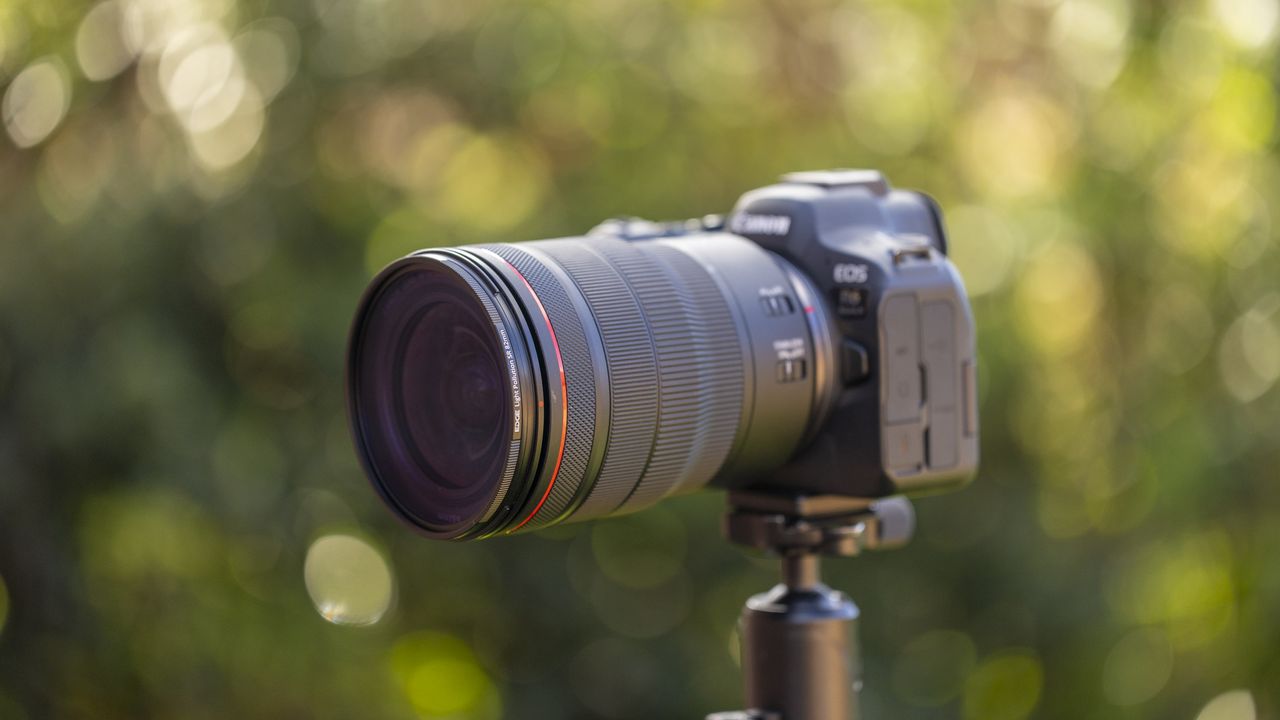
The Irix Edge Light Pollution Filter is a screw-in filter available in thread sizes from 67mm to 105mm. It has an aluminum frame with reinforced tempered glass inside it. I tested the 82mm size, which fits Canon RF 15-35mm f/2.8L IS USM. The filter weighs 23g and comes in a plastic hard case with a soft foam insert to keep it protected when not in use.

The Irix Edge has a thin and robust metal frame with reinforced tempered glass inside (Image credit: Dan Mold)

Irix doesn’t cater for smaller lenses with thread sizes below 67mm, whereas some budget filters, such as the Hoya Starscape, can be purchased for smaller lenses down to 49mm. The Irix Edge filter is available in sizes up to 105mm, only found on high-end pro lenses, and the entire range is geared towards these larger, pro-level lenses.

The Irix Edge Light Pollution filter has a purple color cast to it, and parts of the metal frame are knurled, which makes it easier to get a grip when mounting it or removing it from your lens (Image credit: Dan Mold)

The filter has a total depth of 5.5mm, though only 3mm protrudes when the filter is screwed onto the front of a lens. This isn’t a ‘thin’ filter frame, like some designed to be smaller to cut down on vignetting, though I like this 'fatter' design as it allows the lens cap to be used easily and other filters to be stacked on top of it, should you wish.

The Irix Edge Light Pollution filter comes with a robust plastic hard case. Its clear/white color is a good choice as it makes it easier to find in your bag in the dark, though it's a little on the large side for my 82mm filter (pictured here) (Image credit: Dan Mold)

The metal frame is black to reduce internal reflections, and the filter glass has an anti-reflective coating for sharper images, with greater contrast. A special multi-layer nano coating has been applied to both sides, which is designed to repel oil and water for easy cleaning.

As part of Irix’s Super Resistant (SR) series, the Edge Light Pollution Filter has a special thermal treatment to boost its rigidity and make it less likely to shatter if dropped. Irix is clearly confident in the build quality of its products, as the Light Pollution Filter comes with a five-year warranty.

While Irix does make gelatin filters that can be rear-mounted to ultra-wide lenses that lack a filter thread, such as its ND4, ND8, and ND16 set, the light pollution filter is not currently available for rear-filter mounting.

(Image credit: Dan Mold)

I felt the plastic hard case was a little oversized for my 82mm filter, and it is a bit tricky to open because it looks like it could be opened on either side. I did, however, appreciate that Irix decided to make the hard case white – why is this important? As a light pollution filter, it’s designed for use in the dark. Many other light pollution filters I have tested had black cases, which made them harder to find and operate in the pitch black, so well done, Irix, for choosing a clever color option.

Irix Edge Light Pollution Filter: Performance

The Irix Edge Light Pollution performed well in my tests. As mentioned in the previous section, it's made from quality materials and tempered glass for a hardy construction. It was dropped by my clumsy hands several times, and lived to tell the tale with no problems.

I was particularly impressed by its multi-layer nano coating, which is applied to both sides. This has great oil and water resistance, and because it’s hydrophobic, any water can be shaken off, making it supremely easy to clean.

The nano coating is applied to both sides of the Irix Edge Light Pollution Filter, which is hydrophobic and makes the filter super easy to clean (Image credit: Dan Mold)

Irix claims the Edge Light Pollution Filter delivers the ‘best possible color rendering’. Straight out of camera, the file had a slight purple color cast, but this is only to be expected as the filter itself has a strong purple tint.

However, when processing the white balance of the raw files, the filter did a good job at neutralizing the warmer yellow tones of street lamps, though, of course, it couldn’t reduce the overall light spill from these areas; there really is no substitute for going to a dark sky area to take astro photos if you want to avoid light pollution altogether.

Overall, image quality was very good with sharpness remaining strong and no signs of vignetting. It did a decent job of taming the garish yellow-and-green glow you might see from street lamps or distant light pollution on the horizon, particularly when editing the raw files. However, there was still a faint glow and loss of detail, which can only really be rectified by heading to an area with less light pollution. Nevertheless, my astro results were clearly better than in shots taken without the filter.

Irix Edge Light Pollution Filter: Verdict

The Irix Edge Light Pollution filter does a good job of toning down the bright yellow color casts you might come across when shooting cities at night, effectively reducing the 589nm wavelength of sodium lamps, though it can’t completely dull down the bright light spill in these areas, nor can it combat the clean white light from modern white LED street lamps.

Aimed at professional photographers, it is only available in the larger lens diameters as found on high-end lenses, and is among the pricier options on the market, particularly in the USA. However, it is very well made, with coatings galore to repel water, oil, and dust, and it has a tempered glass construction, making this a tough filter that should withstand all the rigors of night photography.

Features

★★★★★

It's packed with great features, including tough tempered glass and a dual-sided nano coatings.

Design

★★★★☆

The design is pretty good with its semi knurled pattern for grip on the filter rim and low profile frame design. It would be nice to have some smaller options, square varieties, and even gel variants for rear mounting.

Performance

★★★★★

The nano coating made the filter very easy to clean and image quality was very good – top marks here!

Value

★★★★☆

As even the smallest filter in this range is quite large at 67mm, the starting price is expensive and only gets higher, but you get a lot of features and a quality product for your money.

Alternatives

Sign up to read this article
Read news from 100's of titles, curated specifically for you.
Already a member? Sign in here
Related Stories
Top stories on inkl right now
One subscription that gives you access to news from hundreds of sites
Already a member? Sign in here
Our Picks
Fourteen days free
Download the app
One app. One membership.
100+ trusted global sources.