Get all your news in one place.
100's of premium titles.
One app.
Start reading
The Economic Times
The Economic Times

Iran’s rial plunges past 2 million per dollar as Trump unleashes ‘crushing economic operation’

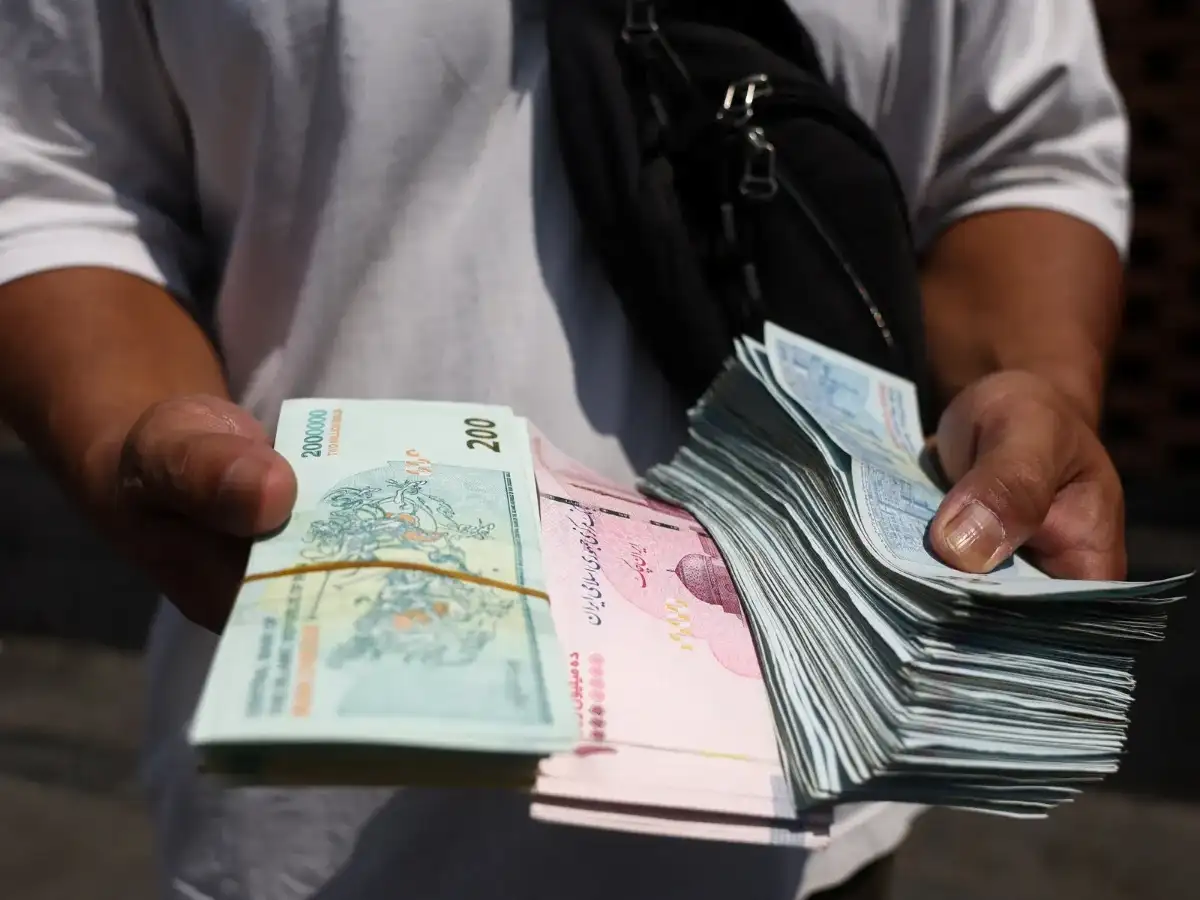
Iran’s rial has fallen through a symbolic threshold, with the currency trading at around 2 million to the dollar on the open market as Washington prepares a fresh campaign to choke off Tehran’s remaining economic lifelines.

The rial was quoted at 1.992 million per dollar on Monday, according to Bonbast, a website that tracks Iran’s unregulated currency market. The currency has lost about 4.5% since US President Donald Trump unveiled what he called a “crushing economic operation” against Iran last week.

Also read: Iran digs up ‘tens of billions’ in gas wealth as US energy showdown heats up

Another currency tracker, TGJU, said the rial crossed 2 million per dollar on Sunday before retreating.

The latest decline comes after almost six months of war and as the US steps up efforts to restrict Iran’s access to trade, finance and oil revenue. Washington is also seeking to pressure Tehran’s remaining commercial partners, while Iran’s main ports in the Persian Gulf face a US blockade.

Oil exports and foreign currency under strain

For Iran, the currency slide comes at a particularly difficult time because oil exports are a major source of foreign-currency earnings.

Central Bank Governor Abdolnaser Hemmati said last week that Iran’s crude exports have “virtually stopped.” The United Arab Emirates, meanwhile, said it had suspended financial transactions with Iran until further notice, cutting into an important channel for trade.

US Treasury Secretary Scott Bessent laid out the administration’s objective in a Financial Times article published Monday.

“Our objective is to sever every economic lifeline that sustains the tyrannical regime until Tehran stands alone,”

Bessent also warned that an “economic D-Day” would begin at dawn.

The pressure is feeding directly into Iran’s foreign-exchange market. Donya-e Eqtesad, a leading Iranian financial newspaper, attributed the rial’s decline to difficulties moving foreign currency and weaker exports, while demand for imports and expectations of higher inflation have risen.

The result is a currency market increasingly caught between shrinking sources of dollars and stronger demand for them.

Tehran turns towards China and BRICS

Washington’s push to isolate Iran is being met with an effort by Tehran to deepen economic links with countries outside the US-led financial system.

China, Iran’s biggest oil buyer, has said American economic pressure will not work and has called for a diplomatic resolution to the war, which is approaching its sixth month.

Iranian Foreign Minister Abbas Araghchi signalled on Monday that Tehran intends to make greater use of relationships with China-aligned partners.

In an op-ed published by state-run Ettela’at, Araghchi wrote:

“We believe that structures such as the Shanghai Cooperation Organisation and the BRICS group are effective instruments for breaking the monopoly of power and moving toward a fairer international order.”

“Iran is determined to make the most of these opportunities,” he added.

The strategy faces an immediate test: Iran needs foreign currency to support imports and its economy at the same time that Washington is seeking to restrict the channels through which those dollars enter the country.

Also read: Iran says support for new sanctions would be 'act of war'

A gas discovery offers another potential energy asset

The currency crisis also comes as Iran has announced a major new gas discovery in southern Fars province.

The field contains more than 7.5 trillion cubic feet of gas, of which around 5.7 trillion cubic feet is estimated to be recoverable. Oil Minister Mohsen Paknejad said the recoverable volume was comparable to one block of the South Pars gas field and could supply gas for 15 years.

The field also contains gas condensate. Paknejad said:

“In addition to this volume of gas, there is also a volume of gas condensate that has brought tens of billions of dollars of new wealth to the country.”

The discovery adds to Iran’s substantial hydrocarbon resources, but it does not provide an immediate answer to the currency squeeze. Developing new reserves takes infrastructure and investment, while Iran is simultaneously dealing with restrictions on its ability to export energy and move money internationally.

For now, the rial’s record fall shows how quickly those constraints are being felt in Iran’s financial markets.

(With inputs from Bloomberg & Reuters)

Sign up to read this article
Read news from 100's of titles, curated specifically for you.
Already a member? Sign in here
Related Stories
Top stories on inkl right now
One subscription that gives you access to news from hundreds of sites
Already a member? Sign in here
Our Picks
Fourteen days free
Download the app
One app. One membership.
100+ trusted global sources.