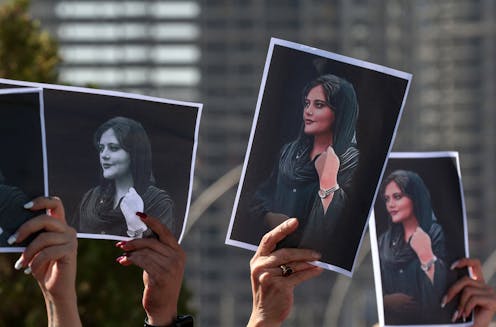
Shouts of “death to the dictator” and “woman, life, freedom” are reverberating throughout the streets of Iran following the death of Mahsa Amini, a 22-year-old woman, while in custody of the “morality police” in Tehran.
These protests have echoes from past resistance movements. For the past two decades I have been studying gender and sexual politics in post-revolutionary Iran through on-the-ground ethnographic fieldwork. For some 40 years following the Feb. 11, 1979, Iranian Revolution, when Ayatollah Khomeini came to power and overthrew the Shah of Iran, Mohammad Reza Pahlavi, people have been rising up against the brutality of the regime in both urban and rural areas.