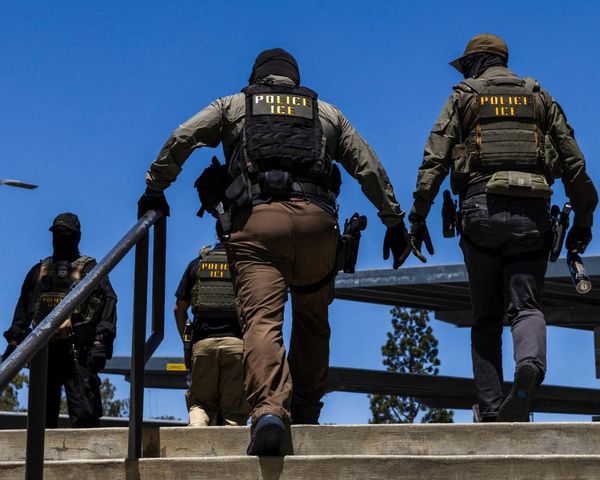
The US House of Representatives has voted for a third time to end the war in Iran, approving a war powers resolution a few hours after a Congressional Budget Office (CBO) report showed the conflict had cost at least $38bn and left America’s stockpile of defensive missiles so depleted it could take five years to rebuild.
The final tally of 220-204 was similar to earlier votes, with a few more Republicans joining most Democrats in calling for an end to the war. None of the resolutions have made it to the president’s desk, where Trump would almost certainly veto them.

The action is likely the last House vote on the Iran war before the midterm elections, where the war and America’s cost of living crisis are expected to hurt Republicans at the ballot box.
Lawmakers are heading home at the end of the week to campaign nearly full-time, with less than 50 days to go before the elections that will determine control of Congress.
“Remember when Donald Trump said that this war would last just a few weeks?” said Democrat Seth Moulton before the vote. He added it was time for Congress to “actually ask tough questions, as the constitution directs us to do, rather than be subservient to another warmongering administration”.
Republican Brian Mast of Florida, the chairman of the House foreign affairs committee, questioned which military resources Democrats would want to remove from the region where he said Iran remains a threat.
Mast said Trump is against “forever wars, and that is what he is ending”, meaning decades of hostilities from Iran.
The House first approved a war powers resolution in June and followed up with another one in July, all seeking to halt US action in Iran. The Senate on its 10th try also approved a war powers resolution to end the conflict, but Republican senators quickly reversed course the next day after Trump berated them during a closed-door lunch.
While the constitution gives Congress the authority to declare war, it also enables the president as the commander in chief to authorise some military actions. The war powers act, created in the aftermath of the Vietnam conflict, sought to put a more specific time limit on the president’s power, requiring congressional approval for sustained military actions after 60 or 90 days.
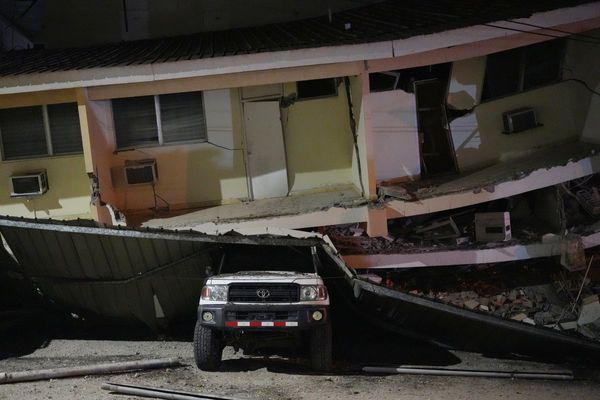
The vote late on Tuesday came as the CBO report found that Iranian strikes had damaged or destroyed hundreds of buildings and structures at US bases in Kuwait, Bahrain, Qatar, the UAE, Saudi Arabia, Iraq, Oman and Jordan. It estimated that the costs of the war will grow $3bn for every month the conflict continues, depending on its intensity, while noting that the war has driven up inflation.
Much of the cost has come from missile defense. Fending off Iranian ballistic missiles and drones has consumed such a large share of the US stockpile of Patriot, Thaad and navy interceptors that the CBO said rebuilding it “would probably take at least five years, even if production was increased”.
In a White House statement responding to reports of shortages, Donald Trump said the US had “far more munitions than anyone in the world” and “far more than we need”. In August, Pete Hegseth, the defense secretary, dismissed a CNN report on the depleted stockpiles as “not true”.
According to the CBO report, shortages would be “especially problematic” in a hypothetical clash over Taiwan, because of the need for interceptors to engage “large numbers of ballistic and cruise missiles”. China maintains an arsenal of these and is expanding it, the report noted, and any US-China conflict over Taiwan would likely require far more interceptors, deployed far more quickly, than the campaign against Iran has.
The economic report came a day after the Pentagon’s inspector general finally released its own first review of the war, saying that the US spent $22.3bn on munitions alone through 30 June, put total spending at $33.4bn, and found the fighting had “resulted in strategic inventory shortfalls and revealed industrial base bottlenecks for munitions resupply”.
The Pentagon’s report did not address its own internal investigation of the Minab school strike on the first day of the war, which killed 156 people including 120 children. Critics have accused the Pentagon of burying results of the investigation that would show negligence in how it compiled targeting data for the initial strikes.
The CBO report also found that increased energy costs, due in large part to the disruption of oil shipments through the strait of Hormuz, have increased inflation by half a percentage point compared with previous estimates. Brent crude jumped from $64 a barrel before the fighting to $103 at its peak, and the CBO projects the war will leave inflation running 0.5 percentage points higher than expected by early 2027, with short-term interest rates already about 0.2 points higher than they otherwise would have been.
In June the White House requested $87.6bn in supplemental funding, of which $67.1bn was earmarked for the Pentagon. Once funding the CBO judged unrelated to combat operations is stripped out – including money for cybersecurity, drones and classified programs – $42.3bn of the Pentagon’s request appears tied to the Iran conflict, about 10% above the CBO’s estimate. The request included $12.1bn for classified programs the CBO could not examine – a far larger secret share than in past war supplementals.
The CBO added that it still could not estimate the cost of repairing bomb-damaged US bases, nor any future diplomatic and foreign aid costs tied to the war.