Iranian and US officials arrived separately on Friday for indirect talks on Iran's nuclear programme, mediated by Oman's top diplomat.
An Iranian convoy was seen departing from a palace on the outskirts of the Omani capital, Muscat, with Iranian state media acknowledging Foreign Minister Abbas Araghchi met with his Omani counterpart, Badr al-Busaidi.

Only after the Iranian vehicles left did another convoy including an SUV flying the US flag enter the palace grounds. It stayed there for about an hour and a half before leaving, according to reports.
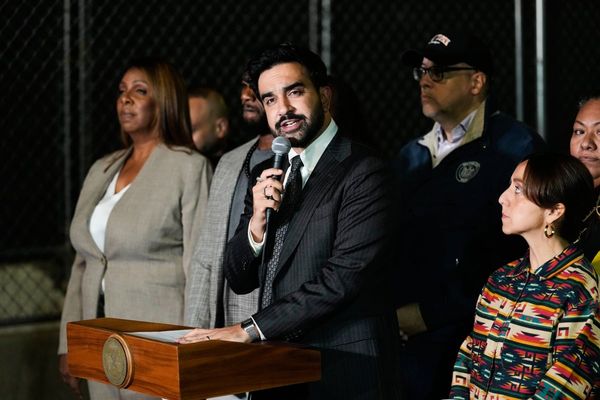
Oman's Foreign Ministry published a statement saying al-Busaidi met separately with Araghchi, then with US special envoy Steve Witkoff and Jared Kushner, President Donald Trump’s son-in-law.
“The consultations focused on preparing the appropriate circumstances for resuming the diplomatic and technical negotiations by ensuring the importance of these negotiations, in light of the parties’ determination to ensure their success in achieving sustainable security and stability,” the Omani announcement said.
It wasn't immediately clear if that was the end of the talks for the day, although Omani officials left the palace immediately after the Americans.
The talks were the first such encounter between the two sides since the US joined Israel's 12-day conflict against the Islamic Republic in June with strikes on nuclear sites.
Tensions remain high following deadly protests in Iran
Ahead of the talks, Araghchi said Tehran will take the "approach of using diplomacy to secure Iran's national interests" during a meeting in Muscat with Badr al-Busaidi, foreign minister of Oman.
Meanwhile, he added that his country maintains "full readiness to defend the country's sovereignty and national security against any excessive demands or adventurism" by the United States, as Trump has also refused to rule out military action against Tehran.
The US delegation intends to explore "zero nuclear capacity" for Iran, White House Press Secretary Karoline Leavitt said, warning that Trump had "many options at his disposal aside from diplomacy".
"They're negotiating," Trump said of Iran on Thursday.
"They don't want us to hit them, we have a big fleet going there," he added, referring to the aircraft carrier group he has repeatedly called an "armada".
The meeting comes just under a month after the peak of a wave of nationwide protests in Iran sparked by persistent hyperinflation and high cost of living which turned into demonstrations against the Tehran regime.
The protests were repressed with an information blackout and unprecedented crackdown that has resulted in the deaths of as many as 30,000 people, according to insiders in Iran and human rights groups.
Trump initially threatened military action against Tehran, telling demonstrators "help is on its way" but has so far refrained from an outright intervention.
Scope of talks remains unclear
The scope and nature of the talks weren't immediately clear. Tehran has maintained that these talks would only be on its nuclear programme.
There had been tensions in the run-up to the talks over whether the meeting should also include regional countries and address Tehran's support of proxies and its ballistic missile programmes, two US concerns that Iran resisted.
US Secretary of State Marco Rubio said talks needed to include all those issues. “I think in order for talks to actually lead to something meaningful, they will have to include certain things, and that includes the range of their ballistic missiles,” Rubio told journalists Wednesday.
“That includes their sponsorship of terrorist organisations across the region. That includes the nuclear programme, and that includes the treatment of their own people.”
With the aircraft carrier USS Abraham Lincoln and other warships in the region along with more fighter jets, the US now likely has the military firepower to launch an attack if it wanted.
Meanwhile, Gulf Arab nations fear an attack could spark a broader regional war, as this week US forces shot down an Iranian drone near the aircraft carrier while Iran attempted to stop a US-flagged ship with speedboats in the Strait of Hormuz.