Nuclear facilities in Iran have been targeted by air strikes, just hours after Israel threatened to “escalate and expand” its campaign, state-run media and Tehran regime officials said on Friday.
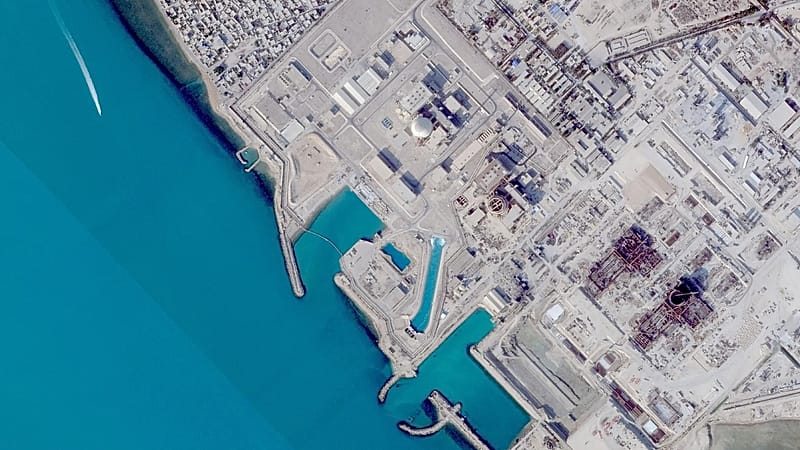
The country’s atomic energy organisation said a uranium processing facility in central Iran had been hit.

"The plant in Ardakan, located in Yazd province, was targeted minutes ago in an attack,” the agency said on its Telegram channel, adding the attack "did not result in the release of any radioactive material."
Meanwhile, the state-run Fars news agency reported a heavy water reactor had also been hit. Heavy water is used as a moderator in nuclear reactors.

"The Khondab Heavy Water Complex was targeted in two stages by aggression from the... enemy," the news agency said, citing Hassan Ghamari, an official in central Markazi province.
Fars and other media outlets said there were no casualties or a radiation leak at the site.
A yellowcake production plant was also struck, IRNA reported. Yellowcake is a concentrated form of uranium after impurities are removed from the raw ore.
Israel targets Iran's weapons production
Meanwhile, air raid sirens sounded in Israel and the military said it has been intercepting Iranian missiles on a daily basis.
Defence Minister Israel Katz said Iran "will pay heavy, increasing prices for this war crime."

"Despite the warnings, the firing continues," Katz said. "And therefore attacks in Iran will escalate and expand to additional targets and areas that assist the regime in building and operating weapons against Israeli citizens."
Israel's military said its attacks on Friday targeted sites "in the heart of Tehran" where ballistic missiles and other weapons are produced.
It said it also hit missile launchers and storage sites in western Iran.
Struggle for a peace deal
Word of the attacks on Iran came after US President Donald Trump claimed talks on ending the war were going well.
With stock markets reeling and the economic fallout from the war extending far beyond the Middle East, Trump is under growing pressure to end Iran's chokehold on the strait, a strategic waterway through which a fifth of the world's oil is usually shipped.
Washington has offered Tehran a 15-point proposal for a ceasefire that includes it relinquishing control of the strait, but at the same time has ordered thousands more troops to the region, possibly in preparation for a military attempt to wrest the waterway from Iran's grip.

Earlier on Friday, the Revolutionary Guards (IRGC) urged civilians across the Middle East to stay away from areas near US forces, ramping up its threats despite Trump's claim that peace talks were making progress.
The IRGC's warning came after Trump again extended a deadline for Tehran to open the Strait of Hormuz or face the destruction of its energy assets, pushing it from Friday to 6 April.
Trump said he did so at Tehran's request, insisting the Islamic Republic wanted "to make a deal" to end the war engulfing the region since 28 February.
But Tehran, which has made it clear it wants to end fighting on its own terms, indicated no let-up in reprisal attacks against Israel and targets across the Gulf.