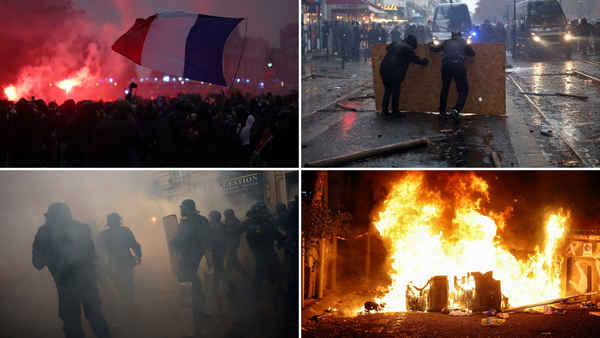
When a protest by angry traders about what they see as the Islamic Republic’s poor handling of the economy morphed into a national uprising across Iran, the authorities moved quickly to shut down the internet. It’s a tactic the regime has used before. Closing down communications makes it harder for resistance to organise. It also makes it hard for people protesting in Iran to communicate with and enlist support from the outside world.
Authoritarian regimes, such as the Islamic Republic in Iran, tend to rely on two distinct modes for managing information and collective action. The first is surveillance. Communications are monitored, platforms filtered, metadata analysed, and users channelled toward spaces that remain visible to the state. In such conditions, limited circumvention is often tolerated.
The regime allows the use of virtual private networks (VPNs) for example, since only a fraction of the population is technically savvy enough to use them. A VPN is a tool that routes a user’s internet traffic through an external server, masking its destination and bypassing local restrictions. In practice, VPNs can help users evade censorship and reduce visibility to domestic internet controls by making their connections appear to originate from outside the country – though they still depend on the underlying internet infrastructure to function.