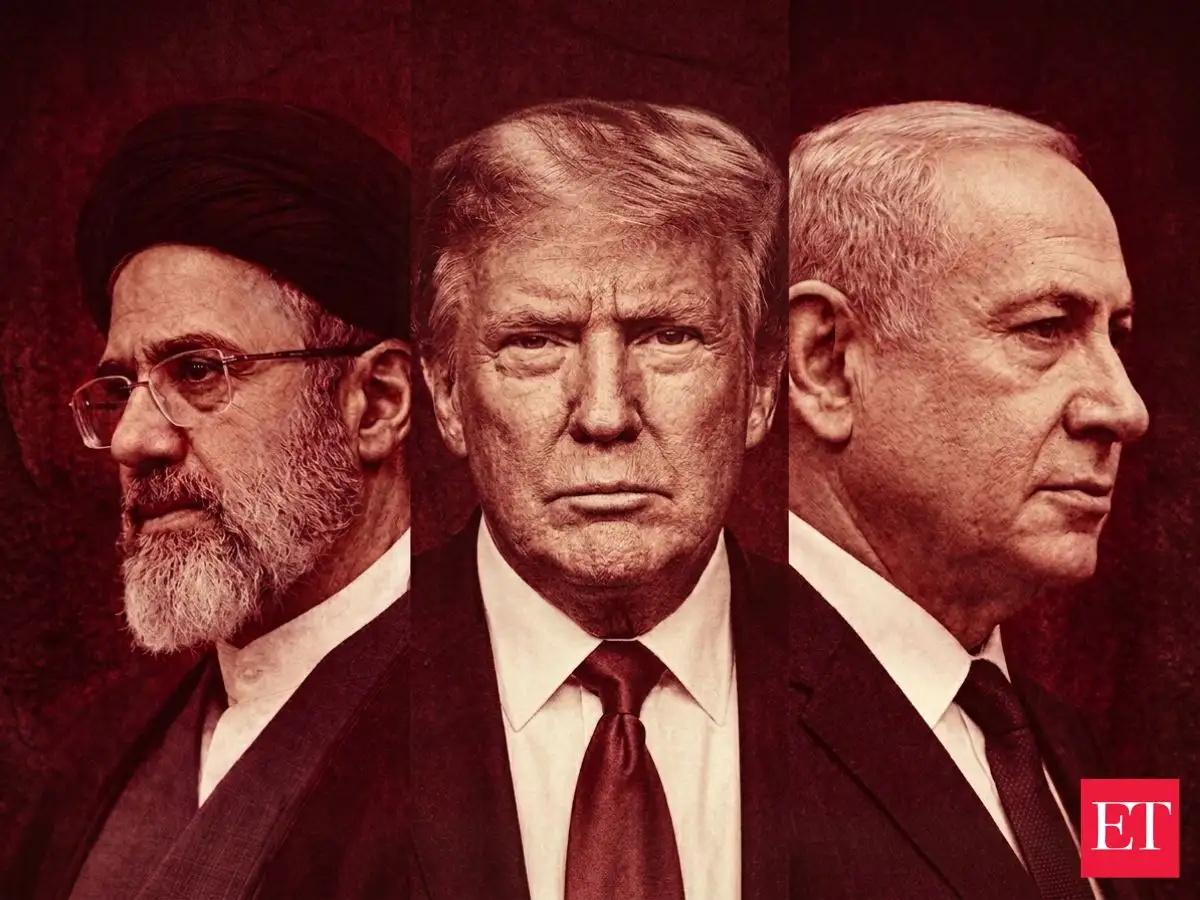
Iran said it was suspending nuclear talks with the United States after President Donald Trump threatened to strike the country again if it did not rein in Hezbollah in Lebanon, the semi-official Fars news agency reported on Sunday. However, talks in Switzerland were still ongoing despite the Iranian media reports, according to people familiar with the matter, Bloomberg reported.
Two semi-official Iranian media outlets said Tehran had halted the talks. But negotiators remained engaged in Switzerland, said the people, who were granted anonymity to describe sensitive matters, Bloomberg reported. Fars cited an anonymous source as saying the talks, being held at the Swiss resort of Bürgenstock, were now in a state of "uncertainty."
Also read: Trump warns Iran: Stop Lebanon proxies or face ‘harder’ US strikes
The Bürgenstock meetings were the first high-level contact between American and Iranian representatives since a ceasefire took hold after US strikes on Iranian nuclear facilities earlier this year. US Vice President JD Vance and Iranian Foreign Minister Abbas Araghchi were among the attendees. Qatar and Pakistan were also part of the talks, reflecting the multilateral framework Washington had assembled.
As the meetings got under way, Trump posted on social media that he would strike Iran again if it does not "immediately stop their highly paid PROXIES in Lebanon from causing trouble." He also warned that the US might start collecting tolls on shipping if there is no deal. Speaking to Fox News on Sunday, Trump said he told Iranian leaders directly that if they close the Strait of Hormuz, "You won't even make it back" to Iran, Bloomberg reported.
Iran's chief negotiator, Mohammad Bagher Ghalibaf, responded on X: "Don't they ever think to themselves that if their threats had actually worked, they wouldn't have reached this level of desperation today?"
A resolution to the fighting in Lebanon will be decisive for the success of the talks, according to an official familiar with the discussions, who asked not to be identified, Bloomberg reported. The conflict emerged as a key roadblock, with other issues in focus being the Strait of Hormuz, US sanctions and frozen Iranian assets. Four-party talks started at 2:45 p.m. local time and were expected to continue Sunday evening. The Swiss are keeping the venue ready until mid-morning Monday, allowing negotiations to run until then if necessary, Bloomberg reported.
Tehran has long maintained that its support for regional groups such as Hezbollah is non-negotiable in any nuclear framework. Israel, Washington's partner in the war on Iran that began February 28, has been fighting a parallel campaign against Hezbollah in neighbouring Lebanon. Iran has consistently sought to link the conflict there, which has killed thousands and displaced more than one million Lebanese — with the broader US negotiations. Israel has insisted it will keep troops on its borders until Hezbollah, designated a terrorist organisation by the US, is no longer a threat.
The Israel Defense Forces said its recent operations are targeting a network of underground bunkers where Hezbollah fighters are believed to be sheltering, Bloomberg reported.
Also read: JD Vance calls ceasefire 'a little messy', says US has made 'great progress' in Iran nuclear talks
The Switzerland talks came weeks after the US carried out strikes on Iranian nuclear facilities, including sites at Natanz and Fordow. The strikes raised fears of a wider regional conflict before both sides pulled back and a ceasefire took hold. Iran called the strikes a violation of international law. The US said they were necessary to prevent Tehran from crossing the nuclear threshold.
Diplomatic contacts resumed in the weeks that followed. Oman and Qatar played mediating roles in bringing both sides to Switzerland. The agenda was expected to focus on Iran's uranium enrichment levels and a possible interim freeze in exchange for limited sanctions relief, according to people familiar with the matter, Bloomberg reported.
It is not clear whether the talks have been formally ended or whether negotiations could resume. No official statement had been issued by either the US or Iranian delegations as of Sunday evening.
(With inputs from Bloomberg)