Get all your news in one place.
100's of premium titles.
One app.
Start reading
Euronews
Euronews
Babak Kamiar

Iran eyes fees on Hormuz internet cables as new lever against the West

Iran's Revolutionary Guards-linked media are pushing for Tehran to impose charges on the submarine fibre-optic cables running through the Strait of Hormuz, arguing that the waterway's role in global digital infrastructure could generate billions of dollars and give Iran a new pressure point against the West.

Tasnim News Agency, which is affiliated with the IRGC, proposed that Iran charge transit fees to the international consortia that own and operate the cables, offer maintenance services, and require companies — including Google, Meta, Microsoft and Amazon — to operate under Iranian regulations.

Mostafa Taheri, a member of Iran's parliamentary Industries Commission, put potential revenues from transit fees at up to $15 billion.

Tasnim and the IRGC-linked Fars News Agency went further, suggesting Iran could monitor data traffic flowing through the cables — infrastructure that carries cloud services, financial messaging systems including SWIFT, and a large share of global internet traffic.

Tasnim claimed at least seven major communication cables serving Gulf countries pass through the strait, including the FALCON, GBI and Gulf-TGN systems, which connect data centres across Asia, Europe and the Middle East.

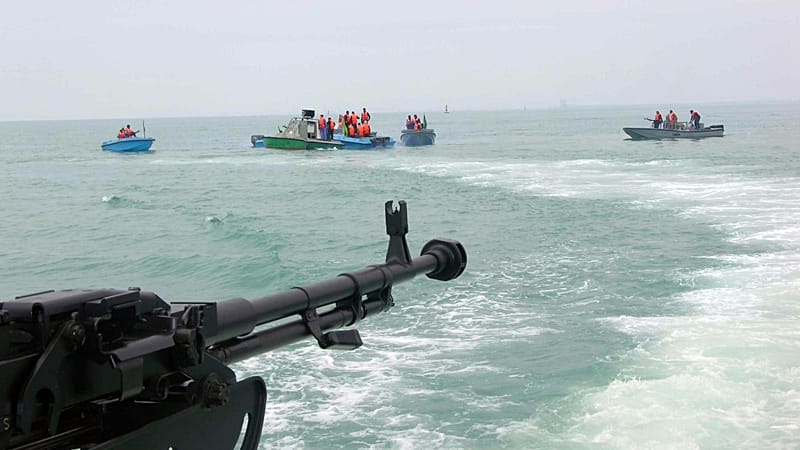
FILE - In this photo released by Tasnim News Agency, a Revolutionary Guard Navy (IRGC) speedboat approaches the cargo ship Epaminondas during what state media described as the (FILE - In this photo released by Tasnim News Agency, a Revolutionary Guard Navy (IRGC) speedboat approaches the cargo ship Epaminondas during what state media described as the)

The legal basis for such proposals is weak. Iranian outlets cite the UN Convention on the Law of the Sea, arguing the strait's narrow geography places its seabed under Iranian and Omani jurisdiction.

However, UNCLOS includes a transit passage principle that protects the uninterrupted flow of international navigation and communications. Iran has signed UNCLOS but never ratified it.

Submarine cables are owned by international consortia, and any attempt to impose fees or to monitor them would face immediate international legal and political resistance.

Instrument of state control

The proposals have not emerged in a vacuum, as Tehran has been restricting its own population's access to the global internet even before the war against the US and Israel began in February, part of its crackdown on nationwide protests.

NetBlocks reported this week that the blackout had entered its 76th day, with government-backed access schemes producing surveillance, corruption and scams in place of open connectivity.

Iran's Communications Minister acknowledged in April that around 10 million people depended on stable digital access for their livelihoods, and that the shutdown was costing businesses 600 billion tomans a day.

The cable fee proposals follow the same pattern of treating digital infrastructure as an instrument of state control.

The strait, which separates Iran from Oman, is around 22 kilometres wide at its narrowest point. Under normal conditions, roughly one-fifth of the world's oil and liquefied natural gas passes through it.

Iran effectively closed it to commercial shipping when the war began, with energy prices skyrocketing.

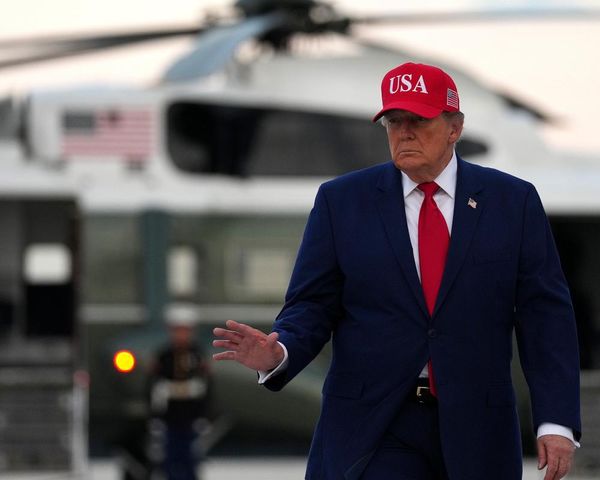
The US Navy imposed its own blockade of Iranian ports on 13 April. A ceasefire has been in place since 8 April but remains fragile, with Trump describing it this week as having a "one percent chance" of surviving.

Sign up to read this article
Read news from 100's of titles, curated specifically for you.
Already a member? Sign in here
Related Stories
Top stories on inkl right now
One subscription that gives you access to news from hundreds of sites
Already a member? Sign in here
Our Picks
Fourteen days free
Download the app
One app. One membership.
100+ trusted global sources.