Closing summary
We’re pausing our live coverage – thank you for reading along. Here’s a quick recap of today’s key developments:
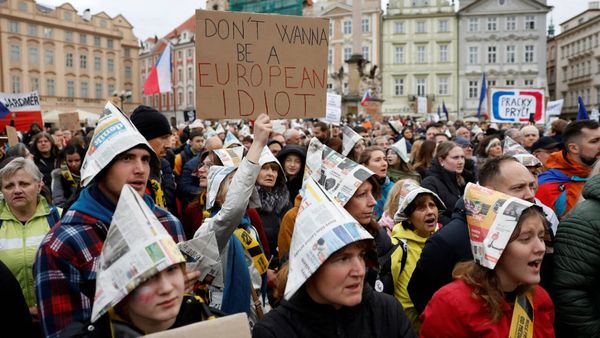
At least 648 demonstrators have so far been killed in the ongoing crackdown by Iranian security forces against the most significant anti-government demonstrations in Iran in years, according to the latest count from the rights groups tracking the death toll. The true number, of course, could be far higher, given the difficulties arising from the days-long nationwide internet blackout. Here is a visual guide to the protest movement.
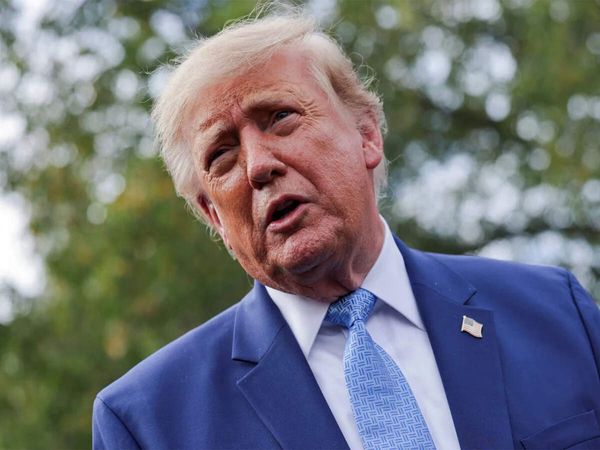
Donald Trump said the United States was considering “very strong options” to intervene in Iran, having previously threatened to intervene militarily if the regime continued to kill protesters.
Diplomatic channels between Washington and Tehran remain open, and the White House said today that Iran is sending “quite different” messages to the United States privately than what it is saying publicly, and the US has “an interest in exploring those messages”.
While diplomacy remains the “first option”, Trump is “unafraid” to respond to the killing of protesters with military force “if and when he deems that necessary”, said White House press secretary Karoline Leavitt. She also said that the US president’s special envoy Steve Witkoff is and “will continue” to be a key player in diplomatic discussions with Iran.
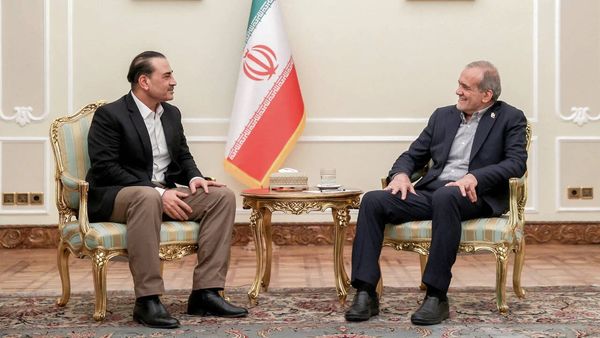
Iran’s supreme leader in turn accused the US of “deceit” and relying on “treacherous mercenaries”, while praising state-organised pro-government rallies in Tehran. You can read more about the staged rallies here.
Iran’s foreign minister Abbas Araghchi warned that Iran was not seeking war but was “fully prepared” for war with the US. “If Washington wants to test the military option it has tested before, we are ready for it”, Araghchi told Al Jazeera Arabic, referring to last summer’s bombings of three nuclear sites in Iran. “We have a large and extensive military preparedness compared to what we had during the last war. We are prepared for all options and hope Washington chooses the wise option.” He went on: “We are also ready for negotiations but these negotiations should be fair, with equal rights and based on mutual respect.”
The UK’s foreign secretary Yvette Cooper told Araghchi that the Iranian government must immediately end its “horrific” violence against protesters. In response, Araghchi warned the UK “to avoid interfering in Iran’s internal affairs”. He also threatened to evacuate the Iranian embassy in London.
Lastly, if it is safe for you to do so, we would like to speak to people in Iran. Could you tell us about your experience of living there during this time? How has the current situation affected your day-to-day existence? What are your thoughts on a US intervention?
We would also like to hear from Iranians living abroad. How are friends and family coping? What are your views on Trump’s comments regarding a US intervention?
Please note that while we’d like to hear from you, your security is most important. We recognise it may not always be safe or appropriate to record or share your experiences, so please think about this when considering whether to get in touch with the Guardian.
IP addresses will be recorded on a third-party web server, so for true anonymity, use our secure messaging service, however, anything submitted on the form below will be encrypted and confidential if you wish to continue.
Some Iranians are still using Elon Musk’s Starlink satellite internet service despite a nationwide communications blackout, three people inside the country said, the latest example of Starlink being used to counter internet shutdowns in geopolitical flashpoints.
Iranian authorities have in recent days launched a deadly crackdown on nationwide protests, including the near-complete shutdown of internet service, which is provided through fiber-optic cables and cellphone towers.
But Starlink, which beams its service directly from thousands of low-earth orbit satellites, is still working in some places in Iran, despite being banned by authorities there, three people using Starlink in the country told Reuters. One of them, in western Iran, said he knew dozens of people using Starlink and that users in border towns and cities were largely unaffected.
Alp Toker, founder of internet monitoring group NetBlocks, said he has heard from people in the region that there is still some Starlink access in Iran, though service appears reduced.
“It is patchy, but still there,” he said.
While it’s not clear how Starlink’s service was being disrupted in Iran, some specialists said it could be the result of jamming of Starlink terminals that would overpower their ability to receive signals from the satellites.
Starlink, which is part of privately held US company SpaceX, didn’t respond to requests for comment. Authorities in Iran could not be reached on Monday, amid phone and internet outages. Iranian authorities have blamed the unrest on terrorists and vowed to safeguard the governing system.