Get all your news in one place.
100's of premium titles.
One app.
Start reading
The Times of India
The Times of India
World
Chethan Kumar

Iran conflict could reshape global terrorism risk: Report

The killing of Iran’s Supreme Leader Ali Khamenei may mark the start of a wider, more unpredictable phase of global terrorism, a special supplement to the 2026 Global Terrorism Index (GTI), released Thursday, has warned.

The 2026 GTI, which ranked Pakistan as the number one country to be affected by terrorism, and the supplement on the Iran conflict are both published by the Institute for Economics and Peace.
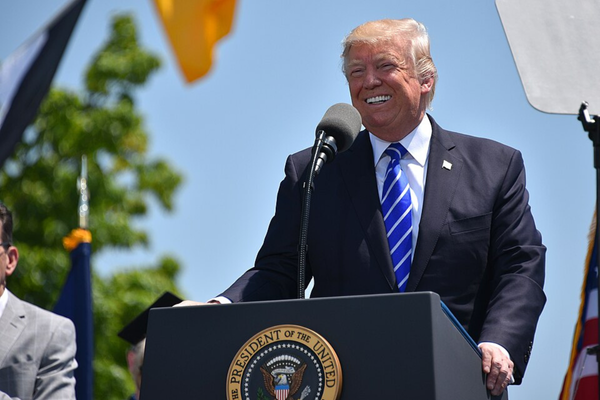
The Iran report notes that what began as a military confrontation is now showing signs of evolving into a diffuse, transnational threat. The immediate battlefield may be in West Asia, but the consequences, the report found, are global.

At the centre of the crisis is a fractured Iranian command structure. The strikes by the US and Israel have dismantled key military leadership, forcing the Islamic Revolutionary Guard Corps (IRGC) and its proxy networks to operate with far greater autonomy.

“The decentralisation of Iran’s operational networks may increase the likelihood of less predictable and harder-to-detect attacks,” the report reads.

Iran’s strategy has long relied on asymmetric warfare. Now, that playbook is expanding. “Iran’s response is likely to rely heavily on asymmetric tactics, including proxy groups, criminal networks, and lone actors,” the report reads.

Within days of the strikes, this threat began to materialise. “The Austin, Texas shooting on March 1, a targeted attack on an Iranian-Canadian dissident’s gym in Ontario, and a car attack on a synagogue in Michigan illustrate how these threats are already materialising,” the report points out, adding that investigators say such incidents may represent the early phase of a broader campaign.

Beyond individual attacks, the conflict is redrawing the map of militant activity. Iran-backed militias in Iraq, numbering at least 1.6 lakh fighters across 67 groups, have stepped up drone and missile strikes on US positions. Meanwhile, Hezbollah, though weakened, retains 40,000-50,000 fighters and has already escalated attacks on Israel while expanding its target range beyond the region.

The risk is not limited to state-backed actors. Security experts warn that the diversion of Western military resources has opened gaps elsewhere. In Syria, “between 15,000 and 20,000 individuals linked to extremist networks escaped from the Al-Hol detention camp following a massive, coordinated prison break,” raising fears of a resurgence of groups like Islamic State.

At sea, the conflict has triggered an economic shock with direct implications for global stability. Iran’s closure of the Strait of Hormuz, through which roughly 20% of the world’s oil passes, has disrupted shipping and driven up energy prices. Tanker traffic dropped sharply, and hundreds of vessels were left stranded.

The economic fallout could be severe, the report warns. Analysts, it said, estimate that if oil prices rise to $120 per barrel, global inflation could increase by 1.2% while economic growth contracts by 0.4%. A prolonged disruption could push prices far higher, amplifying inflation, straining food supply chains, and slowing growth worldwide.

History offers a warning. The report points out how past regime collapses in Iraq, Syria, and Afghanistan were followed by prolonged instability, civil wars, and surges in terrorism. Without a clear post-war plan, Iran risks following a similar trajectory, with internal fragmentation and proxy conflicts spilling across borders, it warned.

Sign up to read this article
Read news from 100's of titles, curated specifically for you.
Already a member? Sign in here
Related Stories
Top stories on inkl right now
One subscription that gives you access to news from hundreds of sites
Already a member? Sign in here
Our Picks
Fourteen days free
Download the app
One app. One membership.
100+ trusted global sources.