Get all your news in one place.
100's of premium titles.
One app.
Start reading
Kiplinger
Kiplinger
Business
Jim Patterson

Iran Conflict Boosts Inflation Threat

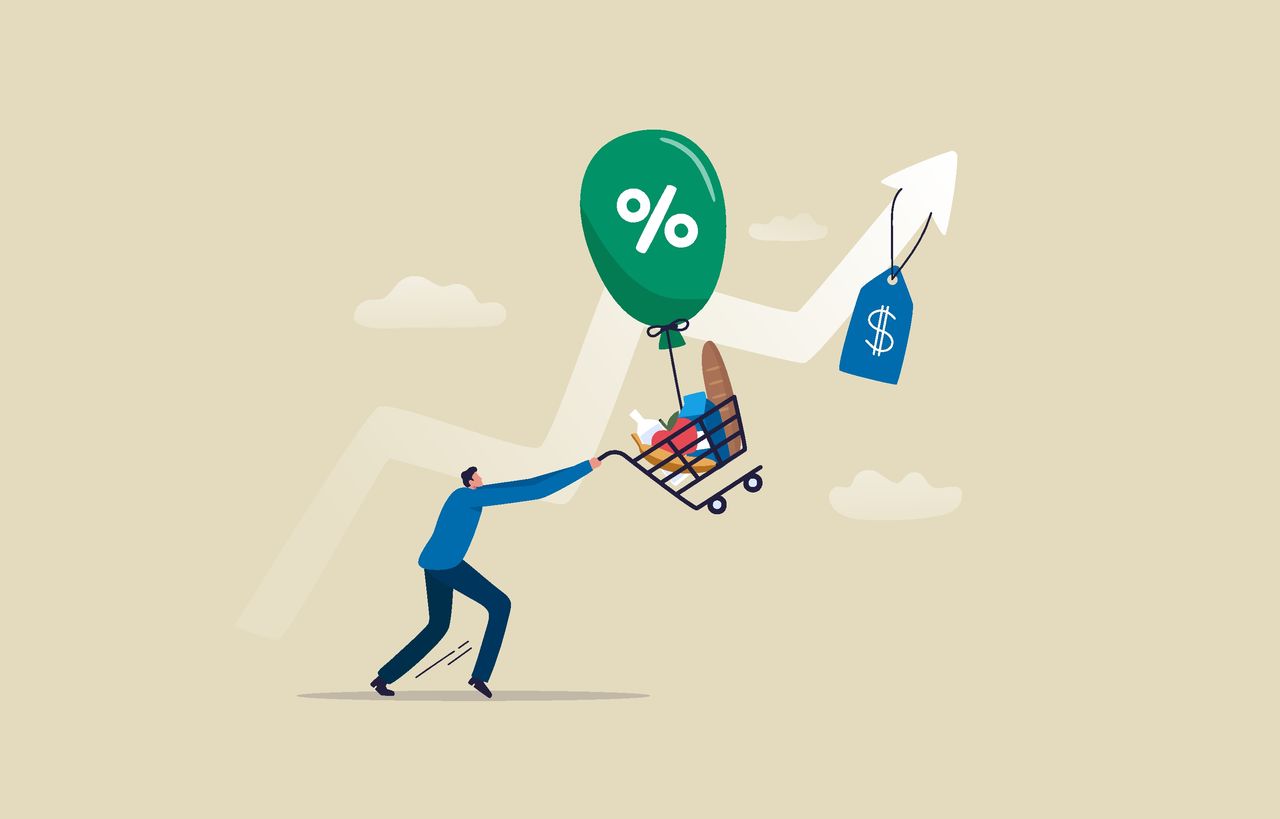
Inflation financial crisis concept. A man trying to catch the shopping cart full of food flying away with the inflation bubble. illustration.

To help you understand what's going on in business and the economy and what we expect to happen in the future, our highly experienced Kiplinger Letter team will keep you abreast of the latest developments and forecasts (Get a free issue of The Kiplinger Letter or subscribe). You'll get all the latest news first by subscribing, but we will publish many (but not all) of the forecasts a few days afterward online. Here’s the latest…

No one knows when the Iran war will end. But some of its effects can be predicted, such as the economic effects of disrupted shipping. Here are some impacts you can factor into your own business or investment planning.

Fuel prices will remain relatively elevated, whether the fighting ends soon or goes on. Global petroleum stockpiles are too depleted for gas and diesel to drop sharply whenever exports resume in large quantities from the Persian Gulf region.

Gas prices will range from near $4 to near $5 per gallon, the former if the war winds down soon, the latter if it continues in the coming months. Some analysts warn that stockpiles will hit key levels by Labor Day if the gulf stays largely closed to tankers, which would spike oil prices and push gasoline to $5. If exports resume, we’ll see some relief at the pump, with regular unleaded averaging above $3.50/gallon into the early autumn, still painful for most drivers.

Diesel is sure to stay much higher than gas due to the extensive damage to refineries in Russia, normally a top diesel exporter. Ukraine’s drone strikes on Russian refineries will be a lasting issue for diesel users, whatever happens in Iran.

Other commodities likely to remain costly because of Middle East disruptions:

  • Aluminum: 10% of global output came from the Persian Gulf prior to the war. Now, there is a large and growing supply deficit. Users are paying a premium for metal for immediate use vs. in the futures market. Restoring Middle East output will be slow.
  • Plastics, namely those used in packaging and electronics: The regional loss of polyethylene exports (10 million tons) is equal to the output of 18 global-scale plants.
  • Fertilizers: The prices of which are down from April peaks but above prewar levels.
  • Helium: needed for many electronics applications and medical imaging gear.

All of these are materials for which output and shipping are hard to restart. War-damaged plants take time to repair. And unlike oil, which can shift from tankers to pipelines in some cases, these commodities have no quick alternate shipping routes.

These cost pressures pose a dilemma for Federal Reserve policy choices. The Fed normally treats energy-driven inflation as temporary and chooses not to raise interest rates, reasoning that it can’t do anything to ease supply problems.

This time may be different. Inflation is already too high and getting embedded in consumer and business psychology, especially with gas prices in more of a plateau than a brief spike this year. The more people expect high prices to continue, the more their behavior tends to reinforce those expectations. The Fed may feel it has no choice but to try to break that self-stoking cycle by raising rates. If it stands pat, bond traders may bid up long-term bond yields for fear that the Fed isn’t trying to put out the fire.

This forecast first appeared in The Kiplinger Letter, which has been running since 1923 and is a collection of concise weekly forecasts on business and economic trends, as well as what to expect from Washington, to help you understand what’s coming up to make the most of your investments and your money. Subscribe to The Kiplinger Letter.

Read more

Sign up to read this article
Read news from 100's of titles, curated specifically for you.
Already a member? Sign in here
Related Stories
Top stories on inkl right now
One subscription that gives you access to news from hundreds of sites
Already a member? Sign in here
Our Picks
Fourteen days free
Download the app
One app. One membership.
100+ trusted global sources.