Pentagon identifies US soldier killed in Iraq
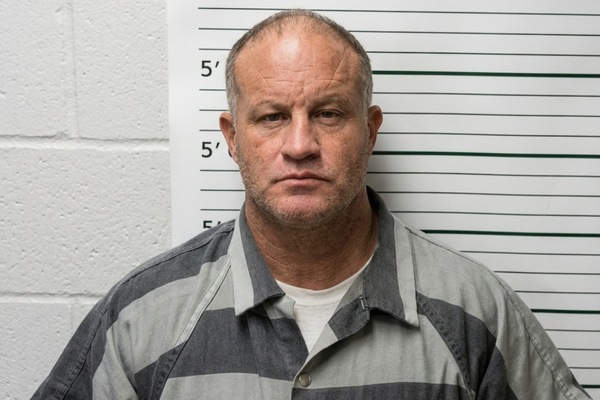
The Pentagon has identified a US solider who was killed in Iraq on Sunday.
Sgt Michael Emmanuel Swinton was killed during a “controlled detonation” of an Iranian attack drone at Erbil airbase in northern Iraq, the US defence department said in a statement today.
The New York Times, citing a US official, reported Swinton was not involved in the detonation of the drone but was killed by flying debris from the blast. The Pentagon said in its statement that the incident was under investigation.
The US military’s Central Command (Centcom) announced previously that two other US soldiers were killed in Iranian strikes on Jordan on Friday.
Lebanese army accuses Israeli forces of firing near its troops in 'pilot zone' in southern Lebanon
The Lebanese army accused Israel of firing near its troops as they were being deployed to an area in southern Lebanon.
In a statement on X, the army said its soldiers were operating in Zawtar al-Gharbiyeh when Israeli forces “opened fire in the vicinity of these units”.
The army said the attack “will hinder the implementation of the deployment stages in the ‘pilot zones’”, which began today under a framework agreement signed by Israel and Lebanon on 26 June (see post at 7:51).
The Israeli military did not immediately comment on the claim.
Two oil tankers loaded with Saudi crude for China and India have made U-turns in the Red Sea on Tuesday and were headed toward the Suez, shipping data on LSEG showed.
As Reuters reports, on Monday, Yemen’s Houthi militia declared a naval blockade against Saudi Arabia, opening a potential new front against the US in its war with Iran and raising the threat to global energy supplies and trade beyond the Gulf.
US Treasury Secretary Scott Bessent has claimed that there has been a substantial decrease in China’s purchases of Iranian oil.
“We have sanctioned Chinese ... so-called teapot refineries, which are the private refineries, and we’ve seen a substantial decrease in their purchases of Iranian oil,” Bessent said on Tuesday in an interview with Fox Business Network.
“The Chinese, in general, because of the prices and because they have a very large strategic petroleum reserve, have dropped their purchases of crude over the past few months by about 40%, and that’s directly pressuring the Iranian regime,” Bessent said.
Oil above $90 a barrel
The comments from Fatih Birol, head of the International Energy Security, come amid further rises in the price of oil.
They are up nearly 2% today to over $90 a barrel following the exchange of attacks by the US and Iran as well as threats of a naval blockade of Saudi Arabia by Yemen’s Houthis.
Benchmark Brent crude futures rose $1.62, or 1.8%, to $90.84 a barrel around lunchtime in London.
Updated
The head of the International Energy Agency (IEA), Fatih Birol, said the deteriorating situation around the strait of Hormuz was accentuating security concerns about the supply of oil but that the markets “continue to benefit from several cushioning factors”.
Among these were supplies from Gulf nations, including Saudi Arabia and the UAE, continuing to reach global markets through alternative routes to the strait of Hormuz, and producers from outside the Middle East increasing their exports to make some of the shortfall.
But, Birol added in a statement, the “full and unconditional reopening of the strait of Hormuz will be essential to avoid a further deterioration in global energy security”.
He said:
There is no room for complacency on oil security amid the escalation in hostilities and a continued drawdown of available commercial inventories. Refinery activity and product supplies have not picked up as much as crude deliveries, meaning that markets for refined oil products, including diesel and gasoline, are considerably tighter than those for crude.”
Iranian president hails 'increased communication' with yet-to-be-seen supreme leader
The president of Iran, Masoud Pezeshkian, said the level of communication with the supreme leader, Mojtaba Khamenei, has “increased” and that he continues to guide decisions for the country, according to state media.
That is despite the leader not being seen in public since the US-Israeli war against Iran began in late February. He assumed the role of supreme leader shortly after his father was killed in US-Israeli strikes in Tehran on 28 February and has only communicated through written statements published in state media.
Speaking at a public event today, Pezeshkian said: “Now, with increased communication and greater access to our beloved leader, all actions are organised according to his guidelines.”
Updated
Kuwait’s energy ministry said Iran has targeted power and desalination plants for a fourth day in a row as attacks continued to escalate in the region.
In a statement on its website, the Kuwaiti ministry of electricity, water and renewable energy said "several” plants were attacked yesterday for a fourth consecutive day, resulting in fires and damage.
About 90% of Kuwait’s drinking water comes from desalination, according to the Associated Press.
Iran official begins meeting with mediators in Pakistan - AP
Iran’s interior minister, Eskandar Momeni, has begun meetings with mediators in Pakistan as diplomatic efforts continue in a bid to salvage the interim deal between the US and Iran.
Momeni met Pakistan’s army chief Asim Munir and is also expected to meet the Pakistani prime minister, Shehbaz Sharif, later today, the Associated Press reported, citing two officials who spoke on condition of anonymity to discuss the closed-door negotiations.
Authorities did not immediately release details of the meeting, which came as Iran continued its attacks on Gulf Arab allies of the US.
Pakistan played a key role in brokering last month’s interim agreement and has worked to persuade both sides back to the negotiating table.
Here are some early images of the Lebanese army being deployed to the village of Zawtar al-Gharbiyeh in southern Lebanon after Israeli forces withdrew from the area:
As mentioned in a previous post, the Lebanese army will resume control of the village as part of the “pilot zone programme” agreed under the US-brokered deal between Lebanon and Israel, which will see the Israeli military gradually withdraw from areas it occupies in southern Lebanon.
Updated
Israel has 'no interest' in joining US strikes against Iran, says Smotrich
The far-right Israeli finance minister, Bezalel Smotrich, said Israel has “no interest” in joining US military operations against Iran, according to local media reports.
Israel has largely kept out of the renewed fighting between the US and Iran in recent weeks, after Washington reportedly requested Israel sit out of the conflict while negotiations were ongoing following the April ceasefire. While an agreement was signed by the US and Iran last month, it was short-lived, and the momentary lull in fighting was followed by back and forth strikes between the two countries as they battle for control of the strait of Hormuz.
“The current situation, in which there is a limited conflict between Iran and the United States, is the right and the best one for us. We’re not looking to push ourselves in,” Smotrich said at a conference, according to the Israel newspaper Haaretz.
Updated
Bahrain’s military has said it has intercepted a number of Iranian attacks. Earlier, the Iranian army claimed to have launched a drone attack against US military targets at the Sheikh Isa airbase in the Bahrain.
“The air defences of the Bahrain Defence Force intercepted and destroyed a number of Iranian aerial aggressions,” the military said in a statement on X.
Lebanon’s president, Joseph Aoun, is due to meet Donald Trump for the first time today as he wraps up a four-day visit to Washington.
The meeting coincides with ongoing US-mediated talks between Lebanon and Israel. The two sides announced a “framework agreement” on 26 June which stipulates the withdrawal of Israeli forces from southern Lebanon as well as the disarmament of Hezbollah.
Aoun arrived in Washington at the weekend and met with US secretary of state Marco Rubio on Sunday. Reuters reports that Aoun, who was elected as president in January 2025, is the first Lebanese head of state in nearly 20 years to visit the White House.
Updated
Satellite imagery shows IDF building barrier that cuts Gaza in half - AP
In Gaza, the Israel Defense Forces (IDF) has built a 14-mile long barrier that separates half of the Palestinian territory that it occupies from the rest of the strip, according to analysis by the Associated Press.
The news agency said satellite imagery show an earthen barrier cutting through the central Gaza Strip in areas where Palestinian communities have been demolished by the IDF. At more than 23km, AP reports that the barrier is equivalent to more than half the length of strip, which is about 40km (25 miles) long and 11km (7 miles) wide.
According to AP, a portion of the barrier in southern Gaza was extended by more than 2km (1.2 miles) in two weeks this month, from 500m (0.3 miles) on 1 July to 2.4km (1.5 miles) by 15 July, splicing the Israel-controlled ruins of Rafah from al-Mawasi, site of some of the largest Palestinian tent camps.
“If construction continues in its current direction, it will join up with the longest stretch of the barrier, which runs nearly unbroken for around 17 kilometers (10 miles) from the southern city of Khan Younis to near Gaza City, in the north,” AP reported.
The IDF confirmed to AP that it has built a physical barrier in the area of the so-called “yellow line”, which marks the boundary of Israeli-occupied land.
The news agency reported the following:
Along with the barrier, the military told AP it has developed a “security zone” around the line, equipped with intelligence and technological assets. It declined to give details on the route of the barrier when asked how far it would be extended. It said the barrier aimed to prevent infiltration and protect Israeli troops and Israeli communities near Gaza.
The Jordanian military said it shot down five drones that were launched from Iran, the official Petra news agency reported.
It added that the overnight attack did not cause casualties or damage.
Iran has repeatedly targeted Jordan in recent weeks as it continues to launch retaliatory attacks against countries in the region hosting US forces.
Iran says it targeted US forces in Bahrain base
The Iranian army claimed to have launched a drone attack against US military targets at the Sheikh Isa airbase in Bahrain.
In a statement carried by Iran’s semi-official Fars news agency, the army said it launched a wave of drone strikes this morning at the base, which it claimed was being used as a launchpad for attacks against Tehran.
The Lebanese army has issued a statement confirming the deployment of troops to Zawtar al-Gharbiyeh, which had been occupied by the Israeli military.
In a statement shared online, it said: “Military units began deploying this morning in the town of Zawtar al-Gharbiyah, Nabatieh, following ongoing communications with the military coordination group for Lebanon.
“The army command renews its call for citizens not to go to the town until the security situation stabilises, and to abide by the instructions of the deployed military units in order to preserve their safety.”
Lebanon army begin deployment to 'pilot zone' in southern Lebanese village
Lebanon’s army has begun to deploy troops to a southern Lebanese village to take charge of security in the so-called “pilot zone”, according to Reuters, citing a security official.
Lebanese soldiers are heading to Zawtar al-Gharbiyeh as one of the first areas being trialled in the pilot zone programme as part of a US-brokered framework agreement between Lebanon and Israel. Two other villages – Froun and Srifa – will also trial the implementation of the programme, the US state department announced yesterday.
Under the framework, signed by Lebanon, Israel and the US on 26 June, the Israeli military will gradually retreat from the areas it occupies in southern Lebanon and hand over security to the Lebanese armed forces, which will also oversee the disarmament of the Hezbollah group.
The plan does not, however, set out a timeline for the withdrawal of Israeli troops. Hezbollah has also rejected the plan, insisting that any decisions on Lebanon should be linked to the wider negotiations between the US and Iran.
Updated
Nearly 100 US service members have been injured over the last two weeks of escalating strikes on Iran, the Pentagon has said, as Tehran launched a wave of reprisals to the tenth consecutive night of attacks.
Iran’s Revolutionary Guards said on Tuesday they had targeted US military sites including air defence systems and a radar installation in Bahrain and Kuwait, while a tanker in the strait of Hormuz reported being struck by an unknown projectile, forcing its crew to abandon the vessel and board a lifeboat.
Kuwait, Bahrain and Jordan all said they had activated defences to repel the attacks, but the scale of US injuries at facilities across the region over recent week is likely to bring greater scrutiny to Iran’s reprisal attacks.
Pentagon spokesperson Sean Parnell said the vast majority of those injured only experienced “minor concussions” and 96% had since returned to work. Parnell was responding to a New York Times report that the Pentagon has withheld information about troop injuries from Iranian strikes. He denied that the Pentagon was hiding data about injuries.
In the last week three US soldiers have been killed in action in Jordan and Iraq.
Read more:
Iran says it targeted Amazon infrastructure in Bahrain
The IRGC said it targeted infrastructure belonging to the US company Amazon in Bahrain, according to a statements published by state media on Tuesday.
There was no official confirmation from Bahrain.
Reuters, carrying the report, could not independently verify the incident.
Updated
Iran’s Islamic Revolutionary Guard Corps (IRGC) is saying it has launched an attack on a US military site in Jordan.
Earlier, Jordanian state TV reported that three missiles launched from Iran overnight had been intercepted, citing the armed forces, while sirens had sounded in the capital of Amman on Monday evening.
Two US soldiers were killed in an Iranian strike on an airbase in Jordan on Friday as Tehran targets Gulf region countries hosting American forces amid continuing US attacks.
Updated
Opening summary: Iran claims attacks on strait of Hormuz ships amid fresh US strikes
Welcome to our live coverage of the latest developments in the Middle East crisis.
Iran attacked a tanker in the strait of Hormuz early on Tuesday, forcing its crew to abandon the ship, as Yemen’s Iran-backed Houthis announced they were imposing an immediate maritime blockade of Saudi Arabia in the Red Sea after the two sides traded fire last week for the first time in years.
A Houthi official said the Bab al-Mandeb strait – at the southern end of the Red Sea, through which about 12% of the world’s trade usually passes – would be closed to the Saudis in response to the kingdom’s “unjust blockade on Yemenis for over 10 years”.
Saudi Arabia said it would take “all necessary measures to protect its vessels in accordance with international law”.
A 10th consecutive night of US airstrikes has not compelled Tehran to loosen its grip on the strait of Hormuz, a vital route for global energy supplies. But even as Iran’s president said the country had returned “full-scale war”, the Iranian interior minister travelled to Pakistan – a key mediator in the conflict – for talks.
In key developments:
-
The latest US strikes came hours after Donald Trump said Iran would pay “many times over” for killing US soldiers after multiple service members were killed in action over the weekend.
-
A tanker came under attack early Tuesday in the Hormuz strait off Oman, forcing the crew to abandon the vessel, the British military’s UK Maritime Trade Operations (UKMTO) centre said. Iran’s Islamic Revolutionary Guard Corps (IRGC) claimed the attack as well as two other attacks on ships in the waterway on Monday.
-
The US military’s Central Command said its latest airstrikes were to “degrade” Iran’s ability to attack commercial shipping in the strait and included hitting military command centres and missile and drone launch sites.
-
Iranian media reported strikes in parts of the country including Bandar Abbas, Tabriz and Bushehr, home to the country’s only operational civilian nuclear power.
-
Iran launched retaliatory attacks against Bahrain, Kuwait and Jordan, which all host US forces.
-
Oil prices softened after hitting their highest levels in more than a month in the previous session. Brent crude futures eased 0.4% to $88.87 a barrel by 0052 GMT on Tuesday while US West Texas Intermediate crude for September delivery was steady at $82.47 a barrel.
-
Democrats have seized on the deaths of three US troops killed in Iranian strikes to urge Trump to urgently reverse his resumption of the war with Iran amid widespread anxiety over climbing casualties.
-
In Lebanon, the Lebanese army began taking charge of security in three southern villages, the US said, as a deal to secure an Israeli withdrawal from southern Lebanon and the disarmament of Hezbollah faced its first test on the ground.
Updated