Get all your news in one place.
100's of premium titles.
One app.
Start reading
Ballotpedia
Ballotpedia
National
Andrew Bahl

Iowa becomes the 25th state to ban foreign contributions to ballot measure committees

On June 2, Iowa Gov. Kim Reynolds (R) signed legislation, HF 2601, which prohibits foreign contributions in ballot measure elections.

Iowa previously had a ban on foreign funding for candidate elections, but no such prohibition on foreign contributions to ballot measure committees.

Iowa is now the 25th state to ban foreign nationals or governments from contributing to ballot measure campaigns. It is also one of 19 states to prohibit foreign contributions to both campaign and ballot measure committees.
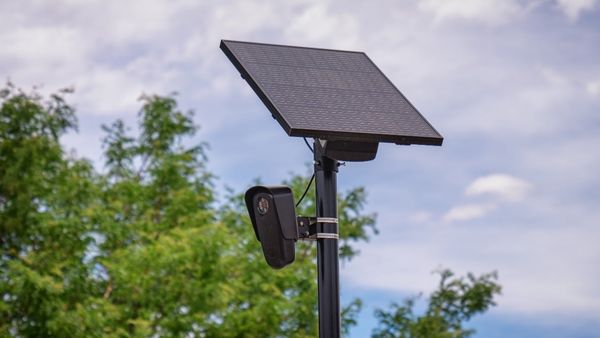
HF 2601 prohibits anyone who is not a citizen or lawful permanent resident of the United States, as well as foreign governments, political parties, and groups, from making contributions to or soliciting contributions for ballot measure campaigns.

The bill requires donors to political committees involved in ballot measures to certify that they are not foreign nationals. Political committees must also affirm that they have not knowingly received contributions from a foreign national.

Finally, the bill prohibits foreign nationals from making independent expenditures in candidate and ballot measure elections.

The bill passed the Iowa House 90-0 on March 23. The Iowa Senate then approved the bill 44-0 on April 21, sending it to Reynolds’ desk.

Rep. Austin Harris (R) said in March, “If you want foreign nationals to meddle in our elections, vote no, but if you don’t want that, and you want to protect the integrity of our elections, vote yes.”

Two other states have enacted prohibitions on foreign contributions to ballot measure campaigns this year. Alabama enacted legislation in March banning foreign national contributions to both ballot measures and candidate campaigns, while Nebraska expanded its ban on foreign contributions to ballot measure committees in April.

So far this year, legislators in 30 states have introduced or carried over 90 bills related to foreign funding of elections.

Campaign finance rules for ballot measure elections differ from those for candidate elections. Federal law prohibits candidates from soliciting, directing, or receiving contributions from foreign individuals or entities in connection with any federal, state, or local election.

In 1978, the U.S. Supreme Court ruled in First National Bank of Boston v. Bellotti that spending in ballot measure elections is similar to issue advocacy in the lawmaking process, and protected by the First Amendment.

In 2012, the U.S. Supreme Court upheld the U.S. District Court for the District of Columbia's ruling in Bluman v. FEC, holding that the Federal Election Campaign Act (FECA) prohibits foreign contributions to political candidates and that this prohibition is constitutional. The district court found, "It is fundamental to the definition of our national political community that foreign citizens do not have a constitutional right to participate in, and thus may be excluded from, activities of democratic self-government." However, it also ruled that FECA "does not bar foreign nationals from issue advocacy,” which includes ballot measure campaigns.

The Federal Election Commission ruled in 2018 that ballot measure campaigns are not regulated under FECA. According to the FEC, since ballot measure campaigns are similar to issue advocacy, foreign individuals, corporations, and governments can contribute to them.

Sign up to read this article
Read news from 100's of titles, curated specifically for you.
Already a member? Sign in here
Related Stories
Top stories on inkl right now
One subscription that gives you access to news from hundreds of sites
Already a member? Sign in here
Our Picks
Fourteen days free
Download the app
One app. One membership.
100+ trusted global sources.