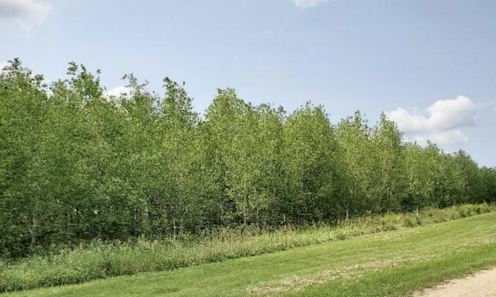
When we walked with a colleague into an aspen forest near Madison, Wisconsin, in the early spring of 2021, we expected to finalize our plans for a research project on several species of insects that live and feed on the trees. Instead, we found a forest laden with fuzzy, brown egg masses.
These masses, belonging to an invasive species known as the spongy moth, brought our plans to a screeching stop. We knew that within weeks, hungry spongy moth caterpillars would strip the forest bare.