Get all your news in one place.
100's of premium titles.
One app.
Start reading
The Times of India
The Times of India
World
TOI World Desk

Introduced Aoudad Threats: Game sheep form hardy US herds; ecologists fear bighorn competition

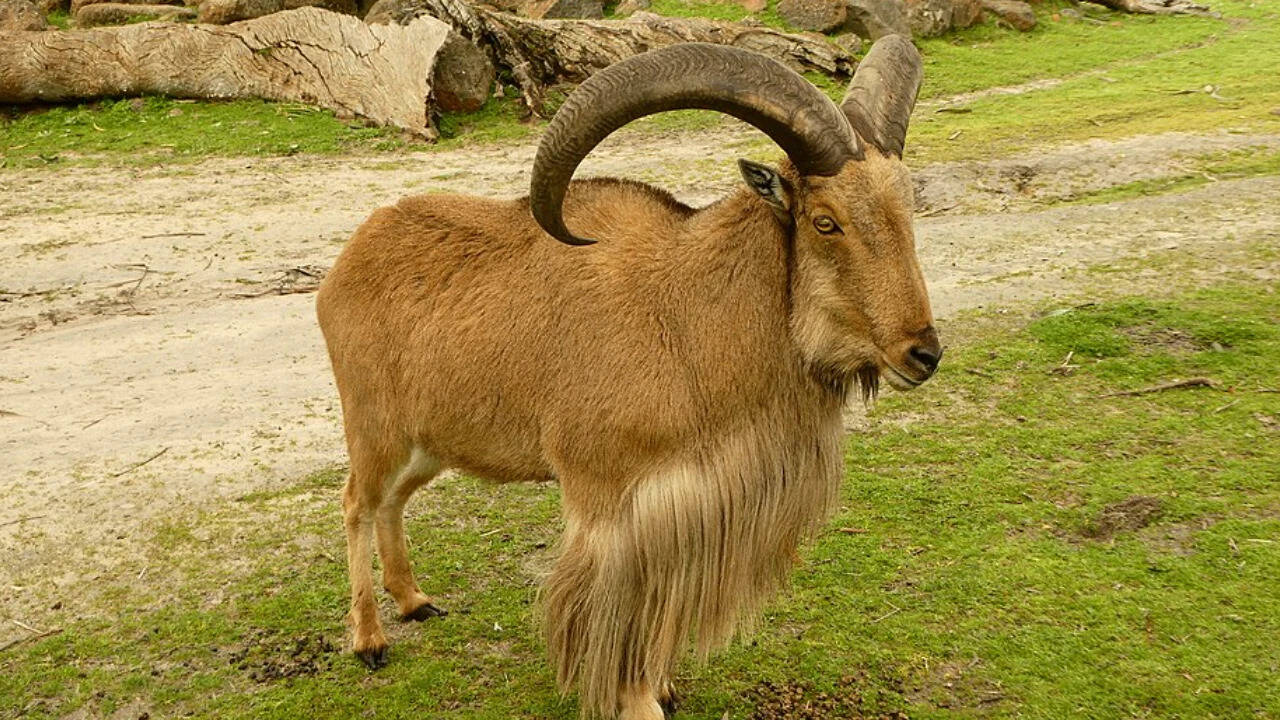
Aoudad, also known as Barbary sheep, are native to the mountains and deserts of northern Africa, but were introduced to parts of the American Southwest as exotic game animals. Their ability to survive in dry, rugged terrain eventually brought them into contact with native species that depend on many of the same resources.

Get breaking news anytime, anywhere. Download the TOI app now!

According to the National Park Service , aoudad were introduced into the Southwest for hunting and subsequently established wild populations. In desert environments, their ability to tolerate heat, use rugged terrain and feed on a wide range of plants has allowed them to persist. In California, this matters because the same type of steep, arid country is occupied by desert bighorn sheep, including the protected Peninsular population of the Santa Rosa Mountains.

From game animal to established population

The introduction of aoudad to the American Southwest came through intentional releases. Wildlife managers introduced the animals in different areas because of their size, distinctive horns and hardiness in harsh conditions. However, once introduced, the aoudad became less reliant on management by humans. Their adaptability allowed them to establish themselves in landscapes that many large mammals struggled to inhabit.

That adaptability is particularly important in desert ecosystems. The National Park Service describes aoudad as an introduced species that has become established in several parts of the Southwest, while noting that they can occupy habitat once used by native bighorn sheep. The history shows how an introduction made for hunting can later become a wildlife-management problem. California's Santa Rosa Mountains provide an important example of the habitat at stake. The California Department of Fish and Wildlife says the Santa Rosa Wildlife Area covers about 101,500 acres and contains the largest herd of protected Peninsular bighorn sheep in the United States.

When two sheep use the same desert

The issue stems from how similar the two species are. Both aoudads and desert bighorn sheep have adapted to living in mountainous and rocky areas in arid climates. Both species also rely on vegetation and water resources that are especially limited at certain times of year. The California Department of Fish and Wildlife further adds that Peninsular bighorn sheep inhabit a small geographical area at the base of the Peninsular Ranges. The distribution of this type of animal is influenced by such factors as topography, visibility, water sources, and the amount of forage available. Canyon bottoms, washes, and alluvial fans become particularly important since they provide water and forage sources.

Research published in the Journal of Wildlife Management provides a closer look at what happens when the two species share the same landscape. Scientists analysed the diets of aoudad and desert bighorn sheep in the Sierra Vieja Mountains of West Texas using DNA metabarcoding of faecal samples. They identified 88 plant genera consumed by the two species. The diets were more similar during the warm-dry season, when forage was more limited, suggesting that periods of resource scarcity could increase the potential for competition. There was another important difference in their diets. Whereas bighorn sheep preferred higher-quality forage, aoudads had a more general diet and could use lower-quality food sources more efficiently. This finding does not prove that aoudad are displacing bighorns in California, but it helps explain why competition between the two species is a concern.

A longer conservation challenge

Competition with yet another herbivore is only one part of a broader conservation challenge for desert bighorn sheep. Desert bighorn sheep inhabit naturally limited regions, and the presence of water and suitable grazing areas determines the location and size of each herd. According to the California Department of Fish and Wildlife, the Peninsular bighorn sheep exist in geographically isolated herds from the San Jacinto Mountains all the way down to the Mexico-California border. Migration between herds is important for reaching resources and maintaining genetic links between them.

Environmental factors affect the animals in their natural habitat as well. According to CDFW, lamb survival may vary significantly among populations and seasons and may be affected by rain that influences the productivity of vegetation and diseases. The monitoring includes ground surveys and satellite and VHF collar tracking for the purpose of studying the movement patterns of the animals. Thus, the aoudad story goes beyond the species’ initial introduction as a game animal. It raises the question of how an introduced sheep species fits into an ecosystem that already has a native one, especially when wildlife managers are trying to conserve scarce resources for both.

Sign up to read this article
Read news from 100's of titles, curated specifically for you.
Already a member? Sign in here
Related Stories
Top stories on inkl right now
One subscription that gives you access to news from hundreds of sites
Already a member? Sign in here
Our Picks
Fourteen days free
Download the app
One app. One membership.
100+ trusted global sources.