
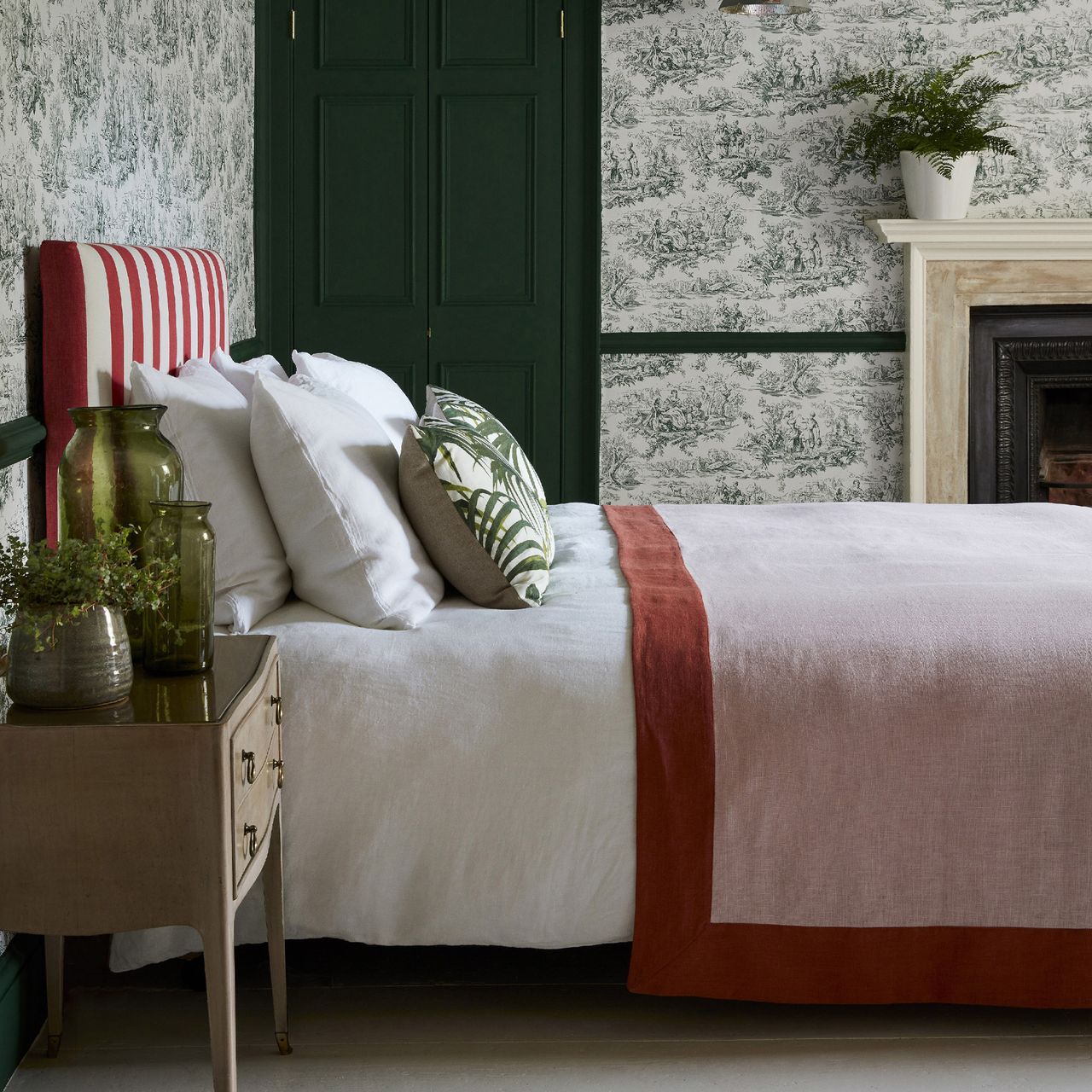
If, like me, you're planning a bedroom refresh this year, then you may be interested to find out what this year's biggest bedroom colour trends are predicted to be.
Yes, bedroom colour ideas should perhaps feel timeless, but we all know that bedroom trends shift a little each year, and the same is true of 2026.

This is the year that the bedroom has been dubbed the 'sensory refuge' by trend forecasters, interior designers, and colour experts alike. It's all about creating a calming, cocooning sleep space as respite from the increasingly unstable and dysregulating world outside our four walls.
When it comes to bedroom colour trends, that means cold, clinical, and impersonal colours are out, and warm, earthy, and richly emotive shades are most definitely in.
'In 2026, bedroom colour is becoming far more emotional and instinctive,' explains Marianne Shillingford, creative director and colour expert at paint brand Dulux. 'We’re moving away from shades that feel cold or overly functional and embracing colours that nurture and restore.'
This is everything you need to know about the colour on their way out and what's replacing them to make sure your bedroom walls, bedding, and furniture choices are dressed in shades that will support your well-being in 2026.
OUT: cool whites and greys

Through this lens, it's perhaps no surprise that the popularity of cool white and grey bedrooms will continue to decline in 2026. Cold and impersonal, these sterile shades lack the warmth and richness needed to create a nurturing and cocooning bedroom.
'For 2026, we’re seeing a clear move away from stark minimalism in the bedroom,' agrees Katerina Tchevytchalova, director at interior design studio K’Arte Design. 'Pure, bright white walls without any warmth are no longer a good fit for sleep spaces, as they can feel clinical rather than restorative. Similarly, the cool greys that dominated interiors over the last decade are starting to look dated unless they’re balanced with warmer accents and softer textures.'
'Once the reigning neutral, grey shades have gradually lost their dominance, especially in bedrooms,' agrees Anna Hill, brand director and colour consultant at Fenwick & Tilbrook. 'Homeowners are now steering away from its cool tones in favour of warmer, richer hues.'
'Cold whites and sterile greys are slipping out of fashion,' confirms Marianne. 'While they once symbolised modern simplicity, they can now feel stark and uninviting in a space that should wrap us in comfort. The once much-loved ‘millennial grey’ is also losing its appeal, as we crave warmth, character, and deeper connection to nature rather than flat, one-note neutrals.'
IN: warm neutrals

'Instead, 2026 is all about warm, nature-led colour palettes that promote comfort and wellbeing,' shares Katerina. 'Think soft earthy neutrals like warm beige, sandy taupe, and chalky stone. Used together with layered textures and tactile materials, these shades help create bedrooms that feel cocooning, restorative, and genuinely easy to live with.'
'Soft warm whites, taupe-based mid-neutrals, and earthy shades are taking centre stage,' agrees Anna, 'creating spaces that feel inviting and cocooning rather than cool and impersonal.'
And the key to this look, as Katerina says, is layering. In 2026, a neutral bedroom shouldn't be flat or impersonal; instead, think warm layering of colours, textures, and fabrics. If you imagine being in a natural landscape, very little is one flat colour; it's a myriad of subtle, nuanced shades that make up a rich and interesting whole.
OUT: icy pastels

And it isn't just cold whites and greys that are out. The shift towards warmer, nature-inspired hues means icy pastel shades are also losing favour.
'The shift in bedroom colour trends for 2026 closely reflects the wider cultural direction,' explains Rhian Barker, group design director at interior design studio Accouter. 'Rather than stark or clinical colours, this year's trending colours prioritise softness, warmth and emotional resonance.'
That means a shift away from 'cool, impersonal hues towards colours that convey comfort, tactility and reassurance,' says Rhian. 'Cold greys, icy pastels and flat, high-contrast whites in bedroom interiors are increasingly viewed as unsupportive of rest and relaxation.'
Instead, we increasingly want to live with warmer, muted colours that create a sense of calm and cocooning. 'Subtle depth, softness and visual warmth, are now shaping bedroom palettes,' says Rhian, 'reinforcing the bedroom’s role as a restorative and emotionally supportive space.'
IN: muted natural tones

So what's replacing 'artificial' pastel shades? Soft, warm, muted shades that are inspired by the natural world. Think 'muted clay tones, warm browns, and softened greens,' says Rhian.
'In their place, nature-inspired hues are taking center stage,' agrees Marianne. 'Sage green is emerging as a clear favourite for 2026, offering a sense of calm, balance, and quiet confidence. It’s grounded and reassuring, with a timeless quality that makes bedrooms feel like true sanctuaries – spaces to slow down, breathe deeply and reconnect.'
'Warm greens such as olive and sage are especially popular, thanks to their connection to nature and their ability to create a sense of emotional stability and calm,' agrees Katerina.
And rather than synthetic cool-toned pinks, there's a similar shift towards warmer, natural tones. 'Terracotta and clay tones are emerging, bringing warmth and depth while pairing beautifully with natural finishes like timber and linen,' says Katerina.
OUT: stark primary colours

Just like in this year's bedding trends, there's also a shift away from 'dopamine decor' in the bedroom. Whilst this trend can look fun and playful elsewhere in the home, in the bedroom, many of us have realised that bright, stark primary colours are a little *too* invigorating for a sleep space.
'There’s less appetite for bold, high-energy shades in the bedroom,' agrees Katerina. 'Bright primary colours like deep reds, vivid blues or intense oranges tend to create a stimulating atmosphere, which works against the calm, restful feeling people want from a bedroom.'
Whilst these vibrant shades might well work to enliven a kitchen or work space, the atmosphere we want to create in the bedroom is a different vibe. Although don't worry, that doesn't mean there's any need to forgo bolder colours altogether.
IN: deep, rich, earthy tones

Rather than primary colours, 2026 is taking inspiration from Mother Nature's deeper and richer tones.
'In 2026, we're predicting that the current appeal for earthy, muted heritage shades will remain strong across both interior and exteriors,' says Anna at Fenwick & Tilbrook. 'Expect rusty browns, oranges, and deep reds that carry warmth and character from winter into the year ahead.'
'In recent years, we’ve seen a clear movement towards warm, earthy colours that create soothing, comforting bedrooms, helping customers connect more with the natural environment,' agrees Ruth Mottershead, creative director at paint brand Little Greene.
'We first saw this in the use of calm, earthy neutrals that have an inherent warmth to them, and more recently in the return of brown, with deep, sumptuous chocolate hues being embraced alongside rich caramels and honey tones to create elegant and indulgent spaces that offer real comfort.'
'Darker aubergine shades are also becoming a popular choice,' says Ruth. 'These sumptuous hues provide a beautiful, charismatic depth of colour.' Plus, 'deep, earthy pinks with a beautiful, rich and chalky, muted hue.'
So if you're a colour lover, don't worry, 2026 isn't all about muted neutrals, it's simply a return to warmer, richer shades, and taking inspiration from nature so that our bedrooms feel like restorative and relaxing spaces.
'Overall, anything that feels cold, rigid, or visually flat is being replaced with schemes that feel softer, warmer, and more lived-in,' shares Katerina.
'Ultimately, bedroom colours in 2026 are about comfort with confidence,' sums up Marianne at Dulux, 'shades that feel soulful, restorative and effortlessly uplifting.'