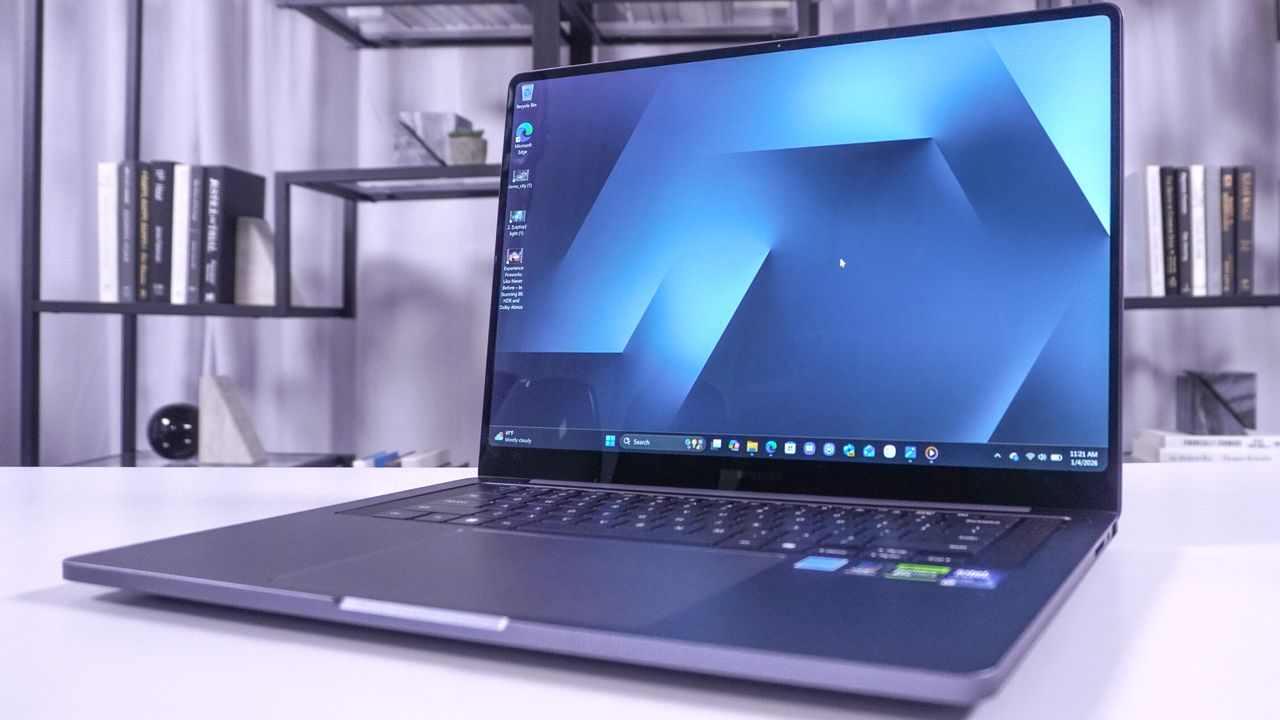
This is the year of the laptop, and Intel Core Ultra Series 3 looked set to be at the center of this revolution.
But after Intel told me that “a lot” of laptop partners could be isolated from the RAM price crisis by sitting on “9 to 12 months of inventory,” Samsung just confirmed that its Galaxy Book 6 Pro and Book 6 Ultra will be around 20% more expensive than last-gen.

While laptop makers may be somewhat isolated, it's looking like we'll still see some price increases.
What are we going to be paying?

So it’s worth noting that we have some specific options here — floating around the upper mid-range level of Intel’s chip offerings. And this is Samsung’s own Korean launch pricing, which may not be fully representative of what the actual price will be (taxes and all that). But it gives us a rough idea.
Laptop |
Chip |
Price (KRW) |
Converted price (USD) |
Converted price (GBP) |
|---|---|---|---|---|
Galaxy Book6 Pro (14-inch) |
Intel Core Ultra X7 |
₩3,410,000 |
$2,322 |
£1,732 |
Galaxy Book6 Pro (16-inch) |
Intel Core Ultra X7 |
₩3,510,000 |
$2,390 |
£1,782 |
Galaxy Book6 Ultra |
Intel Core Ultra 7, RTX 5060 |
₩4,630,000 |
$3,152 |
£2,352 |
Galaxy Book6 Ultra |
Intel Core Ultra 7, RTX 5070 |
₩4,930,000 |
$3,357 |
£2,504 |
Compared to the Galaxy Book 5 Pro, that’s a roughly 20% uplift; same goes for comparing to the Galaxy Book 4 Ultra.
A “perfect combination” of issues

Here’s where it gets interesting, though. Samsung is in a long line of companies who will also probably raise prices. Asus sounded the alarm just before CES 2026, and after speaking to all the laptop makers on the showfloor, it’s clear that cost was the last thing anybody wanted to talk about.
But also there’s what Intel said, which does stand at odds with what the price sheets are telling us. “A lot of our OEM partners have about 9 to 12 months inventory…when it comes to laptops, there is a long lead time of memory securing,” Nish Neelalojanan, Intel’s Senior Director of Product Management, told Tom’s Guide.
Talking further about what may be causing this, Nish highlighted three key areas: component shortages, a significant increase in demand (given how good the Core Ultra Series 3 chips are) and the ramp curve — basically the ramp up of production as Intel transitions from making its first chips to full-scale production at high volume.

“We are ramping up as expected to a ramp curve, and there is a significant amount of demand given how great these chips are performing,” Neelalojanan commented. “So a perfect combination of industry-level component shortages, significantly increased demand, and also the ramp curve…you’re getting mixed signals depending on where the different partners are.”
Outlook

So, put simply, there may be some isolation from the huge price increases seen in RAM components with this inventory. But there will still be some price increases across the board for the premium options.
Of course, we’ll have to see what these affordable Core Series 3 options in Intel’s lineup will be asking for pricewise, and whether they are the “complete reimagining” it’s been touted as. Keep it locked to Tom’s Guide for all the reviews as they drop over the year.

Follow Tom's Guide on Google News and add us as a preferred source to get our up-to-date news, analysis, and reviews in your feeds.
More from Tom's Guide
- I’ve got an Intel Core Ultra X9 388H laptop in front of me, and I’m taking your requests LIVE on what to test
- Asus rep says memory shortage should 'start to normalize' by 2027, but 'nobody wants to be the first one to lower prices'
- 'That's not going to last': Jeff Bezos believes AI will force you to rent your PC from the cloud, and the RAM crisis is accelerating it