
Get all your news in one place.
100’s of premium titles.
One app.
Start reading
GamesRadar
GamesRadar
Technology
Duncan Robertson

Intel confirms Core Ultra refresh rumors, announcing "the fastest desktop gaming processors" the brand "has ever built," and I hope this means long-term support for its current motherboard socket

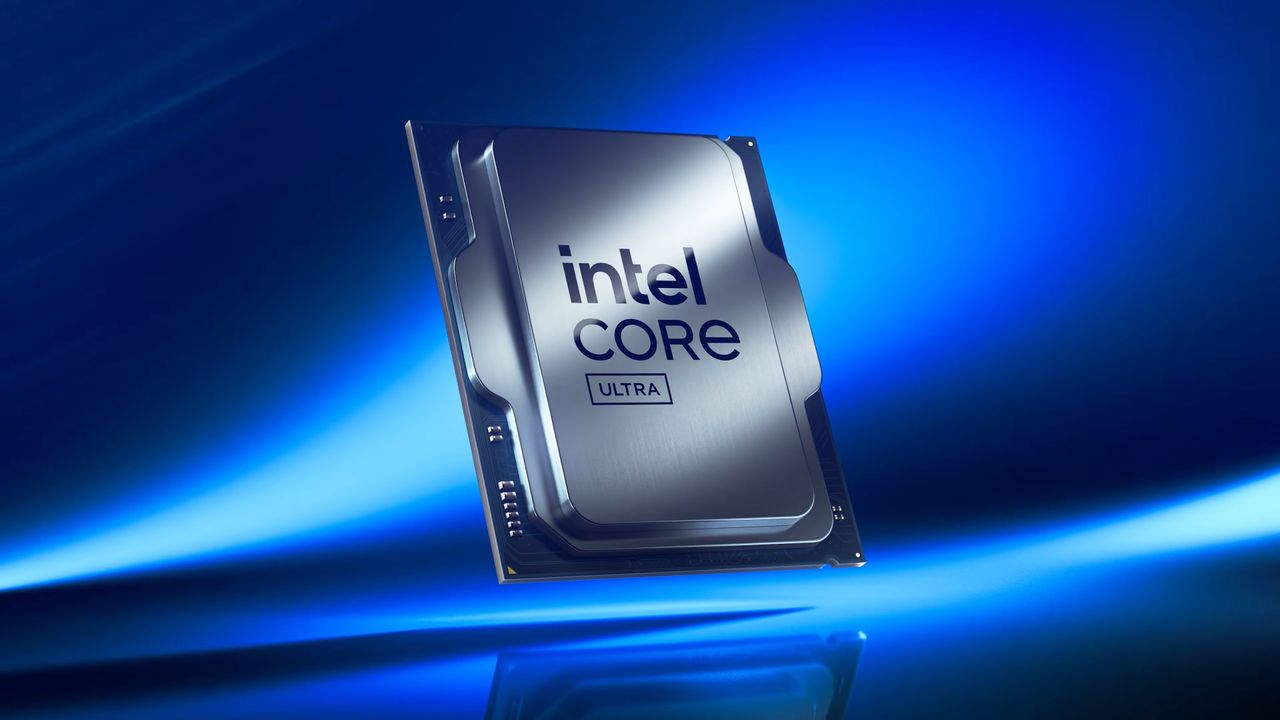
An Intel Core Ultra processor on a blue background.

Intel has had it rough in the desktop CPU market for a few years now, but it's just officially announcing a refresh of its most recent Core Ultra processors, and I think things might be starting to look up. A Core Ultra series refresh has been rumored for a little while now, but Intel is officially launching two new CPUs for gaming later this month, and they'll use the same LGA1851 motherboard socket as the original range.

Specifically, Intel has announced the new Intel Core Ultra 5 250K/KF Plus starting at $199 and the Intel Core Ultra 7 270K/KF Plus starting at $299. Both will launch later this month on March 26.

“With the new Intel Core Ultra 200S Plus desktop processors, Intel is proudly taking the first steps in a new era of enthusiast performance," said Robert Hallock, VP, Client Computing Group at Intel.

"First, the Core Ultra 7 270K Plus and Ultra 5 250K Plus are the fastest desktop gaming processors Intel has ever built. Second, they nearly double the content creation performance of our competitor. And, thirdly, they’re arriving with exciting new technologies that revolutionize the setup and optimization roadmap for Intel gaming platforms. These chips are a value that’s hard to beat,” he said.

The "exciting new technologies" Hallock is referring to here might just be Intel's best answer yet to the extra gaming and content creation performance of AMD's 3D V-cache CPUs. Until now, Intel has tried to combat this with E-cores and cramming its chips full of more threads and cores than the competition. Now, Intel is taking a different approach with a new Intel Binary Optimization Tool.

This is a first-of-its-kind technology that purportedly increases a CPU's instructions per cycle (IPC), even if a workload has been optimized for a different kind of processor, a game console, or an earlier architecture. In essence, this should increase the efficiency of Intel's processors when gaming and content creation by prioritising information that's being processed. Although it's hard to quantify from just a surface-level announcement, it's a promising tease that Intel is trying to lean into enthusiast-level gaming performance in an inventive way, as AMD has been.

Let's talk specs, though. The Intel Core Ultra 7 270K Plus has 24 cores (8 performance and 16 efficiency), and 24 threads, which is up from 20 cores and 20 threads on the original Intel Core Ultra 7 265K. The refreshed model carries over the same 5.5GHz max turbo frequency as the original.

The more affordable Intel Core Ultra 5 250K Plus also gains four cores from its older version, boosting up to 18 cores and 18 threads (6 performance and 12 efficiency). Both CPUs have seen a boost to their die-to-die frequency as well, which increases the CPU and memory controller speed, allowing for boosted gaming performance with less system latency overall for your gaming PC.

Intel has also said that while these new processors will share compatibility with all existing 800-series motherboards currently available, new 800-series chipset motherboard models will be arriving in 2026, including ones that enable support for 4-Rank CUDIMM memory, which Intel is catering to with this refreshed range of processors. Given we're in the middle of a RAM shortage, though, I doubt that will be top of anyone's priority list right now.

My take, as someone who's been watching the CPU market closely, is that this seems like a serious recommitment to the market Intel needs right now. Following its Raptor Lake volatility woes, Intel has been failing to capture the desires of gamers, which has been reflected in consistent losses to AMD (at least as far as Steam hardware surveys have consistently reported over the last year).

Intel's first crack at the Core Ultra CPU range fell a bit flat until firmware updates managed to boost gaming performance up to respectable levels, but AMD has still been winning out based on a commitment to supporting its motherboard ecosystems long-term.

(Image credit: Intel)

For context, AMD's AM4 platform, which launched in 2016, has been supported with new, compatible products even in recent years, and on the current-gen AM5 platform, you can choose from three complete CPU families for a compatible processor. Meanwhile, Intel has consistently shown it wants to move on from each motherboard socket within one or two generations, and I think that's now harming them in terms of making gamers confident to invest in its platforms.

This new Core Ultra refresh certainly seems like it's coming from a revitalised and switched-on Team Blue, at least from the direction of these initial announcements. But I hope that this is the start of Intel realising it needs to offer longer-term upgrade routes and support for people adopting its motherboards. I can understand why the brand abandoned the LGA1700 ecosystem after the instability scandals, but I'm personally hoping this will be the first of many product refreshes on the LGA1851 socket.


Also check out the best graphics card, the best RAM for gaming, and the best computer speakers.

Sign up to read this article
Read news from 100’s of titles, curated specifically for you.
Already a member? Sign in here
Related Stories
Top stories on inkl right now
One subscription that gives you access to news from hundreds of sites
Already a member? Sign in here
Our Picks
Fourteen days free
Download the app
One app. One membership.
100+ trusted global sources.