
Get all your news in one place.
100’s of premium titles.
One app.
Start reading
Windows Central
Windows Central
Technology
Rebecca Spear

Intel challenges AMD's handheld gaming dominance — reportedly refers to its rival's chips as "ancient silicon"

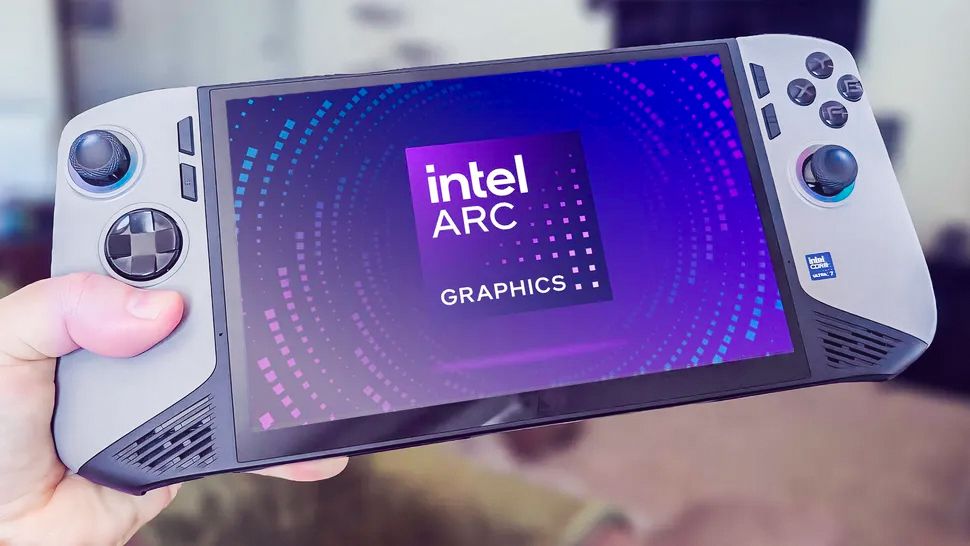
A hand holding up an MSI Claw 8 AI+ handheld gaming PC that has the Intel Arc Graphics logo on it. .

At CES 2026, Intel showed off its next-gen Core Ultra Series 3 chips (Panther Lake) and explained that these latest AI chips will be the company's platform of choice for laptops, tablets, mini PCs, and handheld gaming PCs going forward.

MORE CES 2026
(Image credit: Windows Central (Edited with Gemini))

• Start: Tuesday, January 6, 2026
End: Friday, January 9, 2026
Where: Las Vegas, Nevada
• More info: CES 2026

Of course, Intel plans on challenging AMD's dominance in the handheld gaming space with its newer SoCs (system on a chip) integrated with Intel ARC B390, which the company says offer better performance and features than its rival's; some are referring to this competition as the handheld war.

In an interview, Nish Neelalojanan, senior director of product management client for Intel, reportedly stated that AMD is "selling ancient silicon, while we’re selling up-to-date processors specifically designed for this market" (thanks, PC World). Apparently, the company is returning to low-power E-cores that are "particularly appropriate for gaming."

In other words, we can expect Intel to have a larger and louder presence in premium handhelds this year and next.

RELATED: Here's how to understand Intel Core Ultra Series 3 models

As part of Intel's plan to steal AMD's handheld crown, Team Blue is working with several other companies to create new handhelds. After all, you can't fully challenge the market king if it doesn't have consumer products for people to choose from.

As you'd imagine, Intel is already in contact with several other companies for the production of future handhelds. (Image credit: Intel)

Some of those companies include Acer, MSI, Compal, Pegatron, GPD, Quanta Computer, H Foxconn, Wistron, NexPlayer, and Microsoft.

As a reminder, AMD Ryzen Z1 and Z2 chips power most mainstream handhelds, including ASUS ROG Xbox Ally X, Legion Go 2, and many more devices. Even the Steam Deck has a custom AMD APU (accelerated processing unit), basically an AMD SoC.

Meanwhile, the only major OEM to have Intel-powered handhelds is MSI with its Claw lineup. I've personally been able to get my hands on one of these devices, as seen in my MSI Claw 8 AI+ review, and it truly impressed me with its impressive performance.

If Intel wants to get consumer attention as the best handheld chip manufacturer, it first needs to get its SoCs into more devices. I guess that means we'll be hearing about some new handhelds in the coming months.

It seems the handheld war is ramping up between Intel and AMD this year. Are you more interested in getting an Intel or AMD-powered handheld, and why? Tell us in the comments.

Follow Windows Central on Google News to keep our latest news, insights, and features at the top of your feeds!

Sign up to read this article
Read news from 100’s of titles, curated specifically for you.
Already a member? Sign in here
Related Stories
Top stories on inkl right now
One subscription that gives you access to news from hundreds of sites
Already a member? Sign in here
Our Picks
Fourteen days free
Download the app
One app. One membership.
100+ trusted global sources.