
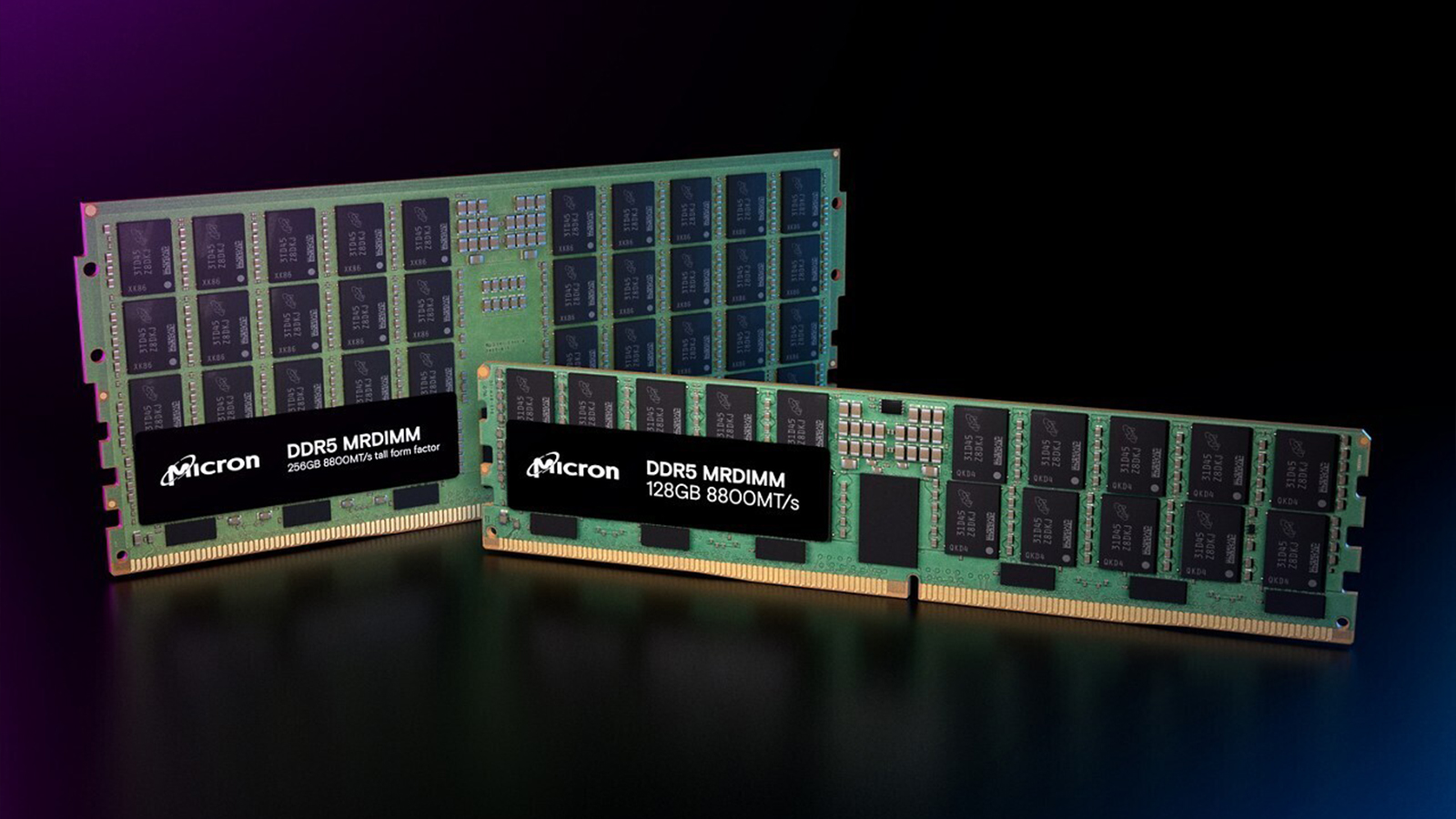
When Intel introduced its Xeon 6 platform earlier this year, the company said that the new CPUs will support multiplexed rank dual inline memory modules (MRDIMMs) with the promise of bringing together high data transfer rates, low latency, high capacity, and predictable power consumption. Late last week the company decided to remind the industry about its MRDIMM support probably because server makers are beginning to roll out systems with such memory modules. For example, NEC recently announced its soon-to-be-built supercomputer that will use MRDIMMs.
As server CPUs ramped up core counts in recent years, memory bandwidth available per core has decreased - despite the fact that DDR5 has greatly improved data transfer rates compared to DDR4, which created performance bottlenecks for compute-heavy workloads. MRDIMMs are designed to improve memory performance by effectively doubling available bandwidth.















