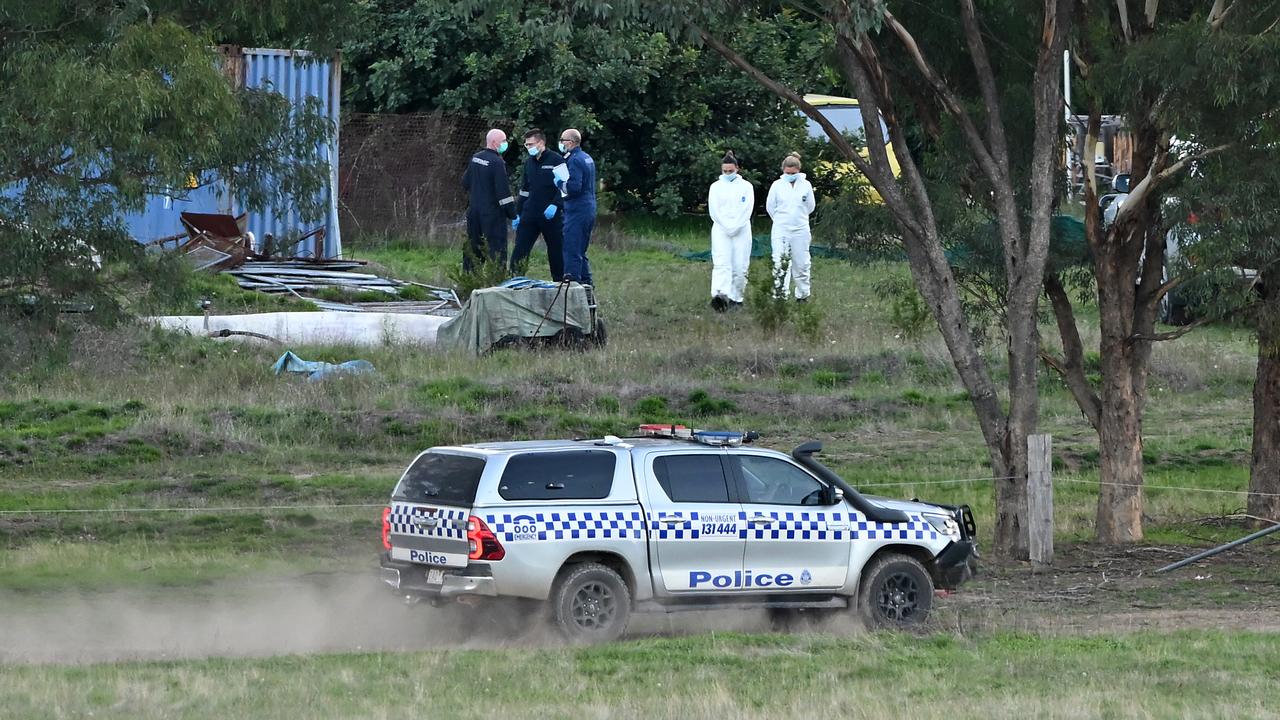
Two men are being questioned by police investigating Dezi Freeman's movements as critics question why specialist officers didn't use body-worn cameras when they captured him.
Freeman triggered one of Australia's largest manhunts after he killed Senior Constable Vadim de Waart-Hottart and Detective Leading Senior Constable Neal Thompson at his home at Porepunkah, in Victoria's High Country, in August 2025.
The 56-year-old fled the scene and evaded capture until he was traced to a remote property about 150km away at Thologolong, near the Victoria-NSW border, in March, when he was shot and killed by police.
On Tuesday, task force detectives arrested two men in relation to the ongoing investigation into Freeman's movements after the police killings.
The men, aged 48 and 45, were arrested at separate locations in northeast Victoria before being interviewed by police.
It comes a day after the coroners court held directions hearings into the deaths of the two police officers and the final shootout that killed Freeman.
They revealed specialist police continue to work without body-worn cameras, eight years after the state force began to roll out the technology.
None of the officers who gunned down Freeman on March 30 were wearing the devices.
They were members of Victoria Police's special operations group, who conducted covert surveillance on the fugitive's location for days before moving in and attempting to negotiate with him over several hours.
Victoria Police confirmed to AAP body-worn cameras currently in use were not compatible with the officers' specialist operational equipment, although a trial was nearing completion.
"Findings from this evaluation will inform any future decisions regarding broader implementation across the unit," a spokesperson said.
But critics say it's too little too late, with police having been aware of the issue for years.
"It's been a significant problem for a long time that the special operations group don't have body-worn cameras," police misconduct lawyer Jeremy King said.
"I've never seen an explanation as to why, and it has caused real problems in terms of police accountability in both civil, coronial and criminal contexts."
The justification provided by police didn't "pass the pub test", Mr King said.
"If someone on the beat can have a camera on them, I cannot understand why someone in the special operations group doesn't," he said.
The slain officers were executing a warrant relating to Freeman's alleged sexual assault of a child and alleged attempt to involve a child in the production of abuse material.
Seven months later, officers tracked the fugitive to a shipping container in Victoria's remote northeast.
Counsel assisting the state coroner, Lindsay Spence, on Monday said Freeman emerged from the container with a bag over his hands before dropping it and revealing a firearm.
He shot at police and eight members returned fire, fatally wounding him, Mr Spence said.
As specialist police were not equipped with body-worn cameras, the inquest into Freeman's death will rely on officers' testimony and footage captured from a police helicopter.
The cameras were trialled by Victoria Police in 2017 before being rolled out to all frontline officers from mid-2018 to November 2019.
It was "quite extraordinary" the gap had not been addressed by the state Labor government, Victorian Greens leader Ellen Sandell said.
Premier Jacinta Allan would not say whether the situation was acceptable.
"We need to let that independent (inquest) process do its work and provide further recommendations," she told reporters.
Separate inquests will probe the deaths of the officers and Freeman's fatal shooting, but full hearing dates have not been set.
1800 RESPECT (1800 737 732)
National Sexual Abuse and Redress Support Service 1800 211 028