
Get all your news in one place.
100's of premium titles.
One app.
Start reading
AAP
AAP
Business
Jacob Shteyman

Underlying inflation still rising as fuel costs ease

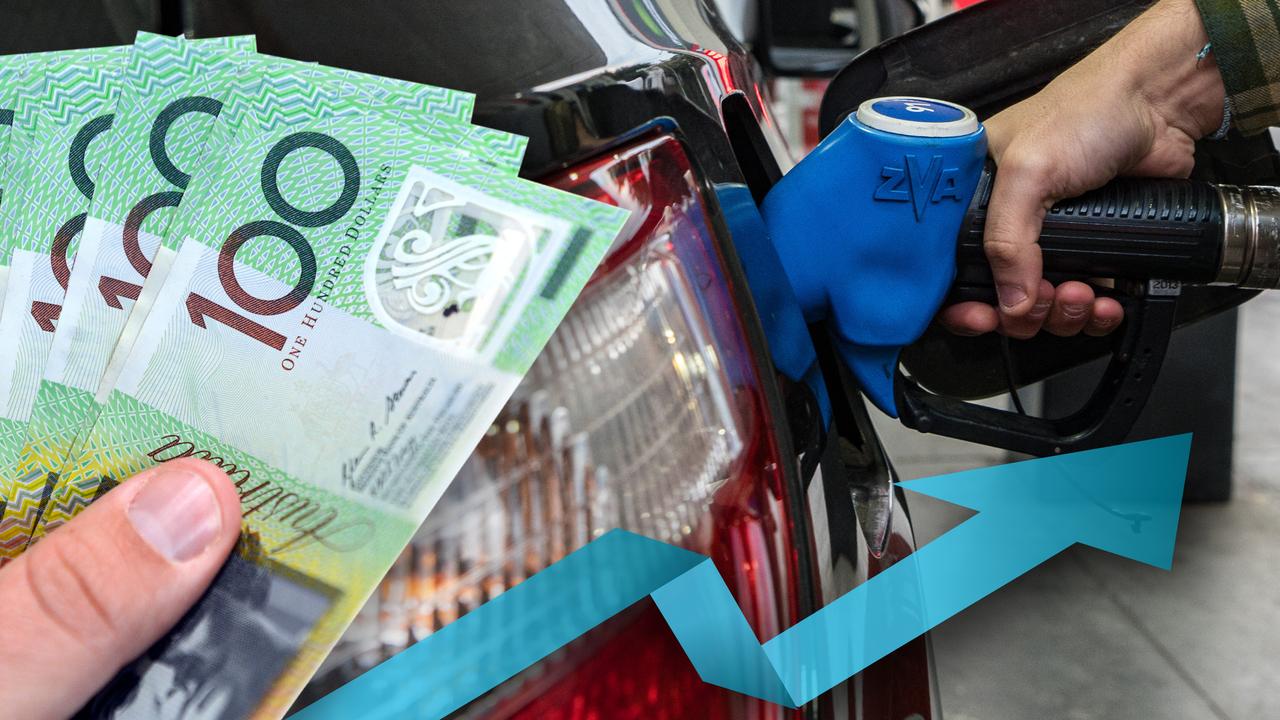
The government's move to temporarily cut the fuel excise helped reduce the annual inflation rate. (Jay Kogler/AAP PHOTOS)

Australia's headline inflation rate fell sharper than expected in April, but a rise in the underlying measure will be cause for concern at the Reserve Bank.

A decline in petrol prices as a result of the government's fuel excise cut caused the increase in the annual consumer price index to fall to 4.2 per cent, from 4.6 per cent in March, the Australian Bureau of Statistics reported on Wednesday.

Forecasters had been expecting the headline inflation rate to fall to 4.4 per cent.

However, the trimmed mean, which omits volatile items and gives a better sense of the underlying pulse, edged up to 3.4 per cent, in line with the consensus of forecasters.

While the slightly softer-than-expected reading won't add to the case for more rate hikes, the RBA board will be wary not to take too much confidence out of one month of data.

Disruptions from the closure of the Strait of Hormuz continue to impact global supply chains and the underlying impulse of price pressures, excluding the temporary easing in fuel prices, was still growing.

economy
Petrol prices eased in April thanks to a cut in the fuel excise. (Dean Lewins/AAP PHOTOS)

Fuel prices fell seven per cent in the space of one month, after a spike of 32.8 per cent in March.

But fuel prices were still 23.5 per cent higher compared to February and before the impact of the Middle East conflict, said ABS head of prices statistics Sue-Ellen Luke.

"The impact of higher oil prices has also been seen in products and services with high freight and logistics costs, such as parcel delivery and building materials," she said.

"This is reflected in price increases of 12.4 per cent for postal services and 4.7 per cent for new dwelling construction compared to 12 months ago."

Housing inflation will be a key focus of the central bank, given it tends to be an early indicator of overall inflation pressures in the economy, AMP economist My Bui said before the release.

Housing costs rose 6.3 per cent annually, with rents up 3.5 per cent, amid ongoing low vacancy rates across the capital cities.

economy
The central bank is expected to keep a close watch on housing inflation. (JASON O’BRIEN/AAP PHOTOS)

Following a weaker-than-expected employment result for April, markets have scaled back rate rise bets.

Traders were pricing in four basis points of rate hikes in June, but were still expecting at least one more 25-basis point increase by the end of 2026.

Construction work done rose 3.4 per cent to $83.4 billion in the first three months of the year, the ABS also revealed on Wednesday, in a sign the economy was still holding up despite two interest rate hikes and the early impacts of the Iran war.

Sign up to read this article
Read news from 100's of titles, curated specifically for you.
Already a member? Sign in here
Related Stories
Top stories on inkl right now
One subscription that gives you access to news from hundreds of sites
Already a member? Sign in here
Our Picks
Fourteen days free
Download the app
One app. One membership.
100+ trusted global sources.