Get all your news in one place.
100's of premium titles.
One app.
Start reading
The Independent UK
The Independent UK
Business
Isabel Keane

Inflation held steady in February as consumers brace for energy spikes due to Iran war

Inflation held steady in the month leading up to President Donald Trump’s war with Iran, which has sent oil and gas prices skyrocketing.

The Consumer Price Index report released Wednesday by the Bureau of Labor Statistics details the cost burden on American households in February, before the war in Iran officially began on February 28.
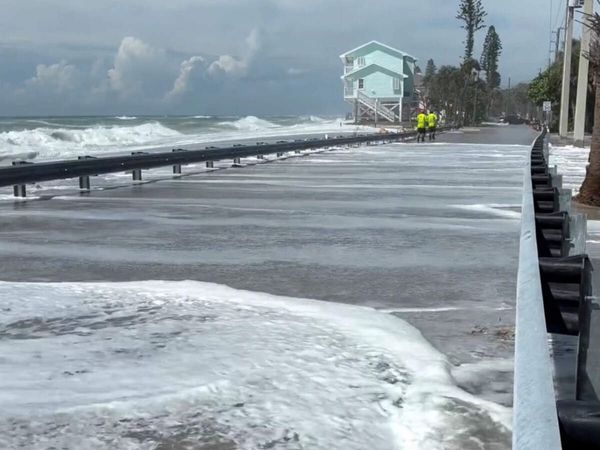
The report showed that inflation was 2.4 percent in February compared with the same period last year, matching January’s increase.

Core inflation, which excludes the often volatile food and energy categories, rose 2.5 percent from last year, also matching January’s level, which was the lowest in five years. However, both figures are above the Federal Reserve’s 2 percent target.

The data represents a snapshot of inflation before President Donald Trump launched a war on Iran, sending oil prices jumping as Iran effectively shut down the Strait of Hormuz, through which around a fifth of the world’s oil passes.

Meanwhile, the report showed that on a monthly basis, prices rose 0.3 percent in February from January, compared to a 0.2 percent increase in January.

However, the conflict with Iran has complicated the current affordability crisis, a point of tension for congressional Republicans set to face voters in midterm elections this year.

Grocery prices also rose 0.4 percent and were up from 2.4 percent from a year earlier. Gas prices also increased 0.8 percent last month — though the uptick is expected to worsen as the war progresses.

Gas prices increased within days of the conflict’s start. The rising cost is also expected to worsen inflation, and will likely push those numbers even higher on next month’s CPI report.

Oil prices rose to nearly $120 a barrel on Sunday before falling to $87 on Wednesday after Trump suggested the war in Iran would be a “short-term” conflict. However, it remained unclear Wednesday when the war might end.

Experts warn that prices will soar should the Strait of Hormuz remain inaccessible. Wood Mackenzie, an energy analytics firm, told the Associated Press that oil prices could rise to $150 a barrel within a matter of weeks.

That would cause gas prices in the U.S., which rose to an average of $3.58 a gallon on Wednesday, to continue to increase, according to the report.

Sign up to read this article
Read news from 100's of titles, curated specifically for you.
Already a member? Sign in here
Related Stories
Top stories on inkl right now
One subscription that gives you access to news from hundreds of sites
Already a member? Sign in here
Our Picks
Fourteen days free
Download the app
One app. One membership.
100+ trusted global sources.