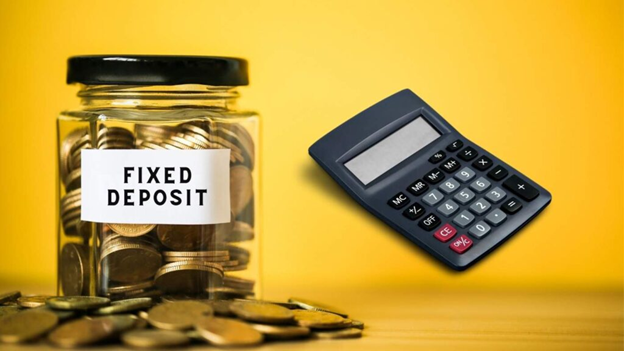
Fixed deposits have always been seen as a safe and steady way to save. For many people, especially retirees and conservative investors, an FD offers something simple: predictable interest and peace of mind. But the return you earn from a fixed deposit is not only about the interest rate. It is also about how inflation affects your money over time. That is why understanding real returns matters, and using an FD calculator can make this much easier.
So how exactly does inflation impact FD returns, and how can you check what your deposit may actually earn? Let us look at this in a practical way, with Bajaj Finance FD as an example.
Fixed deposit returns look stable, but inflation changes the picture
On paper, fixed deposits are straightforward. You invest a lump sum for a chosen tenure, and you earn interest at a fixed rate. For instance, Bajaj Finance Fixed Deposit currently offers competitive rates, including benefits for senior citizens. The rates go up to 7.30% p.a. for 24–60 months, 7.10% p.a. for 15–23 months, and 6.95% p.a. for 12–14 months.
These returns look attractive, especially for investors who want stability without taking market risk. But the real question is what these returns mean after inflation. Inflation affects purchasing power year after year, even when your interest income stays fixed.
What inflation really does to your savings
Inflation is the gradual rise in prices over time. Things that cost less today may cost more a few years later. This applies to daily groceries, healthcare, utility bills, travel, and almost everything else.
So even if your FD gives you a fixed interest payout, the value of that money may not remain the same in real terms. Earning 7.30% p.a. sounds strong, but if inflation stays around five to six percent, the real gain becomes smaller.
That is why returns should always be seen in context, not in isolation. Have you noticed how everyday expenses have increased compared to a few years ago? That is inflation at work.
Why an FD calculator becomes useful
Many investors make fixed deposit decisions based only on the headline interest rate. But an FD calculator helps you go beyond that. It allows you to estimate the maturity amount, interest earned, monthly income if payouts are chosen, and growth over the deposit period.
Instead of guessing, you get clear numbers. This is especially useful when you want to plan savings around real-life goals. For example, how much will a Rs. five lakh deposit grow into in three years? What monthly interest payout can you expect? Does the return comfortably support future expenses?
An FD calculator gives realistic clarity before you invest.
Understanding returns is important for retirees
For senior citizens, fixed deposits are often not just investments. They are income tools. Regular FD interest payouts can support monthly household budgeting, medical needs, and financial independence after retirement.
That is why many retirees prefer predictable income options such as monthly or quarterly payouts. With Bajaj Finance FD, senior citizens choosing monthly payout earn:
- 07% p.a. for 24–60 months
- 88% p.a. for 15–23 months
- 74% p.a. for 12–14 months
Using an FD calculator helps estimate exactly what those payouts may look like in rupee terms. And for retirees, that kind of planning is essential.
Inflation does not make FDs ineffective, but planning becomes necessary
Some people assume inflation reduces the value of fixed deposits completely. That is not true. Fixed deposits still offer safety, stable returns, low risk, and structured income options.
But inflation reminds us that even safe returns must be planned carefully. The goal is not always to beat inflation aggressively. Sometimes, the goal is stability and protection of capital with reasonable growth.
That balance becomes more meaningful when rates are competitive, as they are currently with Bajaj Finance Fixed Deposit.
How an FD calculator helps you choose the right tenure
Tenure plays a major role in FD returns. A shorter FD gives liquidity, while a longer FD helps lock in higher rates for more time.
An FD calculator helps answer questions like: should I invest for one year or three years? What is the maturity difference between these tenures? How much extra interest will I earn by extending the deposit?
For example, choosing a longer tenure under Bajaj Finance FD may allow you to lock in rates up to 7.30% p.a. under the senior citizen cumulative option, which can create a meaningful difference in maturity value.
Realistic planning matters more than just comparing rates
Many people compare FD rates, but fewer people calculate what those rates actually mean in numbers. An FD calculator brings that clarity. It helps you plan deposits based on outcomes rather than assumptions.
It also helps you decide whether you want monthly interest support or a lump sum maturity benefit later. When inflation is part of the picture, such planning becomes even more important.
Conclusion
Inflation affects every saver, including those who prefer fixed deposits. While FD returns remain stable, the real value of those returns depends on rising costs over time.
That is why it is useful to combine a competitive deposit option like Bajaj Finance FD with a practical tool such as an FD calculator. It helps you estimate interest earnings, maturity outcomes, and payout support clearly.
In the end, fixed deposits work best when they are chosen with awareness, not only based on rates. And a return calculator helps make that decision more informed and realistic.