
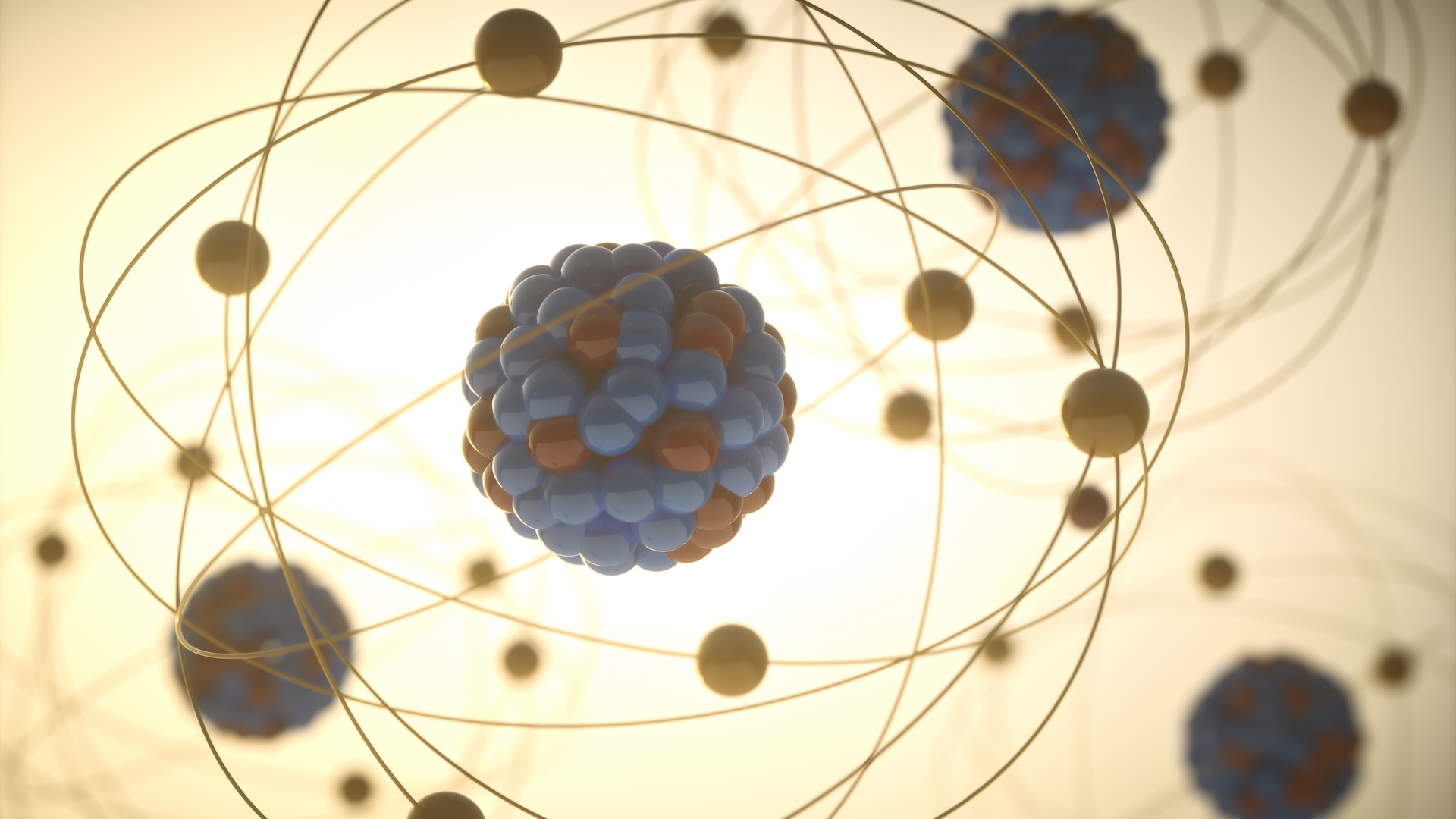
A mysterious second flavor of hydrogen atoms — one that doesn't interact with light — may exist, a new theoretical study proposes, and it could account for much of the universe's missing matter while also explaining a long-standing mystery in particle physics.
The mystery, known as the neutron lifetime puzzle, revolves around two experimental methods whose results disagree on the average lifetime of free neutrons — those not bound within atomic nuclei — before they decay to produce three other particles: protons, electrons and neutrinos.