Get all your news in one place.
100's of premium titles.
One app.
Start reading
The Economic Times
The Economic Times
Suraksha P

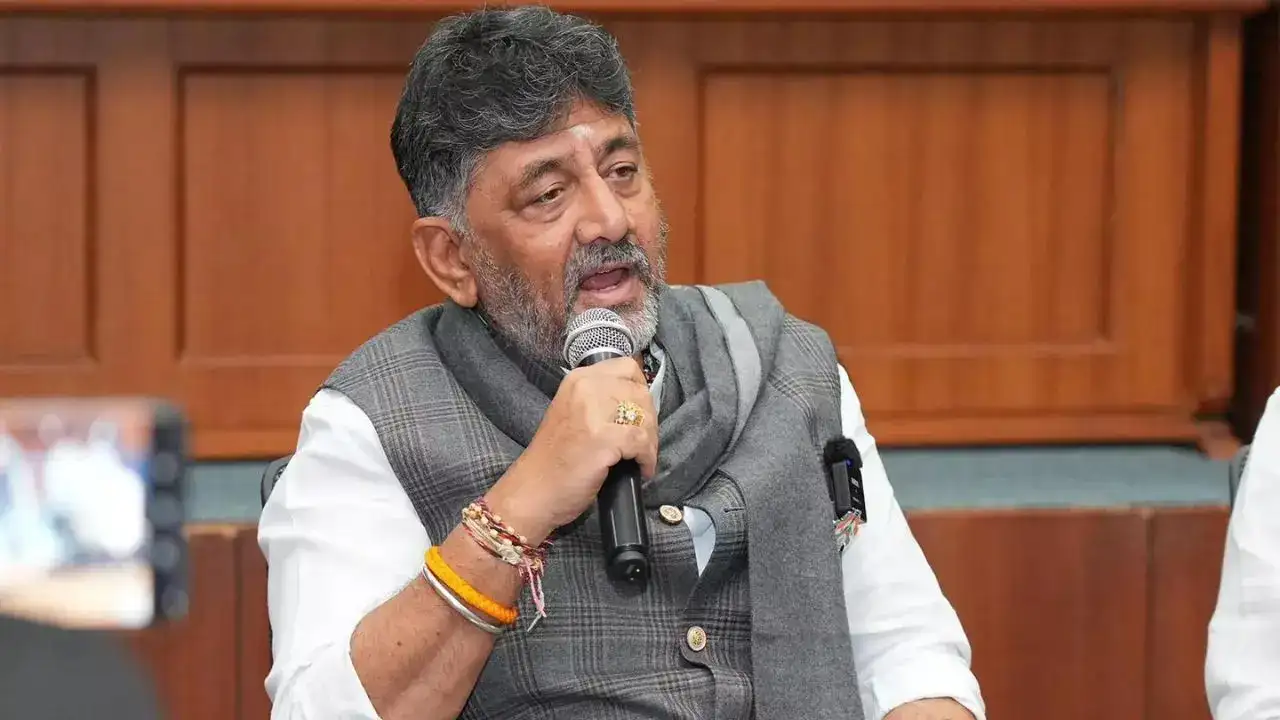
Industry expects policy continuity, faster execution under Shivakumar in Karnataka

Industry leaders expect policy continuity and a sustained push towards technology investments in Karnataka, as DK Shivakumar prepares to replace Siddaramaiah as the chief minister.

Executives from the technology, semiconductor and digital economy ecosystem said Karnataka’s long-standing strengths in talent, research and innovation are institutional in nature and unlikely to change with a leadership transition. At the same time, they said stable leadership and faster decision-making would help the state compete more effectively with others such as Telangana, Tamil Nadu and Maharashtra for investments in artificial intelligence, global capability centres (GCCs), datacentres and electronics manufacturing.
"DK Shivakumar has a significant opportunity to position Bengaluru as a truly world-class innovation hub that continues to attract global talent, investments and entrepreneurship into Karnataka," Biocon executive chairperson Kiran Mazumdar Shaw told ET.

At the same time, the state must strengthen road, rail and digital connectivity to drive more balanced investments across Mysuru, Hubballi-Dharwad, Mangaluru and Bidar, she said.

Karnataka has the potential to lead India in technology, biotechnology, health tech, agri-tech, renewable energy and startups, but this will require forward-looking policies focused on urban mobility, waste management, sustainability and transparent e-governance, Shaw added.

Aarin Capital chairman Mohandas Pai said Shivakumar “has to invest in infrastructure and complete all pending projects across the state".

The Outer Ring Road is probably the most important road in the world from a technology perspective, he said. "No 18-km stretch anywhere has around 93 million sq ft of technology campus space and close to 900,000 people working there,” he added.

“Bengaluru has got a bad name over the last few years because of traffic congestion and flooding. There has been some improvement, but it is not enough,” Pai said.

Karnataka has lost out on several opportunities. "We lost electric vehicle investments to Tamil Nadu and semiconductor investments to Gujarat because other states moved faster and offered incentives quickly,” he explained.

The state has to aggressively market itself for investments, Pai said. Governments cannot sit and wait for companies to come to them, he said.

He should work closely with the Prime Minister and seek support from the Centre for Karnataka’s development, he said.

Investors largely viewed Karnataka’s technology growth story as “institutional and long-term, beyond any individual political leadership change”, said Ashok Chandak, president of the India Electronics and Semiconductor Association.

Successive governments and chief ministers across political lines have helped build this image, he said. “At the same time, stability in leadership always helps strengthen investor confidence and improve speed of decision-making, especially at a time when intense competition exists among multiple states and cities for GCC expansion, AI infrastructure, datacentres, electronics manufacturing and semiconductor investments,” he added.

Nasscom president Rajesh Nambiar said companies evaluating investment destinations broadly look at expertise, economics and the policy environment.

“Karnataka has always scored pretty high on expertise,” Nambiar said.

He added that while economics remains largely similar across states, the differentiator increasingly comes from the “environment”, including infrastructure, labour policies and the overall ease of doing business.

“States compete and states have their own IT policies,” he said. “We believe that if the government is supportive of the industry, they will do everything, and they’ve always been very supportive of the industry,” he said.

Industry executives said Bengaluru’s infrastructure bottlenecks, including traffic congestion and urban mobility issues, remain among the biggest concerns for global investors and GCC operators. Shivakumar currently holds the Bengaluru development portfolio, which directly oversees several infrastructure-linked initiatives in the city.

Sanjeev Gupta, chief executive of the Karnataka Digital Economy Mission, said the state government’s focus on digital economy expansion and decentralised technology growth would continue irrespective of leadership changes.

The push to expand technology growth beyond Bengaluru through initiatives such as the “Silicon Beach of India” vision for Mangaluru and coastal Karnataka would also continue, he said.

Executives said while the Karnataka capital remains India’s largest technology and GCC hub, it faces growing competition from Hyderabad, Chennai, Pune and emerging tier-II cities as companies diversify investments.

The state is seeking to strengthen its position in semiconductor design, electronics manufacturing, aerospace and AI infrastructure.

Executives said investors are increasingly looking not only at incentives but also at speed of approvals, urban infrastructure execution and administrative coordination.

V Veerappan, chairman of the Electronics City Industrial Township Authority and cofounder and president of semiconductor engineering services company Tessolve, said: "DK Shivakumar is aggressive in attracting investments, willing to take risk, and compete with other states. The electronics sector will grow, and he will push decisions faster.”

Sign up to read this article
Read news from 100's of titles, curated specifically for you.
Already a member? Sign in here
Related Stories
Top stories on inkl right now
One subscription that gives you access to news from hundreds of sites
Already a member? Sign in here
Our Picks
Fourteen days free
Download the app
One app. One membership.
100+ trusted global sources.