
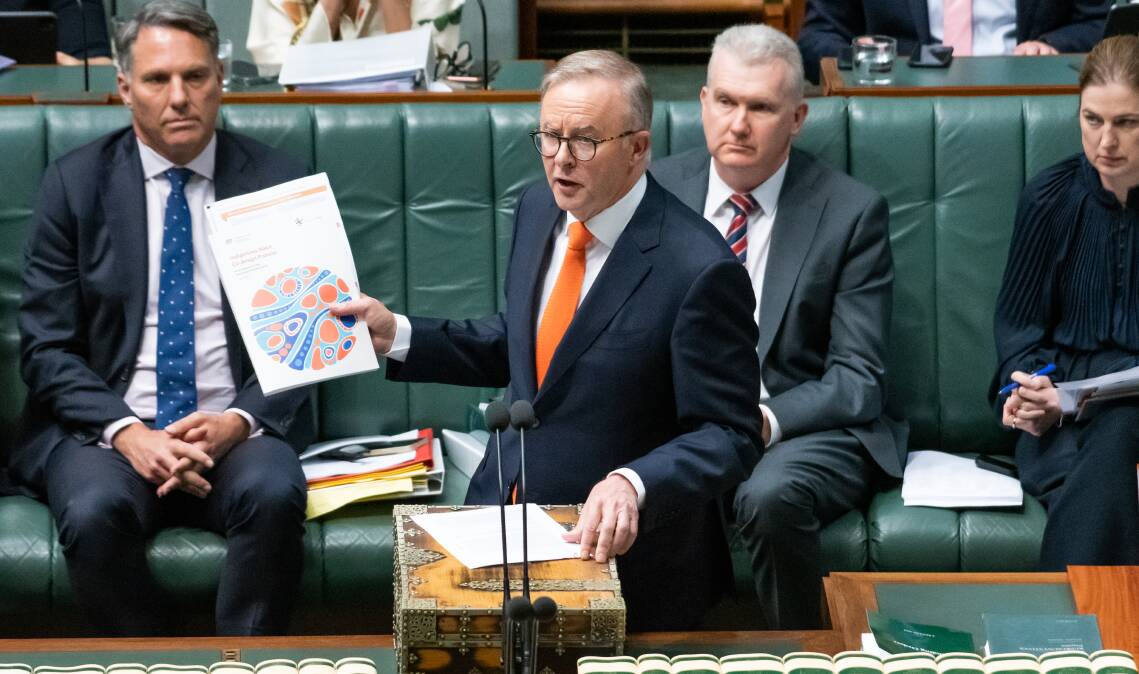
CORRESPONDENTS objecting to the Indigenous Voice to Parliament assert that it is either discriminatory in that it will only require consultation with Aboriginal people on matters that affect them, or unnecessary as they are already represented in parliament. One correspondent suggests that it is not needed after the 1967 referendum, where in fact the resulting changes to the constitution did nothing more than allow Aboriginal people to be counted in the Census and give the Commonwealth the power to make laws in respect to Aboriginal people.
The Voice is the first step in responding to the Uluru Statement from the Heart. The other two components, Makarrata (truth-telling) and then a treaty, should follow. Truth-telling is essential. Ever since British colonisation, and especially after the first settlers started to spread out across the continent, governments, churches and administrators sought to determine the course of Aboriginal people's lives - dispossessing them, enslaving them, condoning or facilitating their slaughter, 'protecting' them, 'civilising' them, converting them, imprisoning them, assimilating them, removing their children, deciding where they should live, work and play. Squatters, pastoralists, graziers, miners and, indirectly, many white Australians have been beneficiaries - or players - in the diminution of the rights of Aboriginal people, the legacy of which can still be seen today. This truth must be confronted.














