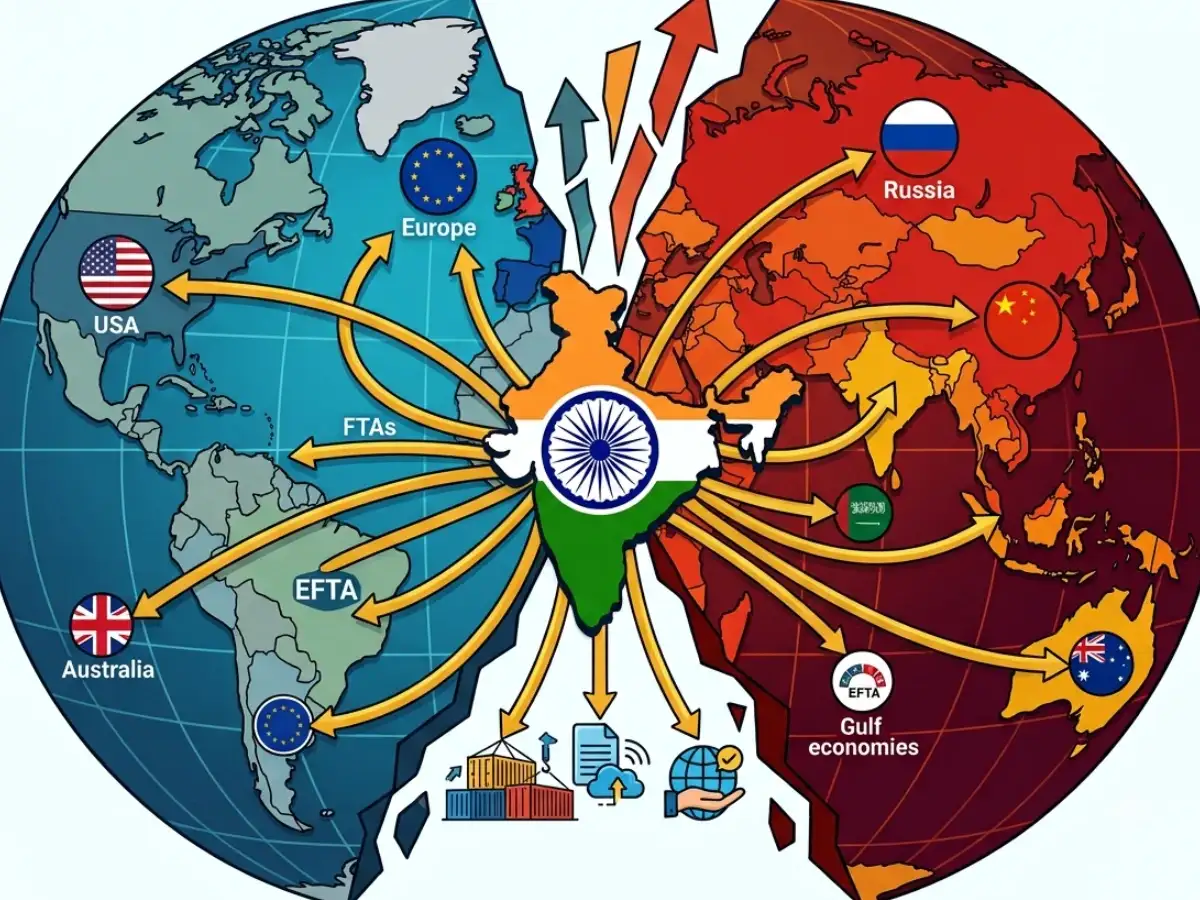
India has spent years building a foreign economic policy that leaves it room to deal with competing centres of power, which includes, deepening ties with the US and Europe while retaining strategic and commercial links with Russia, engaging China where interests demand it and using platforms such as BRICS and the Global South to preserve its room for manoeuvre.
That strategy has delivered a wider trade footprint. But the World Trade Organization’s latest assessment raises a harder question: What happens to countries that refuse to choose a side if global trade itself starts being organised around geopolitical blocs?