
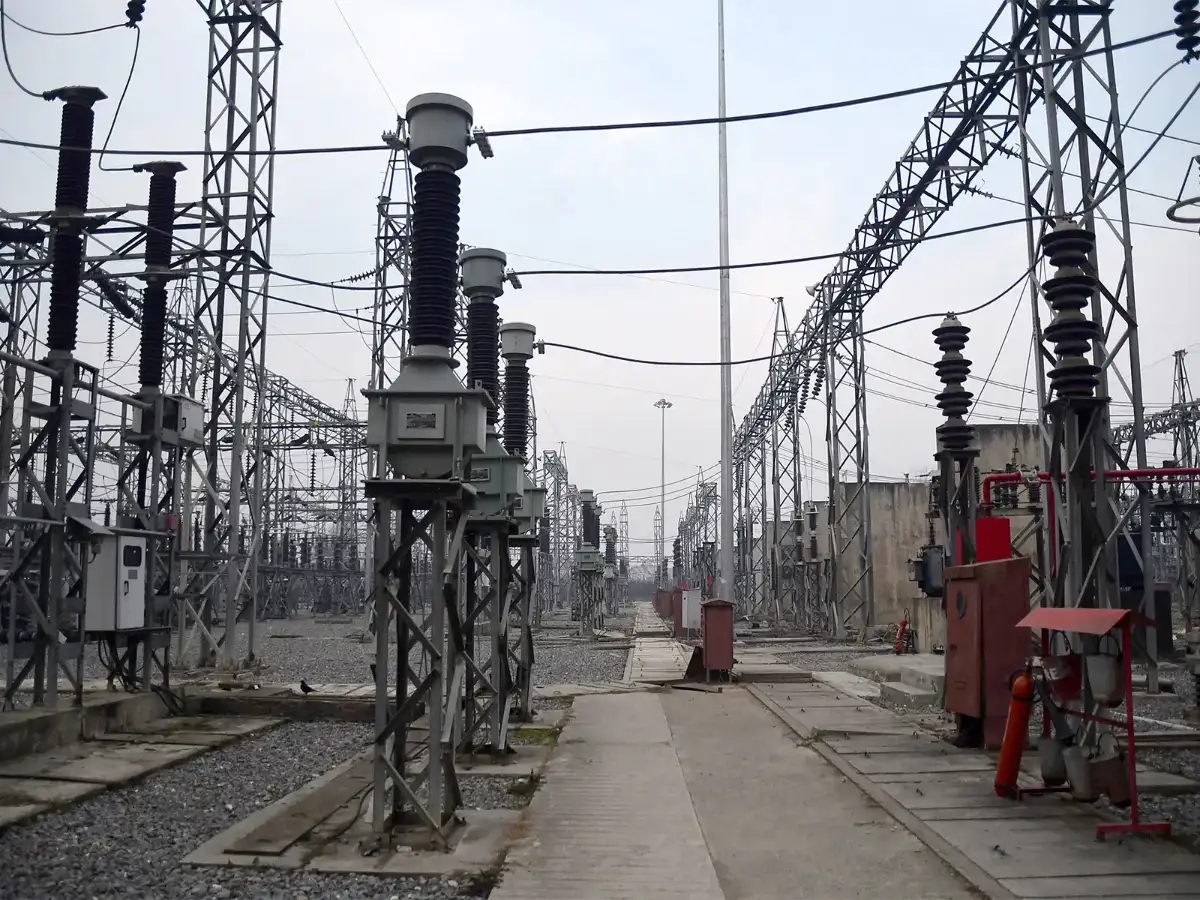
New Delhi: India's peak electricity demand rose around 12 per cent during April-June as compared to corresponding period last year and touched an all-time high of 270.8 gigawatts (GW) in May, with the evening supply gap widened to 3,045 megawatts (MW) in June, the Rajya Sabha was informed on Monday.
The all-India peak demand during non-solar hours stood at 255,172 MW in June, while the peak supply met was 252,127 MW. The gap increased from 1,326 MW in May and 1,225 MW in April, according to data provided in the government's reply to Rajya Sabha..

The northern region accounted for a major part of the June shortfall. Its evening peak demand reached 95,919 MW, against 93,269 MW met--a gap of 2,650 MW.
Also read | After a dash for hot dollars, India dives deep for sticky money
In a written reply in Rajya Sabha, Minister of State for Power Shripad Naik said the development of El Nino conditions had led to a significant increase in electricity requirements.
"During April to June 2026, overall rise in electricity peak demand was around 12 per cent as compared to corresponding period last year," the minister said.
The government said India had adequate power availability, with installed generation capacity reaching 548.86 GW as of June 2026. It added that 324.7 GW of generation capacity had been added since April 2014.
However, state-level data showed gaps in meeting evening demand in some regions. In May, Bihar recorded evening peak demand of 8,702 MW against 7,784 MW met, while Maharashtra met 31,338 MW against demand of 32,193 MW. Punjab met 12,352 MW against 12,812 MW demanded.
Also read | ₹60 crore to ₹600 crore: Meet India's ulra-rich buying homes that cost more than private jets
The government attributed the difference between electricity requirement and supply mainly to constraints in state transmission and distribution networks.
Thermal power remained the main source of electricity during the summer months, accounting for 72.71 per cent of total generation in April, 69.90 per cent in May and 68.39 per cent in June. The renewable share, including large hydro, increased from 24.13 per cent in April to 28.11 per cent in June.
"At present, there is no particular challenge in managing peak demand with fossil fuel resources supplemented by renewable resources," the government said. It added that renewable energy would need to be supported through storage systems at an "exponential rate" over the medium to long term.
Government projections envisage the addition of about 39.88 GW of battery energy storage capacity and 10.95 GW of pumped-storage capacity during FY2027-28 to FY2029-30.







