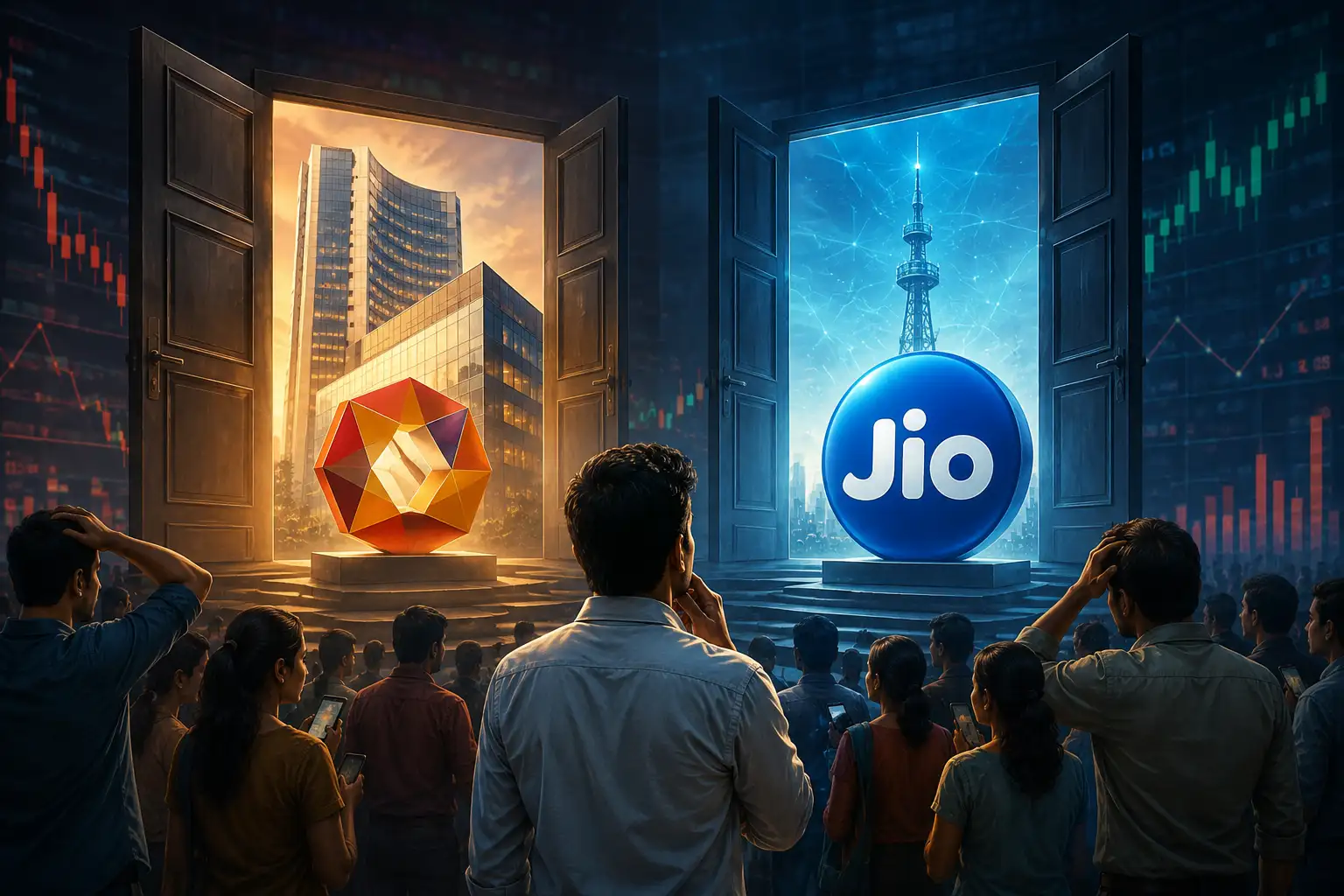
The two mega initial public offerings coming up in India are joined at the hip by retail sentiment. The $7 billion question is if the glue will hold.
If gray-market prices are to be believed, both the National Stock Exchange of India Ltd.’s $3 billion IPO and a $4 billion debut of billionaire Mukesh Ambani’s telecom and digital media empire are likely to find keen interest among local investors desperate for some excitement, the kind that secondary markets have been failing to provide lately.

While global capital chased the AI semiconductor booms in Taipei and Seoul — tripling Korean stocks and doubling Taiwanese equities — the benchmark Indian index hasn’t gone anywhere in the past two years. Worse, the war in Iran has torn a hole in the energy-importing nation’s fragile balance of payments. A plunge in the rupee has scared away foreign capital.
But now that the US and Iran have at least started peace talks, all eyes are on India’s individual stock buyers. They have only recently started to return after beating a retreat from markets. The common investing public needs to get its mojo back, and that’s where both the similarities and the differences between the two IPOs become important.
Both the NSE, India’s largest exchange, and Ambani’s Jio Platforms Ltd. have attractive moats: They are dominant players in what are effectively duopolistic industries, too heavily regulated for new competition to break in. The NSE’s rival is the 151-year-old BSE Ltd., or the erstwhile Bombay Stock Exchange, which has just a 7% share of the overall cash-equity turnover. Jio’s 500 million-plus subscribers — and a media empire buttressed by a lock on cricket, a national craze — put it considerably ahead of Bharti Airtel Ltd., the nearest challenger.