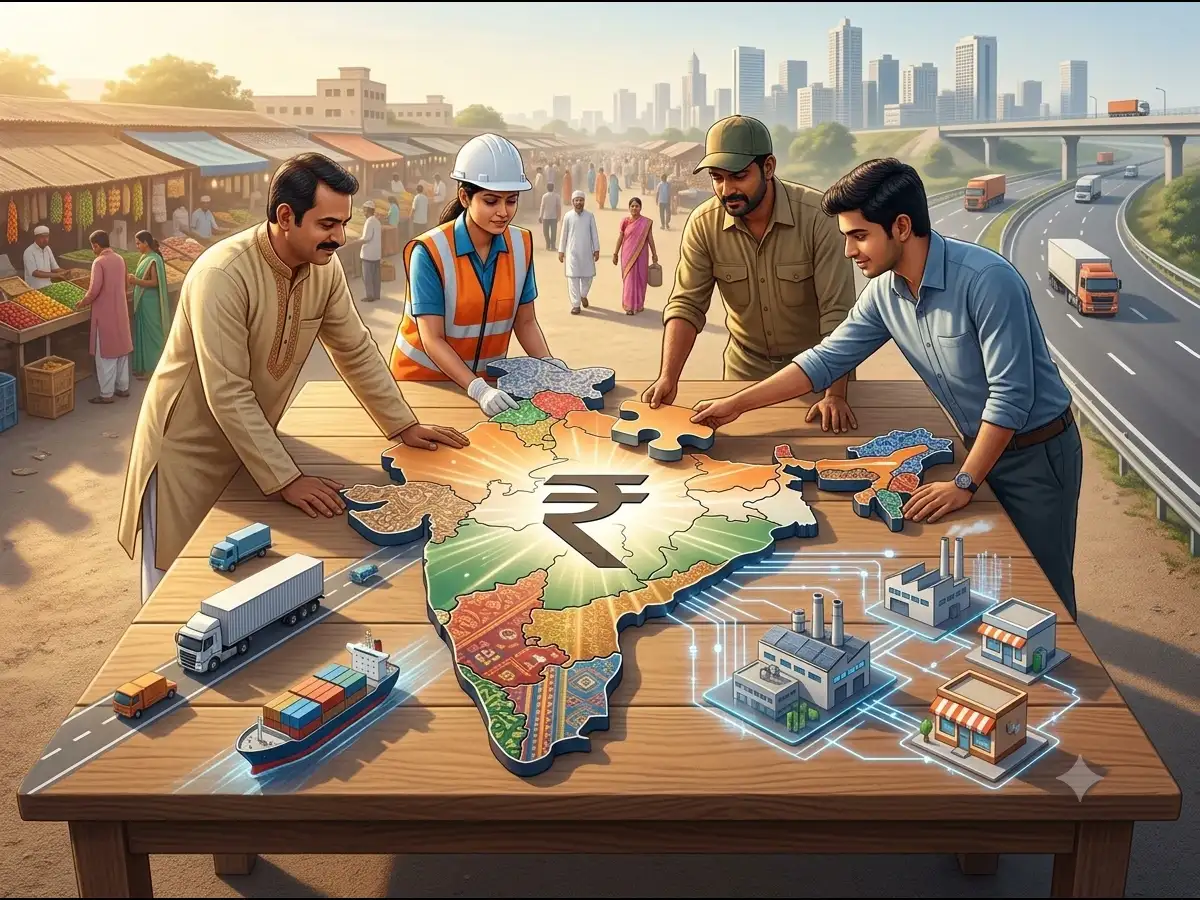
Nine years after it redrew India's indirect taxation map, the Goods and Services Tax (GST) has become less a single reform than an evolving economic system -- one that replaced a maze of levies with a common framework, digitised compliance and steadily widened the formal tax base.
GST was introduced in India on July 1, 2017, after years of political negotiations and legislative work. Its objective was not just replacing taxes; it sought to remove tax-created barriers between states, reduce the cascading effect of taxation, make movement of goods easier and bring more economic activity into the formal system.