Get all your news in one place.
100's of premium titles.
One app.
Start reading
The Economic Times
The Economic Times

India's $40.8 billion Russian crude imports put it in Trump's 100% tariff line of fire

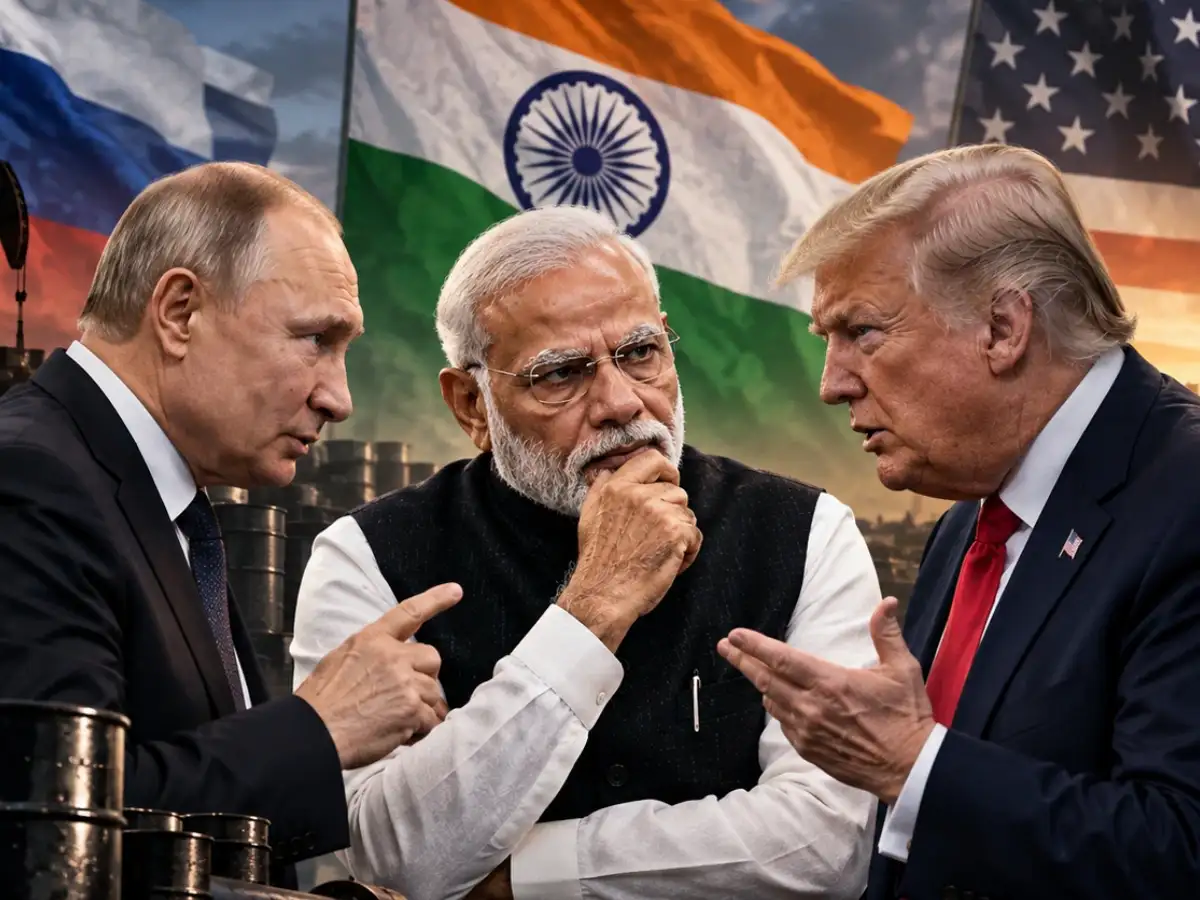
India bought $40.8 billion worth of crude oil from Russia in FY2026, accounting for nearly a third of its total crude imports, according to the Global Trade Research Initiative (GTRI). That trade now sits at the centre of a US sanctions push that could give President Donald Trump the power to impose additional tariffs of up to 100% on major buyers of Russian energy.

Russia supplied 30.3% of India's crude imports in FY2026, out of the country's total crude purchases of $134.7 billion, the think tank founder Ajay Srivastava said. By July 2026, the dependence had deepened further, with Russia supplying 51% of India's imported crude oil.

Also Read: 100% tariff danger for India nears as Russia Sanctions Bill advances in US House amid surprise vote twist

Those numbers capture what is at stake for India as the US House of Representatives prepares to vote on the Sanctioning Russia and Iran Act on September 16.

The legislation would allow Trump to impose country-specific tariffs of up to 100% on major purchasers of Russian oil and gas that continue covered purchases. India, given the scale of its Russian crude imports, would be among the countries exposed to such a measure.

A 100% tariff, however, would not automatically be imposed on India if the legislation becomes law. The bill would give the US president the authority to impose additional duties of up to that level.

China buys more Russian oil, but India could face greater pressure

China buys more Russian crude than India, but GTRI said New Delhi could still face greater pressure from Washington. The think tank pointed to previous US action in July 2025, when Washington imposed an additional 25% Russia-related tariff on Indian goods while sparing China. That tariff was withdrawn only in February 2026.

For India, the potential pressure comes from two directions: its dependence on Russian crude and its trade relationship with the US.

Russian oil has become a major part of India's crude import basket, with $40.8 billion worth of supplies in FY2026, according to GTRI. The think tank said discounted Russian crude has helped lower India's import bill, strengthen energy security and contain inflation.

That also raises the potential cost of any US tariff action. If Washington imposes additional duties linked to India's Russian oil purchases, thousands of Indian products exported to the US could be affected, GTRI said. However, the exact impact would depend on the tariff rate ultimately imposed and the products covered.

Any US action targeting countries continuing to purchase Russian energy would therefore put India's Russian oil purchases under greater scrutiny at a time when New Delhi is also negotiating a trade agreement with Washington.

Russian oil tariff threat collides with India-US trade deal

The tariff threat comes as India and the US work towards formalising their bilateral trade agreement.

Commerce Secretary Rajesh Agrawal has said the agreement is "more or less" finalised, with the two countries working on a framework for preferential market access before signing it at an appropriate time.

Also Read: US lawmaker submits amendment naming India in Russia sanctions act

“There are few things which both sides are discussing, but it will be signed at an appropriate time,” Agrawal said on the sidelines of the Global Fintech Fest 2026.

Agrawal said India and the US need to ensure preferential access to each other's markets under the agreement. India largely operates under most-favoured-nation tariffs, while the US is working with executive tariffs, requiring an architecture that creates tariff differentials and preferential market access for India, he said.

Srivastava argued that the Russian oil tariff provision could put additional pressure on India as the trade negotiations continue.

GTRI also argued that Washington could use the threat of tariffs over Russian oil purchases to push New Delhi towards accepting terms in the bilateral trade agreement that India may otherwise consider unfavourable.

"The bill is a blunt and dangerous attempt to pressurize India to sign BTA on one sided terms. India buys Russian oil to secure affordable energy for 1.4 billion people, not to finance war, and these purchases have helped stabilise global supplies and prices. Tariffs of up to 100 per cent would punish Indian exporters and American consumers, disrupt trade and give the US president excessive power over major partners. Washington should pursue diplomacy and stable energy markets, not threaten a strategic partner for protecting its legitimate economic interests," Srivastava said.

The think tank cautioned that neither signing a trade agreement with Washington nor ending Russian crude purchases would necessarily insulate India from future US trade action. It pointed to the possibility of Washington launching Section 301 investigations or imposing tariffs on other grounds, including against countries with which the US already has trade agreements.

Why the September 16 House vote matters

The immediate trigger is Wednesday's House vote.

The legislation moved closer to passage on September 15 when the House advanced it in a 214-211 procedural vote. The narrow margin contrasts with the Senate, which approved the legislation 86-11 on August 7.

The House Rules Committee voted 7-3 to send the Russia and Iran sanctions bill to the House under a tightly controlled procedure. It also rejected amendments seeking to remove the president's broad power to impose secondary tariffs and to specify the countries covered.

Although the original bill named five countries, including India and China, GTRI said removing their names offers India little protection because it remains the second-largest buyer of Russian oil after China.

The House will now vote on the Senate-approved legislation without amendments following one hour of debate.

Supporters of the legislation argue that targeting countries purchasing Russian energy would reduce the revenues available to Moscow for its war.

Critics, led by Democrat Gregory Meeks, have argued that the legislation gives the president too much power to impose tariffs on major US trading partners without adequate congressional oversight. They have also warned that such tariffs could disrupt global trade, increase prices in the US and affect American foreign policy.

GTRI has taken a stronger position, describing the legislation as an unjustified attempt to impose US foreign-policy choices on other countries through tariff threats. It argued that India should oppose the measure and continue purchasing Russian crude for as long as it remains commercially competitive.

What a 100% tariff threat means for India

If the House passes the Senate-approved legislation, it would then go to Trump for his signature.

For India, the significance of the vote lies in the scale of its Russian oil trade. Russia supplied almost one in every three dollars of crude India imported in FY2026 and 51% of its crude imports in July. While China remains the larger buyer of Russian crude, GTRI's assessment is that India's experience with previous Russia-related US tariffs means New Delhi could still find itself under greater pressure if Washington activates the tariff powers contained in the legislation.

Sign up to read this article
Read news from 100's of titles, curated specifically for you.
Already a member? Sign in here
Related Stories
Top stories on inkl right now
One subscription that gives you access to news from hundreds of sites
Already a member? Sign in here
Our Picks
Fourteen days free
Download the app
One app. One membership.
100+ trusted global sources.