Get all your news in one place.
100’s of premium titles.
One app.
Start reading
The Times of India
The Times of India
Sport
K Kumaraswamy | TNN

Indian tennis needs to have its players train together: Manuel Esparcia

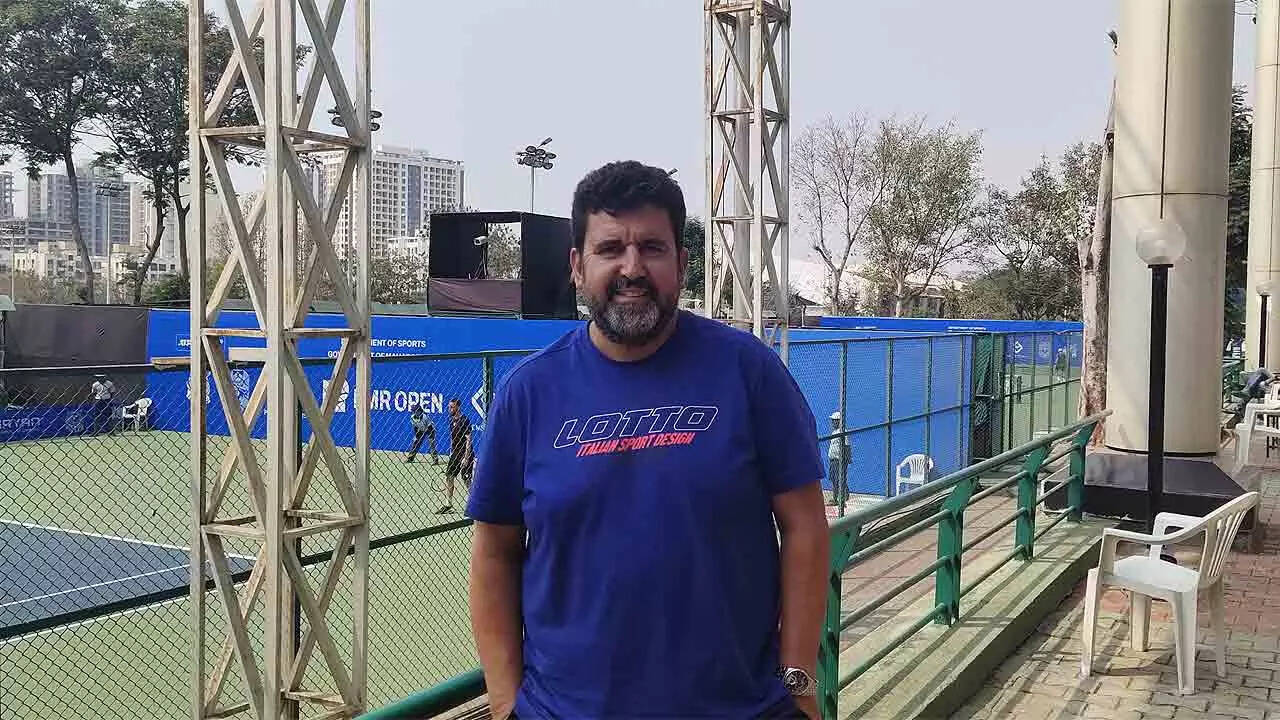
PUNE: Juan Manuel Esparcia wears multiple hats.

The 51-year-old Spaniard, who coached Guillermo Garcia Lopez to a career-high world ranking of 23 and five ATP Tour singles titles, is also a player manager and a certified agent with both ATP and FIFA.
His main interest remains tennis, though. He focusses on junior player development and coaches education. He has conducted camps for international players and given lectures on coaches development around the world.

The burly Spaniard turned to coaching after realising - while serving the then mandatory tenure in the Spanish army at the age of 20 - that he probably would not make the breakthrough as a tennis player.

After moving to the US to study in college, one of his earliest coaching assignments was to work with former women's world no. 1 Monica Seles. From there on, it had been a steady upward graph, culminating in working with Garcia Lopez.

In between, he explored his other areas of interest in sports and diversed into player management, which led to him managing football players since at that time Spanish speaking agents were few.

In early 2010s, Manuel Esparcia was invited to work with a select group of Chinese men's tennis players by an equipment brand. Although he couldn't stay on to take the project to fruition, the Chinese federation carried forward his vision and the impact is there to see with a bunch of young players beginning to make the breakthrough.

Wu Yibing, aged 23, won an ATP title last month in Dallas, becoming the first Chinese to do and rising to a career-high world ranking of 58.

ZhiZhen Zhang has also broken into the top-100 in world rankings earlier this year.

Manuel Esparcia, in India as coach-manager of Carlos Sanchez Jover for the three ATP Challenger events in Chennai, Bengaluru and Pune, said India can take a leaf out of China's book by getting the country's top players train together under one roof.

"What I can say is that maybe we can take China as an example. What I can see now is that you're having the three Challengers plus the ATP (Tour event in January) and now they are also going to happen a few ITF 25 and 15Ks tournaments, I think this is the first thing," he said.

"The second thing is that, probably in the ranking of importance at the same level, and it is that the players need to be together for training.

"India is a big country. And if you have a player in Delhi, another player in Chennai and other player in Pune … it is difficult.

"They need to practice to compete each other, to challenge each other, to live (their) experiences together, learn from each other.

"That is very important because when you don't have a big number of players practising in the same city, so that they can really share things, it is difficult to improve.

"By working only with a coach is tough, you know. The coach can provide a good atmosphere and a good environment for you to develop your skills.

"But you need an opposition, you need somebody who challenges your skills. So I think the second thing is to have enough players practising more or less in the same area or in the same group."

Manuel Esparcia, who decided to become a coach in his early 20s and worked with Monica Seles in his earliest assignment, advised the Indian players to focus on developing an all-round game as modern tennis at the international level did not allow room for any weakness, unlike in the past.

"You need a multi-disciplinary team surrounding you, because the top players today are physically very strong," he said.

"They are so fast. They are technically really good. They have (quite a) few weapons.

"It's not like (in the past) somebody with two weapons, they can play at a high level, but now is very difficult. You need to be good in all aspects."

He said Indian players had the talent but they should be willing to do the hard work and make the sacrifices.

"In India, they were successful in the past with singles players, and now they have a lot of doubles players. So they can do it, you know, the potential is there," he said.

"But it's not only the potential, it is the commitment, the passion, the will to become somebody, to pay the price, you know.

"Sometimes it's really difficult because you have to travel, you're missing home, but this is your job,

"You gotta keep going, believe in and have good work ethics, that's very important. And sooner or later, it will pay off."

Sign up to read this article
Read news from 100’s of titles, curated specifically for you.
Already a member? Sign in here
Related Stories
Top stories on inkl right now
One subscription that gives you access to news from hundreds of sites
Already a member? Sign in here
Our Picks
Fourteen days free
Download the app
One app. One membership.
100+ trusted global sources.