
Get all your news in one place.
100's of premium titles.
One app.
Start reading
The Independent UK
The Independent UK
Shweta Sharma

Indian court refuses to halt transfer of five elephants to temples despite welfare concerns

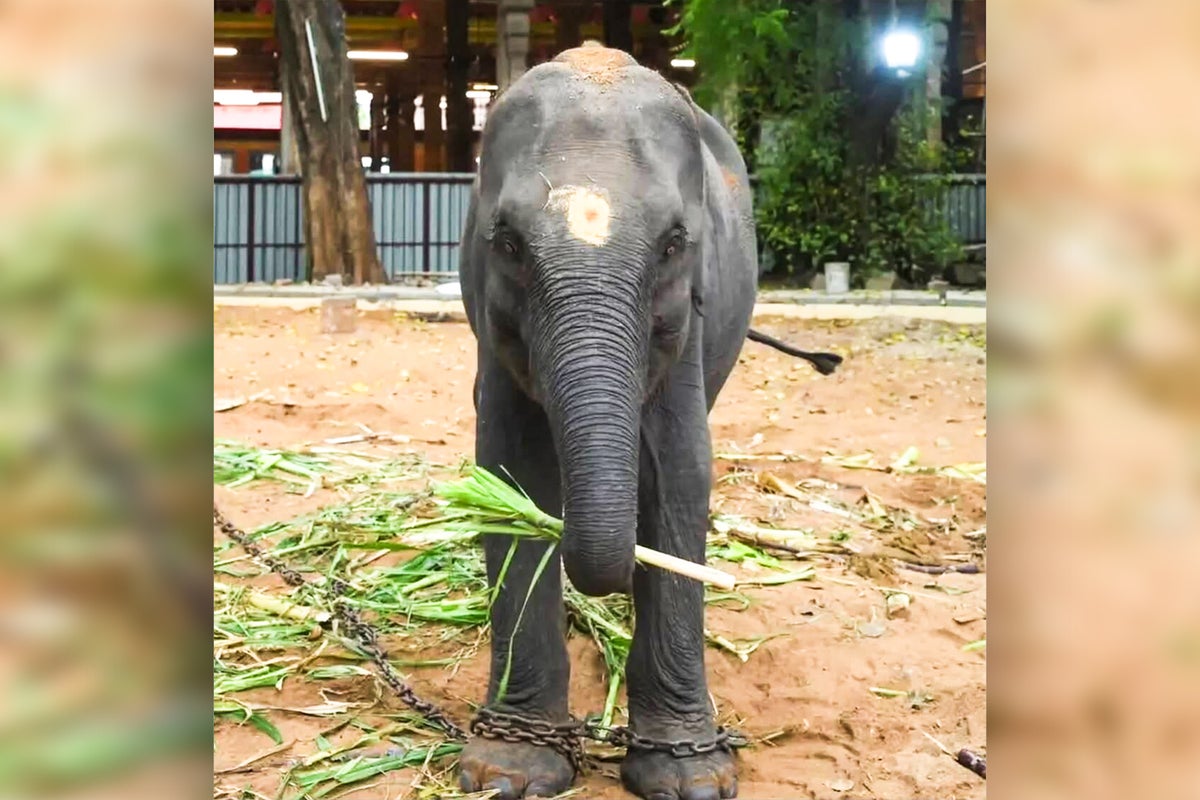
Five-year-old Durga who was transferred from Assam to Tamil Nadu, sparking outrage - (Supplied)

An Indian court has refused to stop the transfer of four elephants to temples after animal rights activists raised concerns that the animals could face “ill-treatment” in another state.

The Gauhati High Court said it would not intervene at this stage unless it was shown that the required legal permissions for the transfers had not been obtained.

Assam-based conservationist Rohit Choudhury filed an application seeking to stop the transfer of five elephants from Assam, in northeastern India, to Tamil Nadu in the south, where they are due to be kept at temples and other religious institutions.

One of the elephants, a five-year-old female named Durga, has already completed the nearly 3,000km road journey from Assam and reached the Madurai Meenakshi Amman Temple.

The Independent reported that the transfer of Durga and the planned relocation of other elephants named Hiralal, Shiva, Rupsing and Bijuli had sparked outrage and demands for an investigation.

Five-year-old Durga who was transferred from Assam to Tamil Nadu, sparking outrage (Supplied)

Animal rights activists have raised concerns about transporting the elephants, aged between five and 13, over long distances by road, as well as their conditions and long-term care at temples in Tamil Nadu.

They have also questioned whether the elephants were genuinely privately owned. Activists have called for an investigation into allegations that one of the elephants, Durga, was removed from Masans National Park under the cover of darkness.

The application also cited previous cases involving elephants from Assam that were kept at temples in Tamil Nadu, including Joymala, whose case led to a dispute between the two states.

Joymala was sent from Assam to a Tamil Nadu temple in 2011 for three years but remained there after the permission expired in 2013. Assam later sought her return, while animal welfare groups alleged she had been ill-treated after a video emerged in 2022.

People for Cattle in India founder Arun Prasanna G said the case raised a much wider question about Assam’s continuing practice of sending captive elephants to other states.

“If owners claim they can no longer care for these elephants, why is the answer repeatedly to move them hundreds or thousands of kilometres out of Assam, rather than first exploring surrender, rehabilitation and long-term care within the state?” he told The Independent.

He also questioned whether forest departments in both states were carrying out sufficient due diligence before approving the transfers.

“A document showing an ownership certificate is not, by itself, proof of the complete history of an elephant,” Mr Prasanna said.

“Authorities must establish how that ownership arose, where the elephant came from, who its mother was, whether its history is consistent with a legal captive origin, and whether every stage of acquisition and transfer can withstand independent scrutiny.”

“We cannot keep moving young elephants across India and ask questions about their origins only after they have reached their destination. The questions must be answered before the truck leaves,” he said.

“Otherwise, ‘donation’ risks becoming a convenient word that hides a much bigger failure of accountability.”

The judges, Chief Justice Ashutosh Kumar and Justice Arun Dev Choudhury, were told by representatives of the Assam government that the five “privately owned” elephants had received all necessary clearances and that “all possible care” would be taken to ensure their safe transportation.

“Prima facie, we find no reason, as on date, to pass any restraint order, unless it is clearly shown that necessary clearances have not been obtained,” the court said.

While declining to stop the transfers, the court kept the application pending, citing the need to protect the health of the privately held elephants and prevent their “unscrupulous or unauthorised use”.

Sign up to read this article
Read news from 100's of titles, curated specifically for you.
Already a member? Sign in here
Related Stories
Top stories on inkl right now
One subscription that gives you access to news from hundreds of sites
Already a member? Sign in here
Our Picks
Fourteen days free
Download the app
One app. One membership.
100+ trusted global sources.


