I was 8 years old when Independence Day came out, and I’ve watched this massive 1996 movie dozens of times over the years. Epic scenes like the destruction of Washington, D.C., Boomer somehow making it through that LA tunnel without being turned into a hot dog, and Bill Pullman’s GOAT presidential speech have been floating around my head ever since. As far as I’m concerned, this is one of the best disaster films of all time, and I’ll die on that hill.
That said, it wasn’t until recently that I learned that the Independence Day ending, or at least the part where Randy Quaid’s Russell Casse flies a jet into an alien ship, wasn’t the original plan, and that there’s an alternate scene. Crazy, right? Well, let me break down the original plans and why director Roland Emmerich decided to make a massive change at the last minute…
How Randy Quaid’s Big Hero Scene Originally Went Down
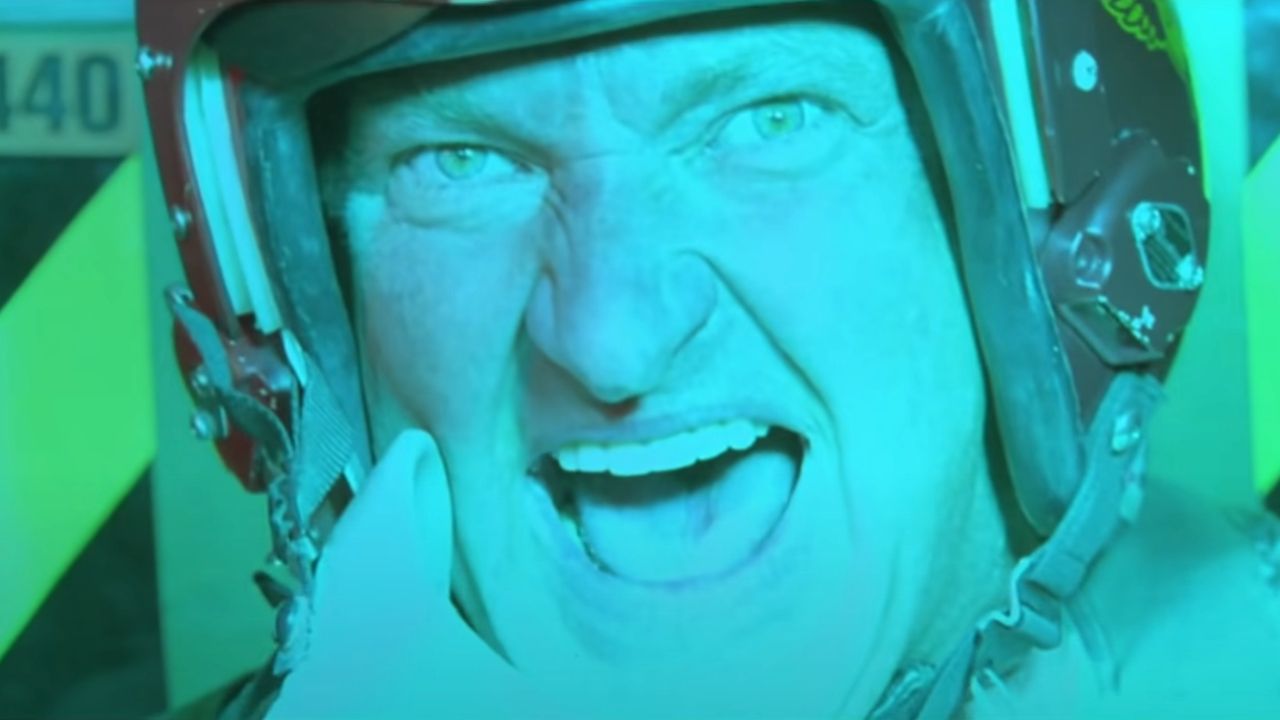
In the final cut of Independence Day, Russell Casse joins President Thomas J. Whitmore and dozens of other pilots in an attack on an Alien ship. When attempting to come in and save the day, Russell’s final rocket jams and he makes the heroic decision to sacrifice himself so humanity can live on. However, that wasn’t the original plan. So what was?
In a 2021 Independence Day oral history published by THR, co-screenwriter Dean Devlin explained that he and Roland Emmerich originally planned and shot a scene that was like something out of Dr. Strangelove, in that Casse pilots his old cropduster with a bomb tied to it to save the day. However, they didn’t get the reaction they were looking for in a test screening:
- Roland Emmerich - When we tested it, it tested through the roof. People said, ‘The only thing we don’t like was this crazy guy [Quaid’s Russell Casse] flies in his crop duster with a bomb roped to his plane. That’s unrealistic.’
- Dean Devlin - And we meant it to be a Dr. Strangelove moment, where he flies into [the spaceship] with his biplane and the missile and he saves the day. We were watching it with the audience, and when he showed up with that plane, there was a big laugh. Roland turned to me and said, “That’s not a good laugh.”
I found a video of this alternate ending, and it sure is something. While it does capture that wild tone of the classic Stanley Kubrick film, it’s easy to see why this didn’t fly.

A Last-Minute Decision Was Made To Reshoot The Sequence
As Emmerich and Devlin recalled into the oral history (it’s a great read if you’re a fan of this classic ‘90s film), they made a last-ditch effort to fix the problematic scene and asked 20th Century Fox if they could reshoot the sequence… weeks before the premiere. As Devlin put it:
We wanted to reshoot it. The studio couldn’t understand why we would want to reshoot it. We were testing in the low 90s. We said, ‘We know it’s not the right laugh.’ And so it was a one-day reshoot. We talked them into spending the money.
With the July 1996 release date quickly approaching, the production team went back at it and reshot a few scenes and reworked the story so that Russell was one of the volunteers in a jet, as opposed to his trusty plane. The plan worked, the movie was a success, and it lives on in Hollywood history.
Though it would have been a hilarious moment if Randy Quaid’s character was flying his biplane around all these fighter jets and alien spacecraft, I honestly think it would have been too much. Instead, we got one of the most iconic movie deaths of all time.