Get all your news in one place.
100's of premium titles.
One app.
Start reading
The Conversation
The Conversation
Environment
Thomas S. Bremer, Associate Professor of Religious Studies and American Religious History, Rhodes College

In the worst of America's Jim Crow era, Black intellectual W.E.B. Du Bois found inspiration and hope in national parks

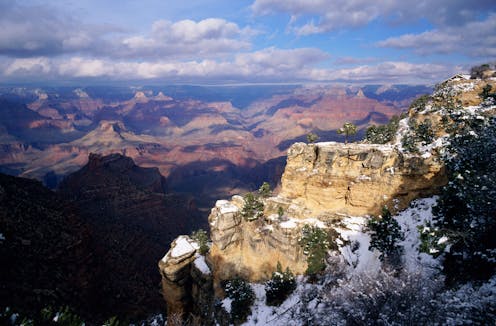
A view of the Grand Canyon after a snowfall. Tom Stoddart/Getty Images

In his collection of essays and poems published in 1920 titled “Darkwater,” W.E.B. Du Bois wrote about his poignant encounter with the beauty of the Grand Canyon, the stupendous chasm in Arizona.

As he stood at the canyon’s rim, the towering intellectual and civil rights activist described the sight that spread before his eyes. The Grand Canyon’s “grandeur is too serene – its beauty too divine!” Du Bois wrote. “Behold this mauve and purple mocking of time and space! See yonder peak! No human foot has trod it. Into that blue shadow, only the eye of God has looked.”

Sign up to read this article
Read news from 100's of titles, curated specifically for you.
Already a member? Sign in here
Related Stories
Top stories on inkl right now
One subscription that gives you access to news from hundreds of sites
Already a member? Sign in here
Our Picks
Fourteen days free
Download the app
One app. One membership.
100+ trusted global sources.