
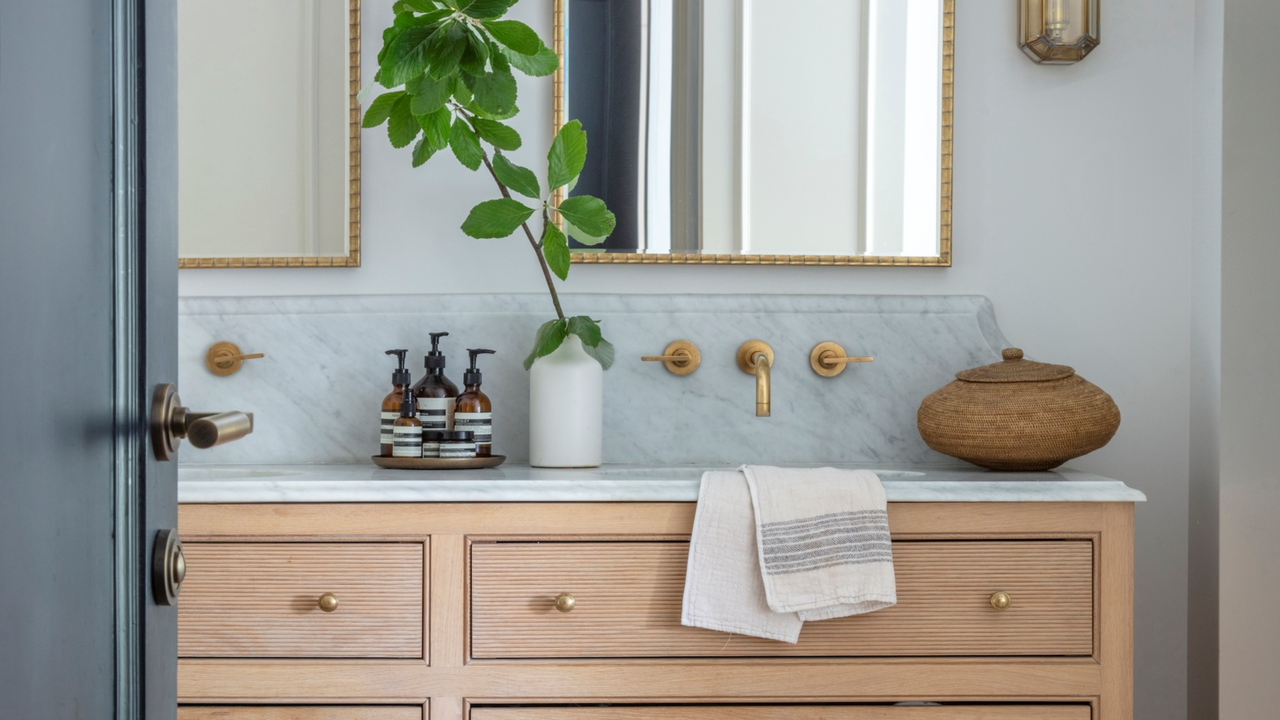
When traveling abroad, do you ever notice you're able to utilize the electrical outlets in the bathrooms — a lot of hotel bathrooms have a hairdryer in the actual bathroom, after all. You see them in American homes a lot, too. Those big bathroom vanity drawers with hairdryers docked inside, plugged in and ready to use.
But as much as anyone would appreciate the ease of drying your hair in front of a big bathroom mirror, it's not something you can do in the UK.

Electrical safety in bathrooms is the strictest in the home, and for good reason. With water increasing the risk of electric shock, regulations are tighter on where your plug sockets can go. Paul Collins, Technical Director at NICEIC — the UK’s leading certification body for the electrical industry, explains the reasons behind this.
Why Can’t You Include Plug Sockets in UK Bathrooms?

Plug sockets aren’t necessarily banned from bathrooms; it just depends on where they're placed.
Bathrooms in the UK are divided into safety zones, based on the distance from the bath or shower. If you want to include a socket in the bathroom, it must be at least 2.5 meters horizontally from the edge of the bath or shower, and each zone has specific regulations for its installation. "In most homes, bathrooms simply aren’t large enough for this distance to be achieved," Paul explains. "You rarely see conventional socket-outlets installed."
Why are other countries allowed plug sockets?

Australia, America, Japan, France, Spain, and Germany are amongst some of the countries that allow plug sockets in the bathroom. It’s as if the UK is being treated like a child, not to be trusted with electricity and water, but the reason is surprising.
Most homes outside the UK use circuit breakers, whereas in the UK we use fused plugs. These circuit breakers trip whenever they’re near water, even if the current is low. These installations also have Residual Current Protection (RCP), which are also known as safety switches. "RCD protection quickly disconnects the power in the event of a fault," says Paul Collins. "It helps prevent a serious injury."
Where to include a socket in the bathroom if you really want one?
"In areas closer to water, only specially designed equipment is permitted. For example, shaver supply units are allowed because they include an isolating transformer, which significantly reduces the risk of electric shock," Paul explains.
"Low-voltage equipment supplied by a Safety Extra Low Voltage (SELV) source may also be permitted in certain zones, provided it is correctly installed and suitable for bathroom use," Paul adds. "Standard socket-outlets, however, are not allowed in these higher-risk areas under any circumstances."
This means that, realistically, you can't use mains-connected appliances in a bathroom, and you should never connect them up with an extension lead to do so, as this can be just as unsafe. However, portable appliances may give you some of the flexibility you require, as long as you make peace with charging them outside of the bathroom.
For more advice like this, make sure you're subscribed to Livingetc's newsletter.